1068
1068
 Request Call Back
 Contact
 1068
1068
Botox: What It Is, How It Works, Side Effects and How Long It Lasts
Published on: Oct 15, 2026
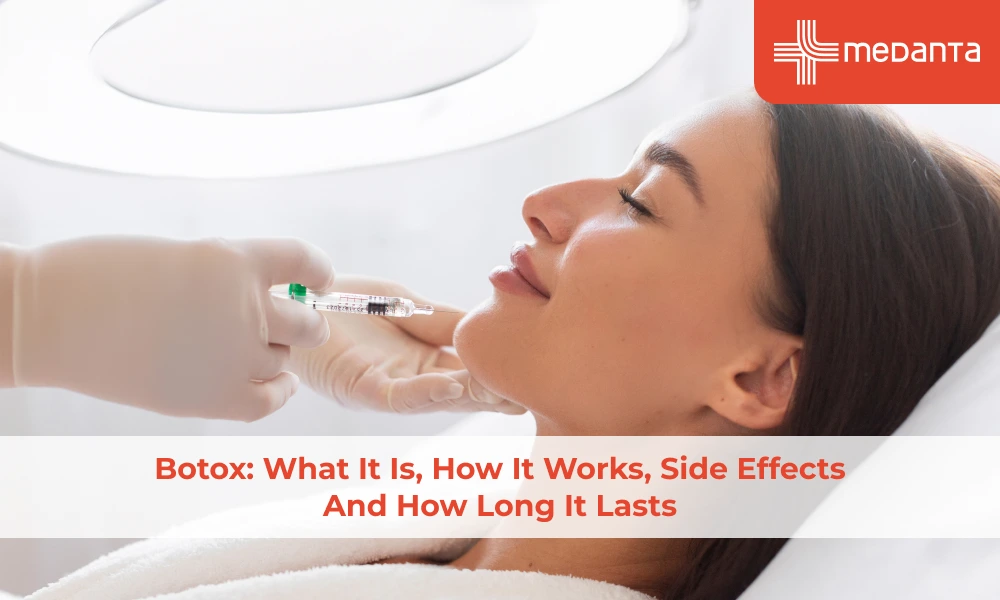
TABLE OF CONTENTS
Botox (botulinum toxin) is one of the most widely performed non surgical cosmetic procedures in the world. Its applications extend far beyond aesthetics. Botulinum toxin is used therapeutically for chronic migraine, hyperhidrosis, overactive bladder & spasticity. Understanding how Botox works, its side effects and how long its effects last can help you make informed treatment decisions.
What Is Botox
Botox is the brand name for onabotulinumtoxinA, a purified form of botulinum toxin type A produced by Clostridium botulinum. While botulinum toxin in large, uncontrolled doses causes botulism, the highly purified, precisely dosed formulations used in clinical practice are safe and well-characterised over decades of regulatory review.
How Botox Works
Botulinum toxin type A exerts its effect at the neuromuscular junction, where motor nerve terminals meet skeletal muscle fibres. Normally, an electrical signal triggers release of acetylcholine from vesicles in the nerve terminal; acetylcholine crosses the synaptic cleft, binds to muscle receptors and triggers contraction.
Botox blocks the release of acetylcholine at the connection between the nerve and muscle. The result is focal, reversible muscle relaxation in the injected area without affecting adjacent muscles when injected with precision.

How Long Does It Take for Botox to Work
Botox does not produce immediate results. Following injection, the toxin is taken up by the nerve terminal and requires time to disrupt acetylcholine release. Initial visible softening of targeted muscles typically begins within two to five days of injection. Most patients notice meaningful wrinkle reduction or muscle relaxation between five and ten days, with full effect achieved at approximately ten to fourteen days.
How Long Does Botox Last
For cosmetic indications the effect of Botox typically lasts three to six months. Areas with strong, frequently used muscles (such as the forehead in highly expressive individuals) may metabolise the toxin more quickly. Higher doses generally produce longer-lasting effects. Individual metabolic rate, body weight and physical activity level (aerobic exercise may shorten duration) all influence how quickly the effect fades.
With repeated injections over time, many patients notice a gradual extension of the interval between treatments because targeted muscles undergo atrophy from prolonged disuse. Regular users may eventually need treatments only every four to six months. In medical indications such as chronic migraine and hyperhidrosis, injection intervals are standardised at twelve weeks by clinical protocol.
Botox vs Dermal Fillers
Botox & dermal fillers are both injectable cosmetic treatments but work through entirely different mechanisms and address different concerns. Botox relaxes muscles and is used for dynamic wrinkles, those that appear with facial expression and movement such as forehead lines, frown lines and crow's feet. Dermal fillers (most commonly based on hyaluronic acid) add volume to areas of the face that have lost fullness due to fat redistribution and bone resorption associated with ageing. They are used for static wrinkles, nasolabial folds, lip augmentation, cheek volumisation and tear trough correction.
Side Effects of Botox
Botox has an extensive safety record when administered by experts using approved formulations. Most adverse effects are localised, mild and transient.
Injection site reactions like redness, mild swelling, and bruising at the injection points
A mild headache occurring within 24 to 48 hours of forehead or glabellar injections
Ptosis (drooping eyelid or eyebrow)
Unequal distribution of the product between the two sides of the face can produce visible asymmetry
Serious adverse events like distant spread of toxin effect causing dysphagia or respiratory compromise are extremely rare at cosmetic doses.
Who Should Avoid Botox
Certain groups of people should avoid Botox. They are:
Individuals with neuromuscular junction disorders like myasthenia gravis and Lambert-Eaton syndrome
Known allergy or hypersensitivity to botulinum toxin or its excipients (human albumin, saline, or lactose depending on the formulation)
Patients taking aminoglycoside antibiotics (gentamicin, amikacin) or other drugs that potentiate neuromuscular blockade
Pregnant and breastfeeding women should tell their doctor before having botulinum toxin.
What to Expect Before and After Treatment
Before treatment, a consultation with the injecting practitioner is essential to discuss the patient's aesthetic goals, medical history, contraindications and current medications. Photographs are taken as a baseline. Patients are generally advised to avoid aspirin, NSAIDs, fish oil and vitamin E supplements for seven to ten days before treatment to reduce bruising risk. No fasting is required.
The procedure itself takes ten to twenty minutes. The skin is cleansed and topical anaesthetic cream may be applied for particularly sensitive patients. Injections are made with a very fine needle into the precise muscle locations mapped by the practitioner during the pre-treatment assessment. Discomfort is minimal and most patients describe it as a brief sting at each injection point.
After treatment, patients should remain upright for at least four hours, avoid vigorous facial massage, strenuous exercise and excessive heat exposure for 24 to 48 hours and avoid alcohol on the day of treatment. These precautions reduce the risk of toxin migration and bruising. Results should be assessed at two weeks, when any necessary touch-up can be administered.
Conclusion
Botox is a safe, well-validated treatment when administered by trained and licensed medical professionals using approved formulations and precise injection techniques. Its cosmetic applications span dynamic facial wrinkles and its medical applications cover chronic migraine, hyperhidrosis and spasticity. Understanding its mechanism, realistic expectations for onset & duration and aftercare allows patients to make informed decisions.
FAQs
What is Botox?
Botox is a purified form of botulinum toxin type A neurotoxic protein. In clinical use it is injected in small controlled doses to temporarily relax muscles or reduce glandular secretion for cosmetic & medical purposes.
How does Botox work?
Botox blocks acetylcholine release at the neuromuscular junction that prevents the nerve signal from reaching the muscle. As a result the targeted muscle cannot contract and relaxes. This smooths overlying wrinkles and reduces involuntary muscle activity.
How long does it take for Botox to start working?
Botox typically begins to show visible effect within two to five days after injection. Full results are usually apparent by ten to fourteen days. Patients are advised to assess results at two weeks before requesting any touch-up.
How long does Botox typically last?
Botox typically lasts three to six months for cosmetic applications. Duration varies with the area treated, dose used, individual metabolism and frequency of prior treatments. Regular users often find effects last progressively longer as treated muscles weaken from repeated injections.
What are the common side effects of Botox?
Common side effects are:
Temporary redness, swelling and bruising at the injection site
Mild headache
Drooping of an eyelid or eyebrow (ptosis)
Asymmetry.
Most side effects are mild and resolve within days to two weeks.
Is Botox safe?
Botox is considered safe when administered by a trained and licensed doctor using approved formulations at appropriate doses. Serious adverse events are rare. Unregulated or counterfeit products and administration by unqualified practitioners significantly increase the risk of complications.
Who should avoid getting Botox?
Botox should be avoided by: pregnant and breastfeeding women; individuals with neuromuscular conditions such as myasthenia gravis or Lambert-Eaton syndrome; those with known hypersensitivity to botulinum toxin or its excipients; and patients taking aminoglycoside antibiotics.
Does Botox hurt?
Botox injections cause minimal discomfort. The needles used are very fine and the procedure takes ten to twenty minutes. Most patients describe the sensation as a brief sting. Topical anaesthetic cream is available for patients with low pain tolerance.
How often do you need Botox touch-ups?
Most patients require Botox touch-ups every three to six months to maintain results. With repeated treatments over time, the interval between touch-ups may extend as repeated muscle relaxation can reduce the strength and activity of the treated muscles.
What should you avoid after getting Botox?
After Botox avoid:
Lying down for four hours
Vigorous exercise for 24 hours
Rubbing or massaging the treated area for 24 hours
Alcohol for 24 hours
Facial heat treatments (saunas, steam rooms) for 48 hours
Pressure on injection sites.
References
1. Carruthers A, Carruthers J. Botulinum toxin type A: history and current cosmetic use in the upper face. Semin Cutan Med Surg. 2001;20(2):71-84. https://doi.org/10.1053/sder.2001.25138
2. Naumann M, Carruthers A, Carruthers J, et al. Meta-analysis of neutralising antibody conversion with onabotulinumtoxinA (BOTOX) across indications. Mov Disord. 2010;25(13):2211-18. https://doi.org/10.1002/mds.23254
3. Dressler D, Adib Saberi F. Botulinum toxin: mechanisms of action. Eur Neurol. 2005;53(1):3-9. https://doi.org/10.1159/000083259
4. Satriyasa BK. Botulinum toxin (Botox) A for reducing the appearance of facial wrinkles: a literature review of clinical use and pharmacological aspect. Clin Cosmet Investig Dermatol. 2019;12:223-8. https://doi.org/10.2147/CCID.S202919
5. Hexsel D, Brum C, do Prado DZ, et al. Field effect of two commercial preparations of botulinum toxin type A: a prospective, double-blind, randomised clinical trial. J Am Acad Dermatol. 2012;67(2):226-32. https://doi.org/10.1016/j.jaad.2011.08.028