1068
1068
 Request Call Back
 Contact
 1068
1068
Almond Oil for Face: Benefits, How to Use It and Who Should Try It
Published on: Aug 28, 2026
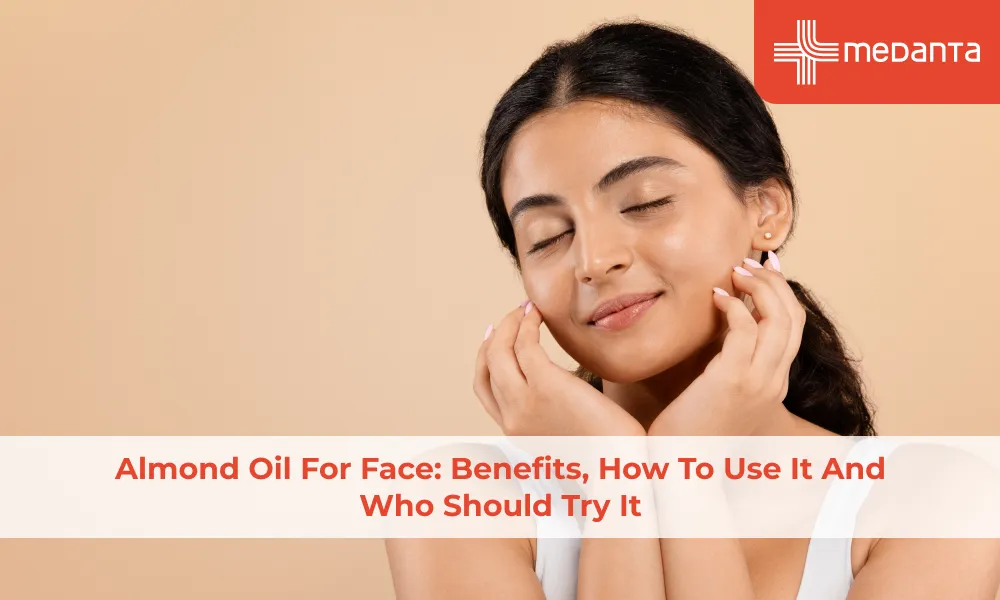
TABLE OF CONTENTS
- Types of Almond Oil: Sweet vs Bitter - Which to Use on Face?
- Nutritional Profile: What Makes Almond Oil Skin-Friendly
- Top Benefits of Using Almond Oil on Your Face
- How to Use Almond Oil for Different Skin Concerns
- Best Time to Apply Almond Oil - Night vs Day
- Almond Oil for Under-Eye Dark Circles – Does It Work?
- Is Almond Oil Safe for Oily and Acne-Prone Skin?
- DIY Face Packs Using Almond Oil
- How to Choose the Best Almond Oil for Your Skin
- Possible Side Effects and Patch Test Instructions
- Conclusion + Skincare Routine Integration Tips
- FAQs
- References
Almond oil has appeared in Indian beauty rituals for centuries including being applied to newborn skin, massaged into hair and used in Ayurvedic preparations. Rich in oleic and linoleic acids, vitamin E, and zinc, it has well-established roles in skin barrier function and hydration. The evidence base for specific claims varies; this article calibrates what almond oil actually delivers.
Types of Almond Oil: Sweet vs Bitter - Which to Use on Face?
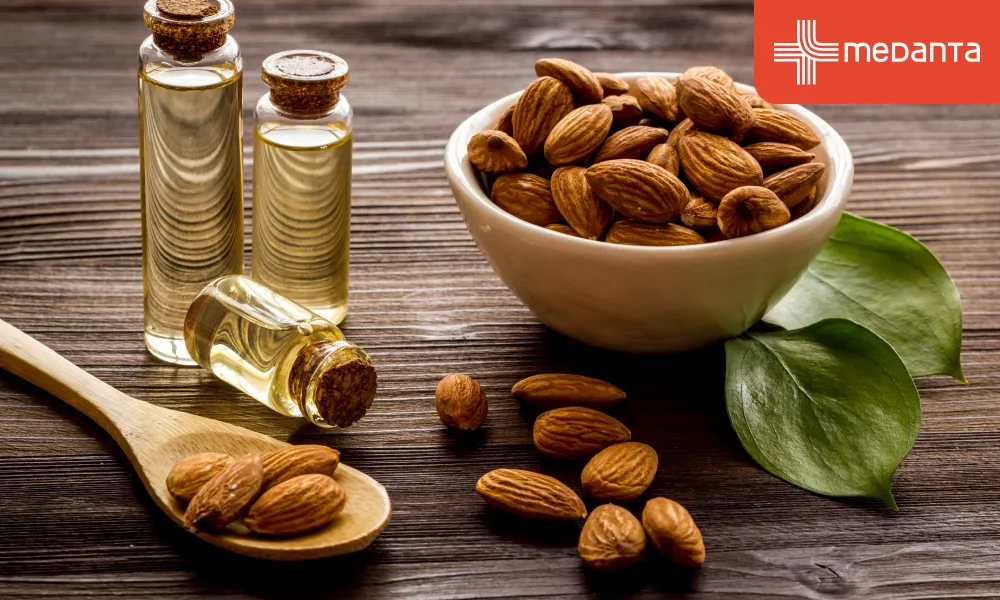
Sweet almond oil, pressed from the edible almond (Prunus amygdalus var. dulcis), is the standard cosmetic and culinary oil. It is light, mild-smelling, and safe for repeated topical use. On the other hand bitter almond oil contains amygdalin, which yields toxic hydrocyanic acid and is not intended for skin application. Any almond oil marketed for facial use should be sweet almond oil.
Nutritional Profile: What Makes Almond Oil Skin-Friendly
Sweet almond oil is approximately 70% oleic acid and 20% linoleic acid. Oleic acid penetrates the stratum corneum and supports barrier lipid composition. Linoleic acid is a ceramide precursor and anti-inflammatory - deficiency is associated with scaling and barrier disruption. Vitamin E acts as a skin antioxidant, though its concentration is modest rather than therapeutic.
Top Benefits of Using Almond Oil on Your Face
Moisturising is the best-supported benefit: Oleic acid improves transepidermal water loss and softens the stratum corneum. Almond oil is an emollient, not a humectant; it seals moisture in rather than drawing it from the environment.
Even tone: Fatty acids may modestly reduce PIH appearance over weeks. Almond oil does not contain tyrosinase inhibitors and cannot lighten skin tone beyond supporting normal cell turnover.
Anti-ageing: As an emollient, it temporarily plumps fine lines but does not penetrate deeply enough to stimulate collagen or reverse structural ageing.
How to Use Almond Oil for Different Skin Concerns
Dry or dehydrated skin: Apply two to three drops to damp skin after cleansing, before moisturiser; more effective than applying to completely dry skin
Post-inflammatory hyperpigmentation: Mix with a niacinamide serum and apply nightly; the oil provides an emollient base while niacinamide does the active pigment-modulating work
Under-eye area: Dab one drop per eye on the orbital bone before sleep; avoid getting oil directly in the eye
Dry patches or flaking: Use as a spot treatment; works well under a thicker moisturiser or balm as occlusive layering
Best Time to Apply Almond Oil - Night vs Day
Night application is generally preferable as skin repair processes peak in the evening, and emollient support during this window aids barrier recovery. Day application requires SPF over the top; almond oil contains no UV filter and vitamin E does not substitute for sunscreen.
For oily or combination skin, night-only targeted application to dry areas like cheeks, under-eye and around the nose - avoids comedogenic risk from all-over application.
Almond Oil for Under-Eye Dark Circles – Does It Work?
Dark circles are vascular (bluish), pigmentary (brownish), structural (shadowing from hollowness) or a combination. Almond oil helps most with pigmentary dark circles. Vascular or structural dark circles from genetics, sleep deprivation or hollowness will not respond to topical oil.
Under-eye darkening in Indian skin tones is frequently pigmentary - almond oil's best-supported rationale for this use. Expectations should remain realistic.
Is Almond Oil Safe for Oily and Acne-Prone Skin?
Almond oil rates 2 on the comedogenicity scale (0 = non-comedogenic, 5 = highly comedogenic) unlikely to cause breakouts for most people but possible in congestion-prone skin. Its high oleic acid content is associated with slight comedogenicity; linoleic-acid-dominant oils (rosehip, hemp seed) are generally better tolerated by oily and acne-prone skin.
For oily skin, use only on dry areas and avoid the T-zone. Full-face application on acne-prone skin carries comedogenic risk when better-tolerated alternatives exist.
DIY Face Packs Using Almond Oil
Besan and almond oil pack: Two teaspoons besan with a few drops of almond oil and rose water; gentle exfoliating and moisturising for normal to dry skin
Haldi and almond oil pack: Quarter teaspoon haldi, one teaspoon curd, a few drops of almond oil; anti-inflammatory and brightening; rinse thoroughly to avoid staining
Honey and almond oil mask: Equal parts raw honey and almond oil for fifteen minutes; deeply emollient for very dry or flaky skin in winter
All DIY preparations should be patch-tested before facial application.
How to Choose the Best Almond Oil for Your Skin
Cold-pressed or expeller-pressed oil retains the most vitamin E and fatty acid integrity; heat-extracted oils may have lower antioxidant content
100% pure sweet almond oil without added mineral oil, silicones or synthetic fragrance as fragrance in a facial oil increases sensitisation risk
Dark glass or opaque packaging slows oxidation; clear plastic bottles expose the oil to light degradation
Ingredient list and packaging matter more than brand or price.
Possible Side Effects and Patch Test Instructions
Tree nut allergy is the primary safety consideration and topical exposure can trigger sensitisation or contact dermatitis. Patch test: apply a small amount to the inner forearm, leave 24 hours and observe. No reaction means facial application is reasonable.
Breakouts within one to two weeks of starting indicate comedogenic sensitivity so stop use and allow the skin to clear. Almond oil lasts approximately one year; rancid oil has an unpleasant sour smell and should not be applied to skin.
Conclusion + Skincare Routine Integration Tips
Almond oil earns its place as a gentle, evidence-supported emollient for dry, normal and combination skin. It works best applied to damp skin as a final moisture-sealing step before bed, layered with an active serum rather than used alone as a treatment. For Indian skin tones prone to PIH, its vitamin E content and barrier emollient support make it a reasonable supplementary tool - not a replacement for actives like niacinamide or azelaic acid.
FAQs
Can I apply almond oil on my face every night?
Yes, for dry, normal and combination skin. Oily or acne-prone skin is better served by targeted application to dry areas only.
Does almond oil lighten skin tone or remove tan?
Almond oil does not contain skin-lightening agents and cannot alter melanin production. Emollient support for barrier function may modestly improve PIH appearance over time.
Is almond oil good for removing dark circles?
Modest improvement in pigmentary (brownish) dark circles has been shown with nightly application over six weeks. Vascular or structural dark circles do not respond to topical oil.
Can people with oily skin use almond oil on the face?
With caution - targeted use on dry patches (cheeks, under-eye) while avoiding the T-zone is safer than all-over application on sebum-heavy skin.
Which is better for the face – almond oil or coconut oil?
For most facial use, almond oil is preferable. Coconut oil has comedogenic properties and is more likely to clog pores. Almond oil's lighter texture and moderate comedogenicity make it better suited for facial application.
Does almond oil clog pores?
It can in congestion-prone skin - comedogenicity rating of 2 means low, not zero. Dry to normal skin is unlikely to experience clogging; active acne or very oily skin is more likely to notice congestion.
Can I mix almond oil with my moisturiser or serum?
Yes. One to two drops mixed into a moisturiser boosts emollient effect. Water-based serums and oil don't mix fully - apply serum first, then oil over it.
Is almond oil safe for sensitive or allergy-prone skin?
For people with a tree nut allergy it's not safe. Patch test and medical clearance are essential. For general sensitive skin without nut allergy, almond oil is well-tolerated. Choose unscented, 100% pure sweet almond oil to avoid fragrance-related sensitisation.
How long does it take for almond oil to show results on the face?
Hydration improvement is immediate. Skin smoothness improves within two to four weeks of consistent nightly use. Effects on PIH or dark circles take six to eight weeks at minimum. Consistent application matters more than occasional use.
Can almond oil reduce wrinkles and fine lines?
As an emollient, almond oil temporarily plumps fine lines by improving surface hydration - not by stimulating collagen or producing structural anti-ageing change. Genuine wrinkle reduction requires prescription retinoids or professional procedures alongside emollient care.
Is almond oil suitable for oily skin?
Targeted application on dry areas suits most combination skin. Whole-face application on oily or acne-prone skin risks comedones. Rosehip or hemp seed oil are generally better tolerated by oily skin than oleic-acid-dominant almond oil.
References
1. Vaughn AR, Clark AK, Sivamani RK, Shi VY. Natural oils for skin-barrier repair: ancient compounds now backed by modern science. Am J Clin Dermatol. 2018;19(1):103–17. https://doi.org/10.1007/s40257-017-0301-1
2. Muskett H, Banerjee S. Sweet almond oil: a review of its chemistry and application in skin care. Int J Pharm Phytopharmacol Res. 2013;3(1):62–7. https://www.researchgate.net/publication/349703614
3. Datta HS, Mitra SK, Paramesh R, Patwardhan B. Theories and management of aging: modern and ayurveda perspectives. Evid Based Complement Alternat Med. 2011;2011:528527. https://doi.org/10.1093/ecam/nep005
4. Sultana Y, Kohli K, Athar M, Khar RK, Aqil M. Effect of pre-treatment of almond oil on ultraviolet B-induced cutaneous photoaging in mice. J Cosmet Dermatol. 2007;6(1):14–9. https://doi.org/10.1111/j.1473-2165.2007.00293.x
5. Ahmad Z. The uses and properties of almond oil. Complement Ther Clin Pract. 2010;16(1):10–2. https://doi.org/10.1016/j.ctcp.2009.06.015