1068
1068
 Request Call Back
 Contact
 1068
1068
Medanta Expert Highlights the Evolution of Vascular Surgery Towards Minimal Access Care
Karnal, 25 September 2026: Vascular surgery is undergoing a significant transformation, thanks to progress in minimally invasive and endovascular techniques that enable doctors to treat complicated arterial and venous disorders via tiny access points rather than conventional open surgery. Leading this development, Gurugram-based Medanta – The Medicity, ranked India’s best hospital by Newsweek in 2026, uses advanced vascular interventions to help prevent limb amputation in diabetic patients, restore blood flow in blocked arteries and to quickly remove blood clots from the lungs that could be fatal.
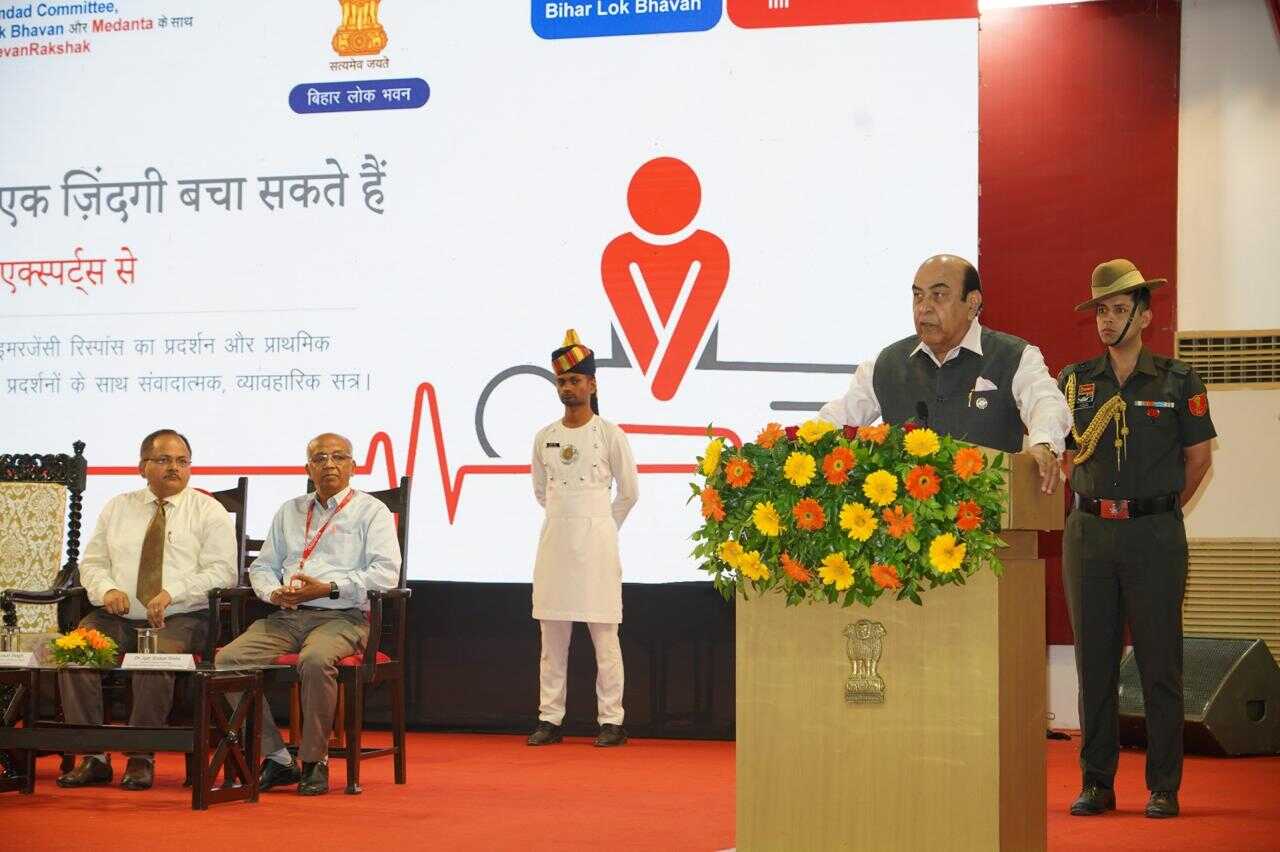
Speaking at a knowledge-sharing programme held in Karnal on 25th September 2026, Dr. Rajiv Parakh, Chairman, Peripheral Vascular and Endovascular Sciences at Medanta stated, “Currently in vascular surgery the aim is to obtain the greatest clinical benefit by using the least invasive method available. For a patient with diabetic foot or a severely blocked artery, our first concern is to restore blood flow before irreversible damage to the tissue takes place. With modern endovascular techniques, we can often reach the blockage through a small vascular access, open the artery and improve circulation without subjecting the patient to a major operation. This shift towards less invasive intervention can be critical in limb preservation.”
Dr. Parakh was delivering a lecture on the topic, “Minimal Access Options for Prevention of Amputations in Diabetic Foot, Clot Removal from Blocked Arteries and Pulmonary Embolism” at an event organised with Associations of Surgeons, Karnal. He pointed out that there is a particular urgency regarding timely vascular intervention in people who have diabetes since poor circulation can cause wounds on the foot to fail to heal and, when combined with infection and tissue damage, may lead to gangrene and amputation.
He stated that Medanta's vascular programme involves carrying out angioplasty and stenting in order to open up blocked arteries in the legs, together with specialised care for the diabetic foot. Dr. Parakh said, “The same approach of targeted, minimally invasive treatment is now being used in the case of acute arterial blockages and venous clots, since quickly restoring circulation can avoid serious complications. Vascular specialists are able to use catheter-based methods to reach the affected blood vessel, remove or decrease the amount of clot and get blood flow running again.”
A major advance has also been in the management of pulmonary embolism (PE) -- a condition in which a blood clot travels to the lungs, which can be fatal. Specialists can use advanced mechanical thrombectomy systems to aspirate the clots directly from the pulmonary arteries via a catheter.
Dr. Parakh said, “Pulmonary embolism can deteriorate rapidly, and in patients with significant clot burden, the ability to intervene directly and remove the clot can be extremely valuable. Mechanical thrombectomy has therefore provided us with an important minimally invasive method of treatment. Instead of relying only on medicines to dissolve the clot, certain patients can have the clot removed using a catheter, which allows us to deal with the obstruction directly and restore pulmonary circulation.”
He said the emergence of these technologies represents a broader transformation in the speciality -- moving from large incisions and open reconstruction to precision-guided interventions carried out via small vascular access points.
For people who have peripheral arterial disease, angioplasty and other blockage removal techniques like 1. Atherectomy (Shaving off the blockage) 2. Laser Angioplasty 3. Intravascular Lithotripsy 4. Aspiration Thrombectomy can be used to open up narrowed or blocked arteries, and stents may be inserted if necessary. In the case of diabetic foot, ensuring that there is a sufficient blood supply can be an important factor in allowing wounds to heal and in possibly avoiding major loss of tissue.
Dr. Parakh added, "The aim is not merely to carry out a less invasive procedure; rather it is to intervene at the right time and to preserve what is important to the patient--whether that is a limb, normal mobility or, in the case of pulmonary embolism, life itself."