1068
1068
 Request Call Back
 Contact
 1068
1068
Vitamin D Rich Foods: Best Natural Sources to Beat Deficiency
Published on: Sep 16, 2026
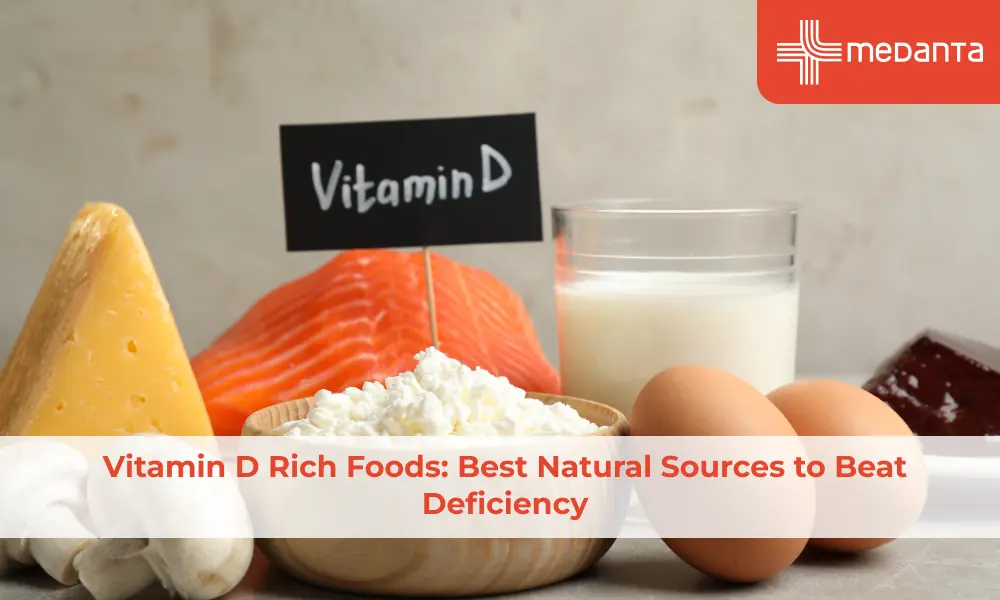
TABLE OF CONTENTS
- Why Vitamin D Is Important for the Body
- Best Vitamin D Rich Foods List
- Vitamin D3 vs Vitamin D2 Rich Foods
- Fatty Fish and Salmon: Top Natural Sources of Vitamin D
- Vitamin D Foods for Vegetarians
- Vitamin D Vegetables and Plant-Based Sources
- Signs of Vitamin D Deficiency
- How Much Vitamin D Do You Need Daily?
- Conclusion
- FAQs
- References
Vitamin D deficiency is one of the most prevalent nutritional problems in India and worldwide. Despite abundant sunlight, NFHS-5 data show deficiency affecting 70 to 90% of Indian adults, explained by indoor lifestyles, sunscreen and protective clothing use, darker skin tones that require longer sun exposure to produce equivalent vitamin D and diets that provide almost no vitamin D from food.
Sunlight is the primary source for most people, but dietary sources matter, especially for those who spend little time outdoors or have conditions that impair sun-triggered vitamin D synthesis. Knowing which foods provide meaningful amounts and understanding the difference between D2 and D3 help build a more effective strategy against deficiency.
Why Vitamin D Is Important for the Body
Calcium absorption: Vitamin D is essential for calcium absorption in your intestines (a process foundational to bone mineralisation and prevention of rickets and osteomalacia)
Bone strength: Inadequate vitamin D leads to reduced bone density and increased fracture risk, even when dietary calcium intake is adequate.
Muscle function: Vitamin D receptors regulate muscle protein synthesis and contraction and the deficiency causes weakness and increased fall risk in older adults.
Immune regulation: Vitamin D modulates innate and adaptive immune responses reducing respiratory infections, autoimmune conditions and inflammatory diseases
Mood and mental health: You have vitamin D receptors present throughout your brain and deficiency is associated with depression, seasonal affective disorder and cognitive decline.
Cardiovascular health: Low vitamin D levels are associated with hypertension, heart disease and stroke.
Hormone regulation: Vitamin D functions as a steroid hormone, influencing parathyroid hormone (PTH), insulin and several other hormonal pathways.
Best Vitamin D Rich Foods List
Most foods contain little or no vitamin D naturally. The richest dietary sources are:
Salmon (wild-caught): Approximately 600 to 1,000 IU per 100g cooked. Wild salmon contains significantly more vitamin D than farmed salmon (though both are excellent sources).
Mackerel (bangda): Approximately 360 to 400 IU per 100g. Widely consumed in coastal India particularly in Kerala, Goa, and Maharashtra, and a practical and affordable source of both vitamin D3 and omega-3 fatty acids.
Sardines (in oil): Approximately 270 IU per 100g. Canned sardines are affordable and widely available across India. Eating them with the soft bones intact also provides calcium
Tuna (canned in oil): Approximately 235 IU per 100g. A widely available and affordable source of vitamin D3 that does not require refrigeration
Egg yolk: Approximately 40 to 50 IU per yolk, rising to 200 IU in eggs from hens raised outdoors. Eggs are the most accessible non-fish dietary source of vitamin D in India available across all income levels
UV-exposed mushrooms (button or shiitake): 400 to 800 IU per 100g when exposed to UV light. Placing mushrooms gill-side up in direct sunlight for 15 to 30 minutes before cooking substantially increases their vitamin D content. This is the only plant-based method of producing meaningful dietary vitamin D.
Fortified breakfast cereals: 50 to 100 IU per serving. You should always go for label check as fortification levels vary between products.
Vitamin D3 vs Vitamin D2 Rich Foods
Dietary vitamin D comes in two main forms, D3 (cholecalciferol) and D2 (ergocalciferol), which differ in potency and food sources.
Property | Vitamin D3 (Cholecalciferol) | Vitamin D2 (Ergocalciferol) |
Source | Animal foods (fatty fish, egg yolk, liver, fortified dairy) | Plant/fungal foods (UV-exposed mushrooms, fortified plant milks) |
Biological potency | Higher: Raises serum 25(OH)D more effectively per IU | Lower: Approximately 30% less effective than D3 at raising serum levels |
Duration of action | Longer half-life in the body | Shorter half-life; cleared more rapidly |
Supplement form | Most common form in Indian supplements (Calcirol, Uprise D3) | Less common in supplements; used in some fortified foods |
Best food sources | Wild salmon, mackerel, sardines, tuna, egg yolk, beef liver | UV-exposed mushrooms, fortified soy milk, fortified orange juice |
Suitable for vegetarians? | No (derived from lanolin/animal sources) | Yes (derived from fungi or yeast) |
Fatty Fish and Salmon: Top Natural Sources of Vitamin D
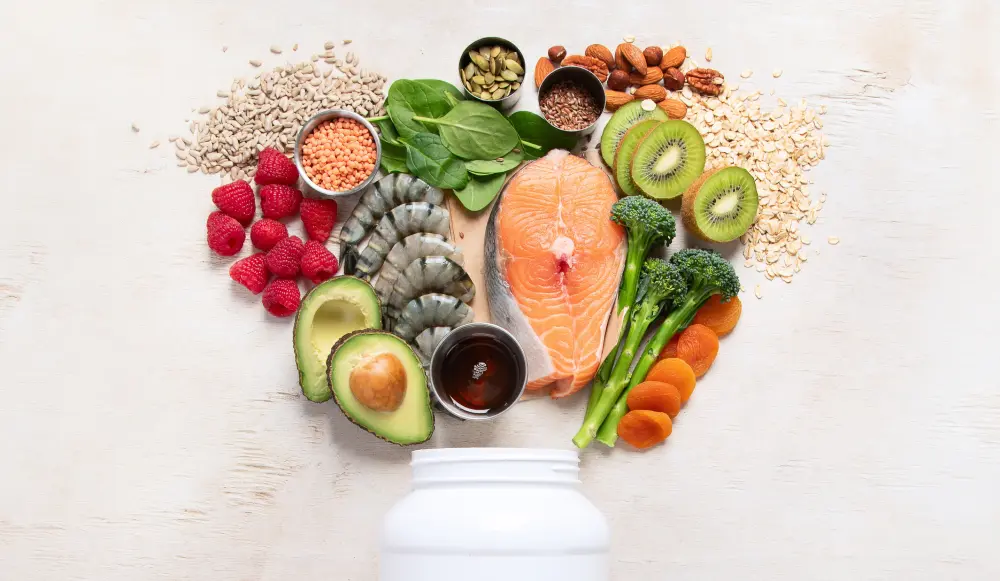
Fatty fish are the most reliable and potent dietary sources of vitamin D, their high fat content driving their richness in this fat-soluble vitamin.
Among all fish, wild-caught salmon is the richest source at 600 to 1,000 IU per 100g. Several Indian fish species like rohu (rohu carp) & pomfret are nearly as potent and far more practically accessible in the Indian market.
Baking and steaming retain more vitamin D than deep frying, which can result in losses of 20 to 40% through leaching into cooking oil and heat degradation.
Vitamin D Foods for Vegetarians
Strict vegetarians have very limited natural food sources of vitamin D. The practical options for Indian vegetarians are as follows.
Eggs (egg yolks): Each egg yolk provides 40 to 50 IU of vitamin D3, rising to 150 to 200 IU in eggs from free-range hens. Two to three eggs daily can provide 80 to 150 IU of vitamin D from food, meaningful but not sufficient on its own to maintain adequate serum levels.
UV-exposed mushrooms: Placed gill-side up in direct sunlight for 15 to 30 minutes before cooking, mushrooms can produce 400 to 800 IU of vitamin D2 per 100g. Button mushrooms, shiitake and portobello mushrooms all respond to UV exposure.
Fortified cow's milk (toned or double-toned): 100 to 150 IU per 250ml serving in most Indian branded milks fortified with vitamin D. Fortified milk is one of the most accessible vitamin D sources for vegetarians in India.
Fortified plant milks: Soy milk, almond milk, and oat milk are frequently fortified with 80 to 120 IU of vitamin D2 per 250ml serving.
Vitamin D Vegetables and Plant-Based Sources
Almost no vegetables contain meaningful amounts of vitamin D in their natural form. Vitamin D is a fat-soluble compound that plants, with the exception of fungi, cannot synthesise in significant amounts.
Mushrooms (UV-exposed): UV-exposed mushrooms are the only true plant-kingdom source of dietary vitamin D.
Fortified plant products: Plant-based milks, juices, and breakfast cereals fortified with vitamin D are the most practical way for vegans and strict vegetarians to obtain dietary vitamin D.
For vegans and strict vegetarians, dietary sources alone are generally insufficient to maintain adequate serum vitamin D levels. Supplementation with vitamin D2 (or vegan D3 from lichen) is typically required.
Signs of Vitamin D Deficiency
Bone pain and tenderness, particularly in the back, hips and legs, reflecting impaired bone mineralisation.
Muscle weakness and fatigue often described as a general heaviness or difficulty climbing stairs or rising from a seated position.
Frequent infections and slow recovery from illness reflecting impaired innate immune function.
If you have depression, low mood and seasonal mood changes you can link it to vitamin D receptor activity in the brain.
Hair loss, particularly diffuse hair thinning across the scalp associated with vitamin D receptor function in hair follicle cycling.
Slow wound healing, reflecting vitamin D's role in skin cell proliferation and immune mediated tissue repair.
In children: rickets (bowed legs, delayed tooth eruption, poor growth) which remains prevalent in India particularly among exclusively breastfed infants.
How Much Vitamin D Do You Need Daily?
The recommended dietary allowances (RDA) for vitamin D, based on ICMR 2020 guidelines for Indian adults, are as follows.
Infants (0 to 12 months): 400 IU (10 mcg) per day.
Children (1 to 18 years): 600 IU (15 mcg) per day.
Adults aged 19 to 70 years: 600 to 800 IU (15 to 20 mcg) per day.
Adults above 70 years: 800 IU (20 mcg) per day.
Pregnant and lactating women: 600 to 800 IU (15 to 20 mcg) per day.
Conclusion
Vitamin D deficiency is widespread in India despite abundant sunlight. Fatty fish including mackerel, hilsa, sardines and pomfret are the richest dietary sources. For vegetarians, UV-exposed mushrooms, fortified milk, and eggs provide the best options. Diet alone rarely provides enough; most deficient adults require supplementation of 1,000 to 2,000 IU daily under medical guidance. Prioritising both dietary sources and sensible sun exposure remains the most effective combined strategy for maintaining adequate vitamin D status.
FAQs
What foods are highest in vitamin D?
Wild-caught salmon (600 to 1,000 IU per 100g), mackerel, sardines, hilsa, and tuna are the highest natural food sources. UV-exposed mushrooms and fortified milk are the most practical options for vegetarians.
What is the best natural source of vitamin D?
Wild-caught fatty fish (salmon and hilsa) are the best natural food sources. For most Indians sunlight exposure remains the primary vitamin D source. Food and sun together provide more than either alone.
What is the difference between vitamin D2 and D3 foods?
Vitamin D3 comes from animal sources (fish, egg yolk, liver) and raises serum vitamin D levels more effectively than D2. Vitamin D2 comes from UV-exposed mushrooms and fortified plant foods and is the vegetarian-appropriate dietary form.
Which fish has the most vitamin D?
Wild-caught salmon provides the most vitamin D globally at 600 to 1,000 IU per 100g. Among Indian fish, hilsa and mackerel (bangda) are the richest sources, making them among the most practical in Indian diets.
Are there vitamin D rich foods for vegetarians?
Egg yolks, UV exposed mushrooms (placed in sunlight for 15 to 30 minutes before cooking) and fortified cow's milk or plant milks are the main vegetarian sources of vitamin D available in India.
What vegetables contain vitamin D?
Standard vegetables contain negligible vitamin D. UV-exposed mushrooms are the only exception; placing them gill-side up in direct sunlight for 15 to 30 minutes before cooking converts ergosterol to vitamin D2, providing 400 to 800 IU per 100g.
What are the signs of vitamin D deficiency?
Common signs include bone pain, muscle weakness and fatigue, frequent infections, low mood or depression, hair thinning and slow wound healing. In children, rickets (bowed legs, poor growth) is the most severe manifestation. A serum 25(OH)D test confirms deficiency.
How much vitamin D should I get daily from food?
Adults aged 19 to 70 years require 600 to 800 IU (15 to 20 mcg) of vitamin D per day. Food alone rarely provides this amount in Indian diets making supplementation of 1,000 to 2,000 IU daily commonly necessary for deficient individuals.
Does egg yolk contain vitamin D?
Yes. Each egg yolk contains 40 to 50 IU of vitamin D3 under standard conditions, rising to 150 to 200 IU in free-range hens raised outdoors. Eggs are the most accessible non-fish dietary vitamin D source.
Can food alone fix vitamin D deficiency?
Rarely. Dietary vitamin D from food typically provides only 100 to 200 IU daily even with a well-planned diet. Correcting established deficiency requires supplementation of 1,000 to 4,000 IU daily, guided by a doctor and monitored with serum 25(OH)D testing.
References
1. Ritu G, Gupta A. Vitamin D deficiency in India: prevalence, causalities and interventions. Nutrients. 2014;6(2):729–75. https://doi.org/10.3390/nu6020729
2. Holick MF. Vitamin D deficiency. N Engl J Med. 2007;357(3):266–81. https://doi.org/10.1056/NEJMra070553
3. Tripkovic L, Lambert H, Hart K, et al. Comparison of vitamin D2 and vitamin D3 supplementation in raising serum 25-hydroxyvitamin D status: a systematic review and meta-analysis. Am J Clin Nutr. 2012;95(6):1357–64. https://doi.org/10.3945/ajcn.111.031070
4. Indian Council of Medical Research. Nutrient requirements for Indians: recommended dietary allowances and estimated average requirements. ICMR-NIN. 2020. https://www.nin.res.in/RDA_2020.html
5. Jakobsen J, Smith C, Bysted A, Cashman KD. Vitamin D in wild and farmed Atlantic salmon (Salmo salar): what do we know?. Nutrients. 2019;11(5):982. https://doi.org/10.3390/nu11050982