1068
1068
 Request Call Back
 Contact
 1068
1068
Squat Benefits: Why This One Exercise Should Be Part of Every Fitness Routine
Published on: Sep 01, 2026
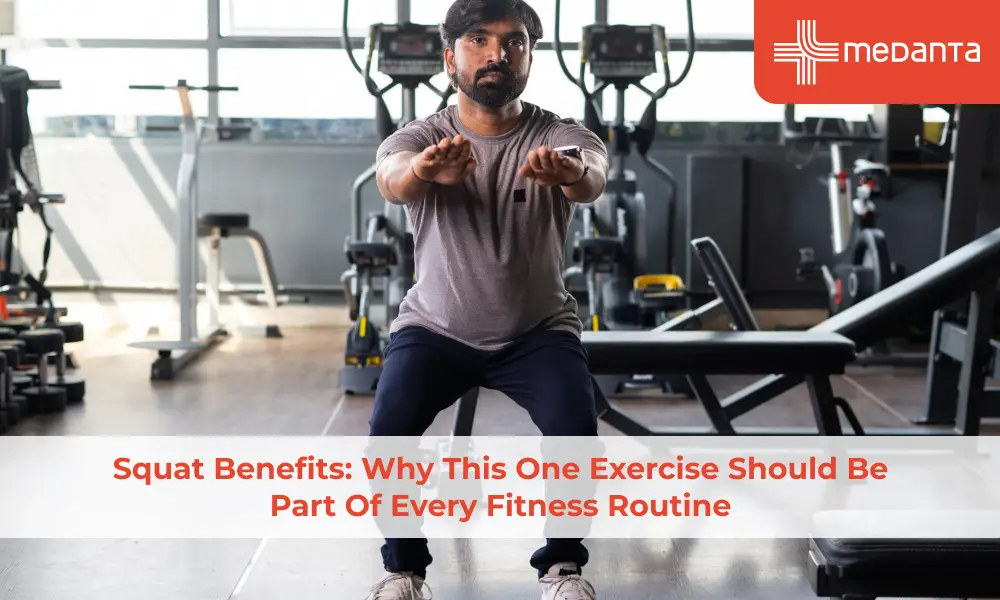
TABLE OF CONTENTS
- Muscles Worked During a Squat
- Top Physical Benefits of Squatting Regularly
- Squats for Men – Strength, Testosterone and Body Composition
- Squats for Women - Glutes, Posture and Bone Health
- Types of Squats and When to Use Them
- How to Do a Perfect Squat (Step by Step with Form Tips)
- Common Squat Mistakes That Cause Injury
- Squats vs Other Lower Body Exercises
- How Many Squats Per Day Is Ideal
- Squats for Weight Loss - What to Expect
- Can You Do Squats With Knee or Back Pain
- Conclusion + How to Add Squats to Your Routine
- FAQs
- References
Few exercises demand as much at once as the squat - loading the quadriceps, hamstrings, glutes, and core simultaneously while requiring coordination and a large range of motion. It generates more total muscle activation than most machine-based alternatives. The squat earned its foundational reputation by replicating the fundamental human movement of sitting and standing under load.
Muscles Worked During a Squat
The quadriceps are the primary movers, extending the knee on the way up. The gluteus maximus drives the movement out of the bottom. Hamstrings, adductors and calves contribute stabilisation throughout. The core (abdominals, spinal erectors & obliques) works isometrically under load. That neuromuscular demand is what makes squats functional.
Top Physical Benefits of Squatting Regularly
Key benefits are:
Muscle mass and strength in the lower body, developed more efficiently than any single-joint alternative
Improved knee joint stability from the strengthened surrounding musculature
Enhanced bone density - loaded squats are among the most effective weight-bearing exercises for bone remodelling
Better balance and proprioception particularly in older adults where fall risk is a clinical concern
Cardiovascular benefit is underestimated. Sets of 15 to 20 squats at moderate load elevate heart rate significantly and high-volume squat sessions rival cardio for caloric expenditure per unit time.
Squats for Men – Strength, Testosterone and Body Composition
Heavy compound exercises, squats included, produce an acute spike in testosterone and growth hormone - an effect larger with heavier loads and multi-joint movements than with isolated exercise. Over months this hormonal environment supports lean muscle gain and reduced body fat beyond what the exercise itself burns. Improved core and glute strength from squatting transfers to virtually every other physical activity from running and cycling to combat sports.
Squats for Women - Glutes, Posture and Bone Health
Squats are among the most effective glute building exercises and heavy hip extension places the gluteus maximus under significant tension through its full range. Strong glutes correct the anterior pelvic tilt that prolonged sitting produces, reducing lower back pain and improving posture. Bone density benefit is particularly relevant for women: loaded squats stimulate osteoblast activity in the femur and spine - the sites most at risk in postmenopausal osteoporosis.
Types of Squats and When to Use Them
Different types are:
Back squat: Barbell across the upper back; the classic strength building variant for overall lower body mass and strength.
Front squat: Barbell on the front deltoids; more quad dominant, demands greater core and thoracic mobility
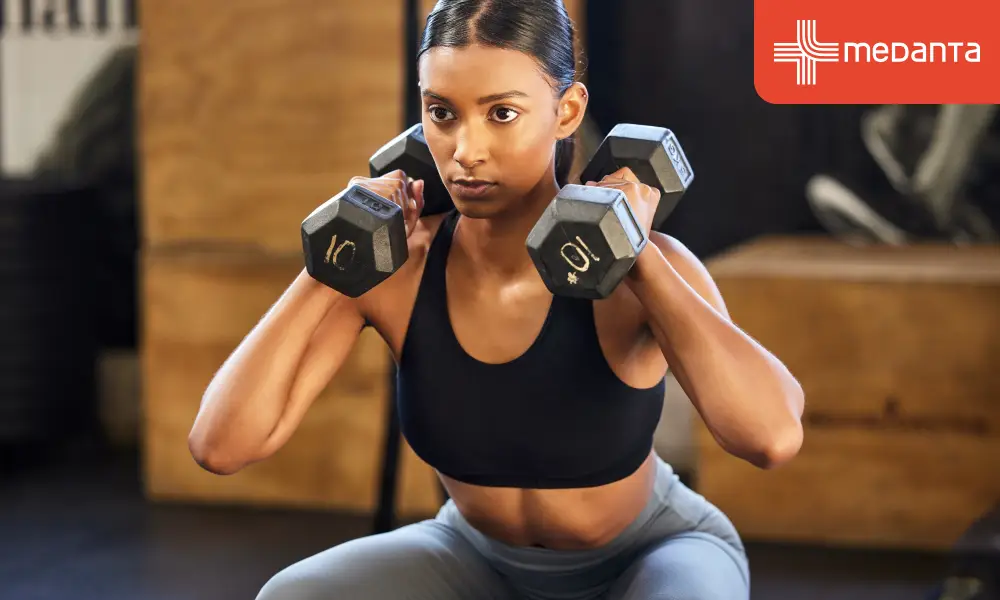
Goblet squat: Weight held at the chest; excellent for beginners learning mechanics & mobility limited individuals
Bulgarian split squat: Rear foot elevated; addresses strength imbalances between legs
Bodyweight and jump squats: Useful for warm-up, conditioning or home training without equipment.
How to Do a Perfect Squat (Step by Step with Form Tips)
Stand with feet shoulder-width and toes slightly outward. Brace the core as if absorbing a punch. Push hips back and bend the knees simultaneously - not knees first. Descend until thighs are parallel or lower. Keep chest up, spine neutral and knees tracking over the second and third toes. Drive through the full foot to stand.
Depth should never be forced at the expense of spinal position - a parallel squat with a neutral spine is preferable to a below-parallel squat with a rounding lower back.
Common Squat Mistakes That Cause Injury
They are:
Knees caving inward (valgus collapse) - corrected by cueing the knees out and targeted glute strengthening
Heels rising - usually limited ankle mobility; heel elevation or ankle stretches resolve most cases
Excessive forward torso lean - common when the bar sits too low or thoracic mobility is restricted
Half squats - reduced range of motion shifts load to the patellofemoral joint rather than the muscles.
Squats vs Other Lower Body Exercises
Exercise | Primary Muscles | Burn | Injury Risk | Equipment |
Squat | Quads, glutes, hamstrings, core | High | Low-Med | Barbell/bodyweight |
Deadlift | Hamstrings, glutes, back | High | Medium | Barbell |
Lunges | Quads, glutes & hip flexors | Medium | Low | Bodyweight/dumbbells |
Leg Press | Quads & glutes | Medium | Low-Med | Machine |
How Many Squats Per Day Is Ideal
The answer depends entirely on the goal and the load. For strength and muscle development, three to five sets of five to twelve reps two to three times per week with progressive overload is the research supported approach and daily squatting at heavy load provides insufficient recovery time. For bodyweight-only conditioning or mobility maintenance, higher frequency including daily practice is entirely appropriate. The popular "100 squats a day" challenge builds endurance and habit but falls short of the progressive stimulus needed for meaningful strength or hypertrophy gains.
Squats for Weight Loss - What to Expect
Squats burn calories and through muscle gains modestly raise resting metabolic rate. A set of 20 bodyweight squats burns roughly 8 to 10 calories and a heavy session can exceed 400 total. Fat loss is a function of caloric deficit and squats contribute but cannot outwork a surplus. Squats' greatest contribution is indirect: building muscle that raises resting metabolism.
Can You Do Squats With Knee or Back Pain
Pain is not an absolute contraindication to squatting. Most knee pain during squats results from technique errors like valgus collapse, heel rise or patellofemoral tracking. Goblet squats and box squats are often well tolerated even when standard squats cause pain. Physiotherapists increasingly use squat variations as rehabilitation tools.
Lower back pain during squats indicates a core engagement problem or load exceeding current capacity. A physiotherapist's guidance on load & form usually makes squatting accessible. Avoiding squats without specialist guidance often delays the strengthening that is part of rehabilitation.
Conclusion + How to Add Squats to Your Routine
Start with the goblet squat to learn the movement before adding a barbell. Two squat sessions per week, replacing leg press or leg extension machines deliver compound benefits those machines cannot replicate. For home training, bodyweight squats, jump squats and split squats give a complete lower body stimulus with no equipment. Progress the load consistently - squats improve when challenged, not when comfortable.
FAQs
How many squats should a beginner do per day?
Three sets of ten to fifteen bodyweight squats, two to three times per week, is a solid starting point. Rest days prevent muscle soreness that often derails beginners in the first two weeks.
Do squats help reduce belly fat?
Squats burn calories and build muscle that raises resting metabolic rate supporting fat loss overall. They don't spot reduce abdominal fat. Fat loss follows a consistent caloric deficit and squats contribute on both the expenditure and muscle mass side.
Is it okay to do squats every day?
Daily bodyweight squats are fine. Daily heavy barbell squats are not recommended without adequate recovery as muscle repairs during rest, not loading. Alternating variations and intensities allows higher frequency without overtraining.
Can squats cause knee pain or damage?
Squats done correctly rarely cause knee damage. Most squat related knee pain traces to valgus collapse, heels rising or forward knee travel - technique errors. A painful knee benefits from form correction and load reduction, not avoidance.
Do squats make your legs bigger or leaner?
Both depending on load and diet. Heavy low-rep squats with a caloric surplus build mass. Higher-rep squats in a deficit maintain muscle while fat reduces. Nutrition context determines the outcome not the exercise in isolation.
What is the difference between a squat and a deadlift?
Squats are knee-dominant primarily loading the quadriceps with significant glute involvement. Deadlifts are hip dominant, loading the hamstrings, glutes and spinal erectors from the floor. Both are fundamental compound lifts that complement rather than replace each other.
Should I do squats with weights or bodyweight?
Bodyweight squats build the movement pattern and suit conditioning. Weighted squats provide the progressive overload needed for strength and muscle development. Master bodyweight form first then add load - a goblet squat with a modest dumbbell is the natural first step.
Can women do squats safely during their period?
Exercise typically reduces menstrual cramps through endorphin release and improved blood flow. Load and intensity can be adjusted on high-discomfort days; there is no medical reason to avoid squatting during menstruation.
Do squats improve posture?
Yes. Strong glutes correct anterior pelvic tilt - the forward-tilted pelvis from prolonged sitting that produces lower back pain. Core engagement during squats also strengthens the postural muscles of the thoracic and lumbar spine.
What should I eat before doing squats for best results?
A mixed carbohydrate and protein meal one to two hours before works well like a bowl of roasted chana, a banana with peanut butter or paneer with roti all provide usable energy without digestive discomfort. Training fasted is not ideal for heavy squat sessions.
Who should avoid squats?
Those with recent knee replacement, acute disc herniation or active patellar tendinopathy should get physiotherapist clearance first. Pregnancy does not automatically contraindicate squats many women squat throughout with appropriate modification and guidance. Complete avoidance is rarely necessary.
References
1. Habif TP. Clinical Dermatology: A Color Guide to Diagnosis and Therapy. 6th ed. Philadelphia: Elsevier; 2016.
2. Rasi A, Soltani-Arabshahi R, Shahbazi N. Skin tag as a risk factor for impaired fasting blood glucose and dyslipidaemia. Singapore Med J. 2007;48(11):995–9.
https://smj.sma.org.sg/4811/4811a4.pdf
3. Shaheen MA, Abdel Fattah NS, Sayed YA, Saad AA. Assessment of serum leptin, insulin resistance and metabolic syndrome in patients with skin tags. J Eur Acad Dermatol Venereol. 2012;26(12):1552–7.
https://doi.org/10.1111/j.1468-3083.2011.04363.x
4. Gupta S, Aggarwal R, Gupta S, Arora SK. Human papillomavirus and skin tags: is there any association? Indian J Dermatol Venereol Leprol. 2008;74(3):222–5.
https://doi.org/10.4103/0378-6323.41366
5. Seery JP. Skin tags. In: Lebwohl MG, Heymann WR, Coulson IH, editors. Treatment of Skin Disease. 5th ed. Philadelphia: Elsevier; 2018. p. 748–9.