1068
1068
 Request Call Back
 Contact
 1068
1068
Persistent Thyroid Nodules with Normal Thyroid Function: What Does It Mean?
Published on: Jul 28, 2026
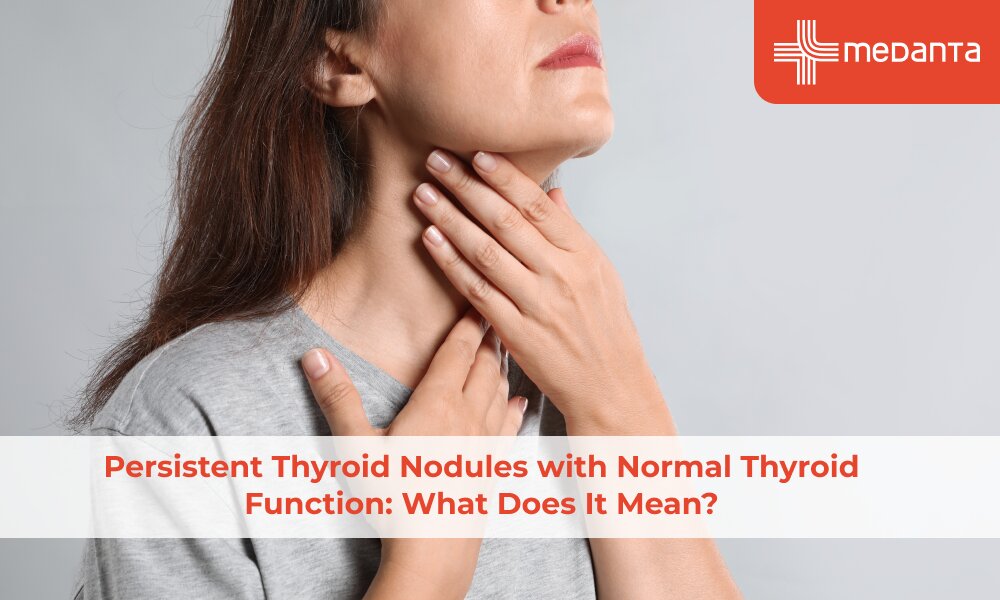
TABLE OF CONTENTS
- What Are Thyroid Nodules and How Common Are They?
- Can You Have Thyroid Nodules Even When Thyroid Tests Are Normal?
- Why Some Thyroid Nodules Persist Without Causing Symptoms
- Common Causes of Thyroid Nodules with Normal Thyroid Function
- Signs and Symptoms That Should Not Be Ignored
- How Persistent Thyroid Nodules Are Evaluated and Monitored
- When Does a Thyroid Nodule Need a Biopsy?
- Can a Normal Thyroid Nodule Turn Cancerous Over Time?
- Treatment Options for Persistent Thyroid Nodules
- When to See a Doctor and What to Expect During Follow-Up
- FAQs
- References
A thyroid ultrasound done for an unrelated reason picks up a nodule the patient had no idea existed. Blood tests come back entirely normal. The natural next question - what does this actually mean, and should I worry deserves a straightforward answer rather than vague reassurance. Thyroid nodules with normal thyroid function are common, mostly benign, and usually require nothing more than periodic monitoring.
What Are Thyroid Nodules and How Common Are They?
A thyroid nodule is a discrete lump within the thyroid gland - the small butterfly-shaped gland at the base of the throat that regulates metabolism. Nodules can be solid, fluid-filled or a mixture of both. The large majority never cause symptoms or require treatment.
Thyroid nodules are more common than most people realise, particularly among women and older adults and the likelihood of developing one only increases with age. More often than not, they cause no symptoms at all. Many are found by accident, spotted during a routine physical exam or an imaging test ordered for a completely unrelated reason.
The reassuring part is that the vast majority turn out to be harmless. Still, a small percentage can be cancerous, which is exactly why timely evaluation and proper follow-up matter, even when a nodule seems unlikely to be serious.
Can You Have Thyroid Nodules Even When Thyroid Tests Are Normal?
Yes, and this is the situation most people with incidentally discovered nodules find themselves in. Thyroid function tests including TSH, free T3, and free T4 measure hormone output, not structural anatomy. A nodule can exist within a gland that continues producing exactly the right amount of hormone particularly when the nodule is small or non-functional. Normal blood tests never rule out the presence of a nodule.
Why Some Thyroid Nodules Persist Without Causing Symptoms
Most thyroid nodules (like follicular adenomas, colloid cysts or areas of chronic thyroiditis) are benign focal overgrowths that neither produce excess hormone nor interfere with gland function. A nodule needs to reach significant size typically beyond 3 to 4cm before pressing on adjacent structures enough to cause swallowing or breathing symptoms. Smaller nodules, representing the vast majority found incidentally, persist quietly because they have no mechanism for causing symptoms.
Common Causes of Thyroid Nodules with Normal Thyroid Function
Different types of thyroid nodules cause an overgrowth with normal thyroid function. They are:
Benign follicular adenoma: The most common cause, a non-cancerous overgrowth of follicular cells that produces no excess hormone
Colloid cyst: A simple benign cyst often shrinking over time without intervention
Hashimoto's thyroiditis: Can produce nodular change in early phases before TSH is affected
Multinodular goitre: Multiple nodules within an enlarged gland, common in areas of historically low iodine intake
Thyroid carcinoma: Accounts for a small number of nodules, though true community prevalence of malignancy is considerably lower.
Signs and Symptoms That Should Not Be Ignored
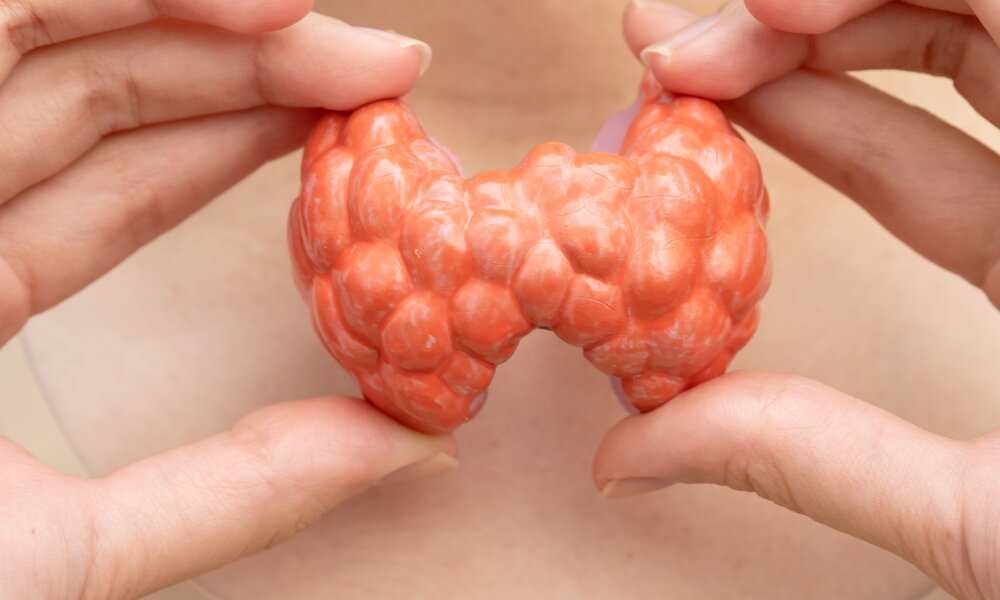
The majority of thyroid nodules cause nothing noticeable at all. However several symptoms need immediate evaluation regardless of how reassuring previous blood tests have been. They are:
Rapid growth of a previously stable nodule over weeks or months
Difficulty swallowing that is new and progressive
Hoarseness or voice change lasting more than two to three weeks without an obvious upper respiratory cause
Difficulty breathing or a sensation of pressure on the throat, particularly when lying flat
Swollen lymph nodes in the neck alongside a known thyroid nodule.
How Persistent Thyroid Nodules Are Evaluated and Monitored
Ultrasound is the cornerstone of nodule evaluation, characterising size, composition, echogenicity, margins, calcification patterns and vascularity. The ACR TIRADS classification assigns a score from 1 to 5 based on these features, guiding follow up intervals and biopsy decisions. Low-risk nodules may need imaging only every two to three years. Whereas higher-risk features shorten that interval or trigger biopsy.
When Does a Thyroid Nodule Need a Biopsy?
Fine needle aspiration cytology (FNAC) samples cells from the nodule under ultrasound guidance. It is recommended when nodules reach certain size thresholds based on ultrasound risk: high-suspicion nodules from 1cm, intermediate-suspicion from 1.5cm, low-suspicion from 2.5cm. Purely cystic nodules do not need FNAC.
Can a Normal Thyroid Nodule Turn Cancerous Over Time?
Benign nodules very rarely transform into cancer and malignancy risk applies primarily at initial diagnosis rather than to established benign nodules monitored over years. If follow-up imaging shows rapid growth, new calcifications or a change in character then it needs re-evaluation or repeat biopsy but most such nodules remain benign on cytology.
Treatment Options for Persistent Thyroid Nodules
Most thyroid nodules need no active treatment beyond surveillance. Options for those causing symptoms, growing significantly or showing concerning features include hemithyroidectomy or total thyroidectomy. Minimally invasive alternatives includding radiofrequency ablation (RFA) and ethanol ablation are increasingly available at specialist centres in India for benign symptomatic nodules. TSH-suppression with levothyroxine is rarely used nowadays given limited efficacy and cardiovascular risks.
When to See a Doctor and What to Expect During Follow-Up
A newly discovered nodule needs ultrasound with formal TIRADS scoring, TSH measurement, and clinical assessment of voice, swallowing, and lymph nodes. A nodule with stable, benign characteristics over five or more years may eventually come off routine surveillance. Any new symptom like voice change, swallowing difficulty or neck swelling should prompt an unscheduled evaluation.
FAQs
I can feel a lump in my neck, but my thyroid reports are normal. Should I worry?
A palpable neck lump with normal thyroid function tests needs ultrasound characterisation before any conclusion is drawn. Normal blood tests confirm the gland is producing hormones correctly but say nothing about structural abnormalities. An ultrasound will clarify whether the lump is a thyroid nodule, a lymph node or something else entirely and guide next steps.
Can thyroid nodules go away on their own?
Cystic nodules sometimes shrink or resolve spontaneously as fluid is reabsorbed. Solid nodules rarely disappear completely though they may remain stable for years. Nodules associated with Hashimoto's thyroiditis can fluctuate in size with disease activity. Spontaneous resolution of a solid nodule is uncommon enough that it shouldn't be relied on as a management strategy without medical oversight.
Why do I have a thyroid nodule if my thyroid is working normally?
Structural changes in thyroid tissue like nodule formation and functional changes in hormone output are largely independent processes. Most nodules arise from focal overgrowth of normal cells, not from cells behaving abnormally in terms of hormone secretion. A well-functioning gland can simultaneously harbour a nodule, just as a healthy organ can have a structural variant without functional consequence.
Is every thyroid nodule a sign of cancer?
No the majority of thyroid nodules evaluated through biopsy are benign. Thyroid cancer does occur, but it represents a minority of nodules and is additionally one of the most treatable cancers when identified early. The presence of a nodule is an indication for proper evaluation, not for alarm.
How often should I get a thyroid nodule checked?
Frequency depends on the nodule's ultrasound risk category. High-suspicion nodules or those after an indeterminate biopsy need follow-up every 6 to 12 months initially. Low-risk nodules monitored over years of stability can extend to every 2 to 3 years.
Can stress cause thyroid nodules to develop?
No direct causal link between psychological stress and thyroid nodule formation has been established. Stress does affect immune function and inflammation, which may influence autoimmune thyroid conditions like Hashimoto's thyroiditis but this is different from directly causing a nodule to grow.
Will I need surgery if my thyroid nodule does not disappear?
Persistence alone is not a surgical indication. Surgery is considered when a nodule causes compressive symptoms, when biopsy shows malignancy or a high-risk indeterminate result or when a nodule grows significantly on serial imaging. Most stable, benign nodules are monitored without any surgical intervention.
Can thyroid nodules cause difficulty swallowing or breathing?
Nodules larger than roughly 3 to 4cm or those positioned posteriorly pressing on the oesophagus or trachea can cause these symptoms. Small or moderate-sized nodules rarely cause difficulty swallowing or breathing. Any new swallowing or breathing difficulty needs immediate clinical review regardless of previous nodule assessments.
Are there any foods I should avoid if I have a thyroid nodule?
For most people with a benign nodule and normal thyroid function, no specific dietary restriction is necessary. Excessive intake of raw goitrogenic vegetables (cabbage, cauliflower, broccoli) is sometimes advised against in large quantities for those with borderline thyroid function, though cooked forms have minimal effect. Iodine intake should stay within normal ranges.
What changes in a thyroid nodule should prompt me to see a doctor immediately?
Rapid increase in nodule size over weeks, new onset of hoarseness or voice change, difficulty swallowing that is progressive, visible or palpable neck swelling outside the thyroid area or any breathing difficulty associated with a known nodule all need prompt medical review.
References
1. Haugen BR, et al. 2015 American Thyroid Association management guidelines for adult patients with thyroid nodules and differentiated thyroid cancer. Thyroid. 2016;26(1):1–133. DOI: 10.1089/thy.2015.0020
https://doi.org/10.1089/thy.2015.0020
2. Dean DS, Gharib H. Epidemiology of thyroid nodules. Best Pract Res Clin Endocrinol Metab. 2008;22(6):901–911. DOI: 10.1016/j.beem.2008.09.019
https://doi.org/10.1016/j.beem.2008.09.019
3. Tessler FN, et al. ACR Thyroid Imaging, Reporting and Data System (TI-RADS): white paper of the ACR TI-RADS committee. J Am Coll Radiol. 2017;14(5):587–595. DOI: 10.1016/j.jacr.2017.01.046
https://doi.org/10.1016/j.jacr.2017.01.046
4. Cibas ES, Ali SZ. The 2017 Bethesda System for reporting thyroid cytopathology. Thyroid. 2017;27(11):1341–1346. DOI: 10.1089/thy.2017.0500
https://doi.org/10.1089/thy.2017.0500
5. Durante C, et al. The natural history of benign thyroid nodules. JAMA. 2015;313(9):926–935. DOI: 10.1001/jama.2015.0956
https://doi.org/10.1001/jama.2015.0956
6. Chung SR, et al. Efficacy of thermal ablation for autonomously functioning thyroid nodules: a systematic review and meta-analysis. Eur Radiol. 2022;32(2):1009–1017. DOI: 10.1007/s00330-021-08199-1