1068
1068
 Request Call Back
 Contact
 1068
1068
Nose Strips for Blackheads: Do They Work and How to Use Them
Published on: Sep 30, 2026
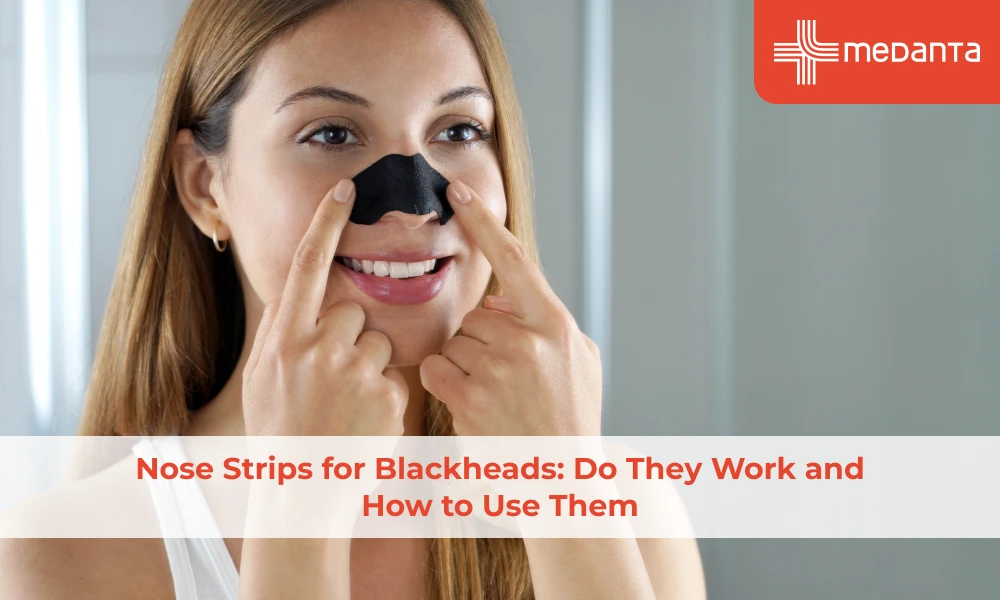
TABLE OF CONTENTS
- What Are Nose Strips and How Do They Work?
- Blackhead Removal Strips vs Blackhead Removal Tape
- Do Nose Pore Strips Actually Remove Blackheads?
- How to Use a Blackhead Nose Strip Correctly
- Who Should Avoid Nose Strips?
- Best Practices for Deep Cleansing Pore Strips
- Side Effects of Overusing Nose Strips
- Alternatives to Nose Strips for Blackhead Removal
- Conclusion
- FAQs
- References
Nose strips are one of the best-selling skincare products in India and globally, stacked in every pharmacy alongside cleansers and toners. Affordable, quick to use, and visually satisfying when they pull out the contents of pores, their appeal is understandable. Blackheads on the nose are among the most common and most visible skin concerns, particularly in tropical and subtropical climates like India where heat, humidity, and pollution increase sebum production and pore congestion year-round.
But the satisfaction of a peel is not the same as a clinical result. This article explains what nose strips actually do, how long results last, and how to use them without damaging skin.
What Are Nose Strips and How Do They Work?
Nose strips are adhesive patches made from a fabric or paper base coated with polyquaternium-37, a cationic polymer that bonds to the oily surface of skin and the waxy material inside pores. When the strip dries and is peeled off, it physically lifts material from the pore openings by mechanical adhesion.
The strip adheres to the uppermost part of the pore plug, which typically extends above the skin surface. When the pore contents are sufficiently soft (most reliably achieved when the skin has been steamed or wetted), the adhesive draws them upward and out as the strip is removed. The result is a strip dotted with small whitish or yellowish projections: these are the sebaceous filaments and blackhead plugs that have been extracted.
Blackhead Removal Strips vs Blackhead Removal Tape
These terms are used interchangeably but refer to different products.
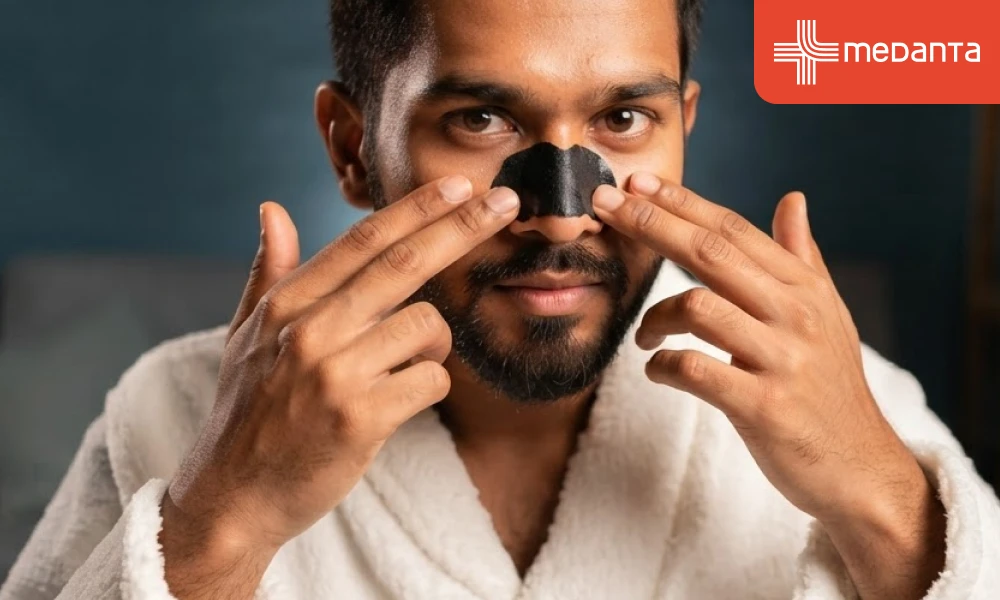
Blackhead removal strips (nose strips): Pre-cut adhesive patches shaped specifically for the nose. Designed for single use, typically left on for five to fifteen minutes until dry, then peeled away.
Blackhead removal tape: A broader category of roll-format adhesive tape products that can be cut to any size and applied to multiple facial areas including the chin, forehead and cheeks. Some formulations use similar adhesive chemistry to nose strips. Others use hydrocolloid or charcoal-activated adhesives. Blackhead removal tape is generally less precisely calibrated for facial skin and requires more care in application to avoid irritation.
Do Nose Pore Strips Actually Remove Blackheads?
Nose pore strips can lift away some surface debris, but the effect doesn't last. What they mostly remove are sebaceous filaments that are the normal oil and dead skin cell buildup that naturally refills itself over time. They may pull out surface-level blackheads too, but deeper ones tend to resist this method.
What pore strips can't do is shrink pore size or stop blackheads from coming back. According to studies while pore strips remove surface material effectively, they do not significantly alter long-term pore size or reduce blackhead recurrence.
Without addressing the underlying causes including excess sebum production, inadequate exfoliation and humidity, blackheads return within days to weeks regardless of how often strips are used.
How to Use a Blackhead Nose Strip Correctly
Correct application significantly improves results and reduces the risk of skin irritation.
Cleanse the nose thoroughly with a gentle face wash to remove surface oil and makeup.
Wet the nose thoroughly with water or steam. Moisture softens pore contents enough for the adhesive to draw them out. A warm damp cloth held over the nose for three to five minutes maximises pore opening.
Apply the strip with the smooth side down, pressing firmly onto the nose from the bridge down across the nostrils. Smooth out any air bubbles or lifted edges.
Leave the strip on for ten to fifteen minutes until it feels stiff and dry. Peeling before it is fully dry significantly reduces the amount of material extracted.
Peel from the outside edges inward and from the bottom upward in a slow, controlled movement. Pulling quickly increases the risk of capillary damage. After removal rinse the nose with cool water to close the pores.
Apply a niacinamide serum or pore-minimising toner after use. Freshly stripped pores are temporarily more open and vulnerable to dirt and sebum reaccumulation.
Who Should Avoid Nose Strips?
If you have certain skin types and conditions you should avoid using nose strips. These are:
Sensitive or reactive skin: The mechanical adhesion of nose strips can trigger redness, inflammation, and skin barrier disruption in those with reactive skin, rosacea, or skin that flushes easily
Active acne or inflamed skin: Applying a nose strip over active pustules or inflamed skin causes significant pain on removal and can rupture inflamed follicles, spreading bacteria and worsening the breakout
Skin using retinoids or chemical exfoliants: Retinoids (tretinoin, adapalene) and chemical exfoliants such as glycolic acid and salicylic acid thin the outermost skin layers, making the skin significantly more fragile. Using nose strips while on these treatments can strip healthy skin cells and cause severe redness, rawness and potential scarring.
Best Practices for Deep Cleansing Pore Strips
Limit use to once per one to two weeks at most. More frequent use does not improve results and increases the risk of skin barrier damage.
Always steam or thoroughly wet the nose beforehand. A facial steamer is more effective but not necessary.
Follow strip use with a salicylic acid (BHA) toner or niacinamide serum. Salicylic acid dissolves within the pore lining breaking down sebum that the strip did not reach. Niacinamide reduces sebum production over time.
Do not use strips as a standalone blackhead treatment. They are most effective as a periodic removal step within a broader routine that includes daily cleansing, regular chemical exfoliation, and non-comedogenic moisturisers.
Side Effects of Overusing Nose Strips
Used too frequently or incorrectly, nose strips cause a predictable set of problems.
They are:
Enlarged pore appearance
Redness and capillary damage
Increased blackhead recurrence.
Alternatives to Nose Strips for Blackhead Removal
For sustained blackhead reduction rather than temporary physical removal, the following alternatives have stronger evidence and longer-lasting results.
Salicylic acid (BHA) cleansers and toners: Salicylic acid at 0.5 to 2% concentration dissolves within the pore lining breaking down the sebum and dead cell plugs that form blackheads. Used daily, a salicylic acid toner is more effective for long-term blackhead reduction than periodic strip use.
Niacinamide serums: Niacinamide (vitamin B3) at 5 to 10% reduces sebum production, improves pore texture and strengthens the skin barrier. Regular use over eight to twelve weeks produces measurable reductions in pore size and blackhead formation.
Retinoids: They are the most common evidence backed treatment for blackheads. They increase skin cell turnover, prevent dead cells from clogging pores and reduce sebum production.
Clay masks and professional treatments: Bentonite or kaolin clay masks absorb excess sebum without mechanical adhesive trauma (they are better for sensitive skin). Professional extraction and chemical peels at dermatology clinics across India produce more thorough and longer-lasting results than over-the-counter strips.
Conclusion
Nose strips remove superficial pore contents effectively and produce immediate visible results, but they do not address the causes of blackhead formation. Used correctly, once or twice a month with proper preparation and aftercare, they are a reasonable occasional tool for nose pore management. Used incorrectly or too frequently, they damage the skin barrier, enlarge pores over time, and increase blackhead recurrence.
FAQs
Do nose strips really remove blackheads?
Nose strips physically remove surface pore contents, including sebaceous filaments and some shallow blackheads. They do not extract deeply embedded blackheads or address the underlying causes of blackhead formation, so results are temporary and blackheads return within days to weeks.
How do you use a blackhead removal strip correctly?
Cleanse the nose, wet it thoroughly with water or steam to soften pore contents, apply the strip firmly, leave until completely dry (ten to fifteen minutes), then peel slowly from the outside edges inward. Follow with a pore toner or niacinamide serum to close pores and control sebum.
Are blackhead nose strips safe for regular use?
Nose strips used once every one to two weeks are generally safe for normal and oily skin types. More frequent use damages the skin barrier, strips natural lipids and can enlarge pore appearance over time. Those with sensitive, dry or retinoid-treated skin should use strips rarely or not at all.
What is the difference between nose strips and pore strips?
Nose strips are pre-cut adhesive patches shaped for the nose. Pore strips are the broader category term, which includes nose strips as well as strips and tapes designed for the chin, forehead or full face. The adhesive mechanism is the same: mechanical adhesion lifts pore contents on removal.
How often should you use deep cleansing pore strips?
Once every one to two weeks is the recommended frequency for most skin types. Using strips more often does not improve results and progressively damages the skin barrier, causing chronic dryness, redness, and paradoxically more visible pores over time. Less frequent use combined with daily chemical exfoliation is more effective.
Can nose strips damage your skin?
Yes, particularly with overuse or incorrect technique. Risks include skin barrier damage, redness, broken capillaries (if peeled too quickly), enlarged pore appearance over time and worsening of blackheads through reactive sebum overproduction. Strips used on inflamed or retinoid-treated skin carry a higher risk of significant damage.
Do blackhead removal strips work on all skin types?
Strips work best on oily skin with visible, near-surface blackheads. They are less effective on dry skin (where pores are less congested) and can cause irritation on sensitive or reactive skin. Those with rosacea, active acne, or skin on prescription retinoids or chemical exfoliants should avoid nose strips entirely.
What is the best way to prepare skin before using a nose strip?
Cleanse the nose with a gentle face wash, then wet the skin thoroughly with warm water or steam for three to five minutes to soften pore contents. Do not apply any oil, serum, or moisturiser before the strip as surface products prevent the adhesive from bonding to the skin and significantly reduce extraction results.
Are there natural alternatives to nose pore strips?
Clay masks using bentonite or kaolin clay absorb excess sebum from pores without mechanical adhesive trauma. Multi-masking with a clay mask on the nose and a hydrating mask elsewhere is a gentler alternative. For sustained blackhead reduction salicylic acid cleansers and niacinamide serums are more effective long-term options than any physical removal method.
Why do blackheads come back after using nose strips?
Because nose strips remove the visible symptom without addressing the cause. Excess sebum production, inadequate exfoliation, humidity and hormonal factors continuously refill pores. Sebaceous filaments naturally regrow within two to four weeks. Addressing blackhead recurrence requires daily chemical exfoliation and sebum control & not repeated physical extraction.
References
1. Draelos ZD. The science behind skin care: cleansers. J Cosmet Dermatol. 2018;17(1):8–14. https://doi.org/10.1111/jocd.12469
2. Baumann L. Cosmetic Dermatology: Principles and Practice, 2nd ed. McGraw-Hill. 2009. https://www.mhprofessional.com/9780071490627
3. Cunliffe WJ, Gould DJ. Prevalence of facial acne vulgaris in late adolescence and in adults. Br Med J. 1979;1(6171):1109–10. https://doi.org/10.1136/bmj.1.6171.1109
4. Kircik LH. Salicylic acid 2% in polyhydroxy acid foam vehicle for self-administered treatment of mild to moderate acne vulgaris. J Drugs Dermatol. 2013;12(3):282–8. https://pubmed.ncbi.nlm.nih.gov/23545697
5. Thielitz A, Abdel-Naser MB, Fluhr JW, Zouboulis CC, Gollnick H. Topical retinoids in acne: an evidence-based overview. J Dtsch Dermatol Ges. 2008;6(12):1023–31. https://doi.org/10.1111/j.1610-0387.2008.06741.x