1068
1068
 Request Call Back
 Contact
 1068
1068
Mangosteen Fruit: Health Benefits, Nutrition and Uses
Published on: Sep 17, 2026
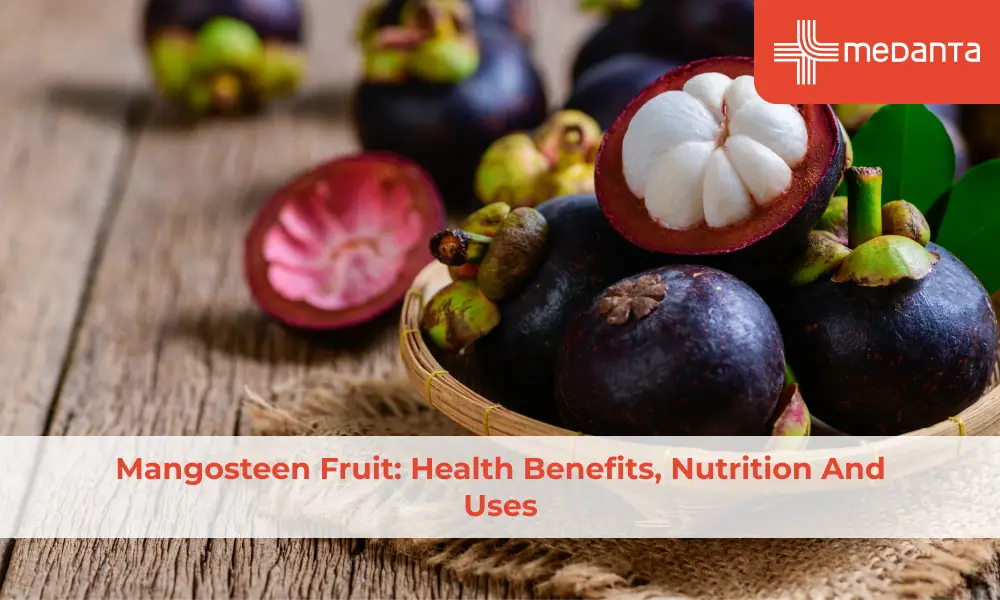
TABLE OF CONTENTS
Mangosteen has carried the title 'queen of fruits' for over a century - a distinction earned through an unusual combination of flavour, texture and a depth of bioactive compounds that few tropical fruits can match.
In India, mangosteen grows primarily in Kerala, coastal Karnataka, and the Andaman and Nicobar Islands, and takes seven to ten years from planting to produce its first fruit - which partly explains its scarcity and relatively high price. Fresh mangosteen is available in South Indian markets from May to August and can be found year-round in dried, powdered, or juice form in health food stores across India.
What Is Mangosteen Fruit?
Mangosteen (Garcinia mangostana) is a tropical evergreen tree native to Maritime Southeast Asia that produces a dark purple or reddish-purple fruit approximately the size of a tangerine.
The fruit has a thick, tough outer rind called the pericarp that is deep violet to brownish-purple when fully ripe. Inside is soft, white, segmented flesh each enclosing a seed. The flesh has a distinctive flavour: the closest comparison is a combination of peach, lychee and a delicate floral sweetness, with a subtle tartness.
Mangosteen is botanically unrelated to the mango the two share only the first five letters of their names. In India, confusion between the two is common, particularly in the northern states where mangosteen is rarely available fresh.
Nutritional Value of Mangosteen
Mangosteen is a low-calorie fruit whose greatest nutritional distinction lies in its exceptionally high concentration of xanthones (polyphenolic compounds found almost exclusively in the Clusiaceae family of plants). The nutritional values of raw mangosteen per 100 grams of edible flesh are:
Calories: 73 kcal
Carbohydrates: 17.9 g (of which sugars: 16.8 g)
Dietary fibre: 1.8 g
Protein: 0.4 g
Fat: 0.6 g
Vitamin C: 2.9 mg (approximately 3% of the adult daily requirement)
Folate (Vitamin B9): 31 mcg (approximately 8% of the adult daily requirement)
Manganese: 0.102 mg
Magnesium: 13 mg
Potassium: 48 mg
Mangosteen is not a powerhouse of any single vitamin or mineral but its vitamin C content is modest compared to Indian gooseberry (amla) or guava. What makes mangosteen nutritionally significant is the xanthone content of its rind. The purple pericarp contains over 40 identified xanthones, the most studied of which is alpha-mangostin, which has been the subject of hundreds of laboratory studies examining its antioxidant, anti-inflammatory, antimicrobial and potential anti-cancer properties.
Top Health Benefits of Mangosteen
The health benefits of mangosteen are:
Potent antioxidant activity: Mangosteen contains xanthones, a group of powerful antioxidants that help protect cells from free radical damage and support overall health.
Anti-inflammatory properties: The natural compounds found in mangosteen (alpha-mangostin) carry anti-inflammatory properties that may help bring down inflammation levels including COX-1, COX-2 and the NF-kB transcription factor in the body.
Supports heart health: Its antioxidants (alpha-mangostin) may help improve cholesterol levels and protect blood vessels, both of which contribute to better cardiovascular health over time.
May support blood sugar regulation: Certain compounds in mangosteen (gamma-mangostin and other xanthones) appear to slow carbohydrate digestion, which can help reduce those sharp blood sugar spikes after meals.
Antibacterial and antifungal activity: Several xanthones from mangosteen pericarp inhibit the growth of Staphylococcus aureus (including MRSA), Streptococcus and Helicobacter pylori, lending a hand to overall immune health.
Mangosteen for Skin and Immunity
Two of the most common reasons people seek out mangosteen (in juice, powder, and capsule form) are skin health and immune support.
For skin health, the most relevant properties of mangosteen are its antioxidant activity and its anti-inflammatory and antibacterial effects. High-antioxidant foods slow skin ageing by neutralising free radicals before they can damage skin cells.
For immunity, mangosteen supports the immune system through multiple pathways. Its xanthones modulate immune cell activity and reduce the excessive inflammatory response that underlies both acute illness and chronic immune dysregulation. Its vitamin C content contributes to mucosal barrier integrity (the first line of defence against respiratory and gastrointestinal pathogens), and its folate content supports the production and function of white blood cells.
How to Eat Mangosteen
The thick purple rind is not edible as it is extremely bitter and astringent and the purple pigment stains clothing and surfaces persistently.
Score and twist: Using a sharp knife, score around the fruit's circumference, cutting through the rind only, not the flesh underneath. Twist the two halves in opposite directions and the top will lift away to reveal the white, segmented flesh, ready to eat straight with a spoon.
Seeds: Some segments contain seeds that are bitter and should not be eaten. The number of petal-like lobes on the flat base of the fruit corresponds to the number of segments inside and to the number of seeds.
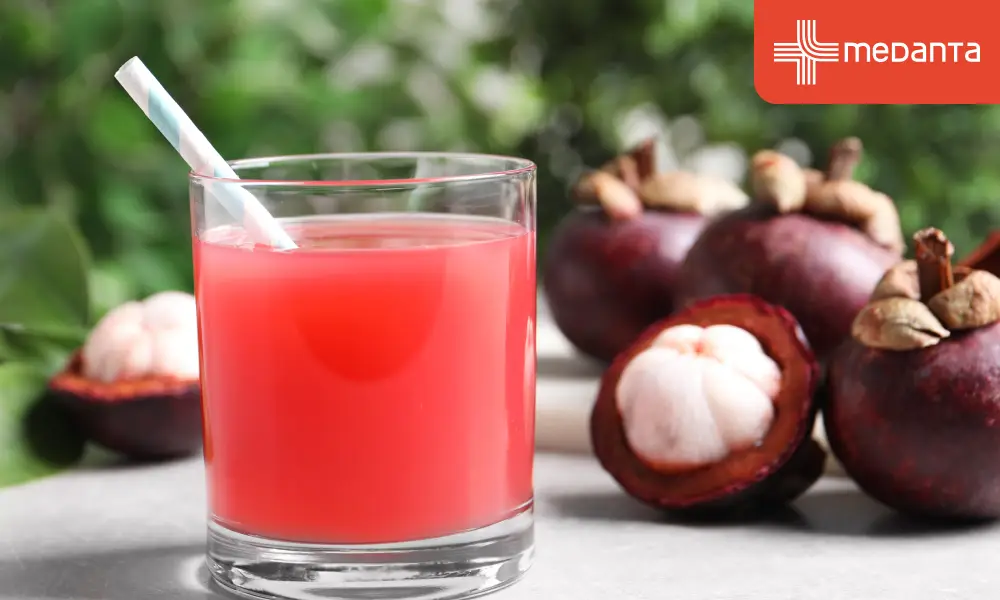
Culinary uses: Beyond eating fresh, mangosteen flesh is used in smoothies, fruit salads, sorbets and desserts. In India, dried mangosteen slices and mangosteen powder can be added to curd, smoothies or herbal teas.
Possible Side Effects of Mangosteen
Mangosteen is safe for the vast majority of healthy adults but excessive intake or supplements may cause side effects in some people. They are:
Digestive issues like bloating, stomach discomfort, nausea or diarrhoea
May increase the risk of bleeding especially in people taking blood-thinning medicines or before surgery
Increase the risk of low blood sugar especially in people taking diabetes medicines
Allergic reactions (rare).
Where to Buy Mangosteen and How to Pick a Ripe One
Fresh mangosteen is available from May through August in Kerala, coastal Karnataka, Goa, and parts of Tamil Nadu. In North India, it is rarely available fresh and is considerably more expensive typically found in upscale supermarkets such as Nature's Basket and Foodhall. Year-round, mangosteen can be found in dried form, as a powder, or as a juice or supplement on Amazon India and BigBasket.
When buying fresh mangosteen, the following indicators reliably identify a ripe fruit:
Colour: A ripe mangosteen should be a deep, uniform purple or reddish-purple colour. Green or orange patches indicate under-ripeness.
Rind firmness: A perfectly ripe mangosteen gives very slightly to firm pressure (similar to the give of a ripe peach) without being soft or mushy.
The calyx: The green, leaf-like sepals at the stem end of the fruit should still be green and fresh.
Conclusion
Mangosteen earns its royal title through a complex flavour, a generous antioxidant profile centred on the xanthone family and a growing body of research supporting its anti-inflammatory, antibacterial and metabolic benefits. As part of a diet rich in diverse fruits and vegetables, mangosteen contributes bioactive compounds that most other fruits simply do not contain. If fresh mangosteen is not easily available, freeze-dried powder or standardised xanthone supplements offer a concentrated alternative - follow the recommended dose and consult a doctor if you are taking anticoagulant medicines.
FAQs
What are the health benefits of mangosteen fruit?
Mangosteen is rich in xanthones and other antioxidants. The most significant health benefits include strong antioxidant and anti-inflammatory activity, potential support for heart health, antibacterial activity against Staphylococcus aureus and Helicobacter pylori and potential support for blood sugar regulation through inhibition of alpha-glucosidase.
What is the nutritional value of mangosteen?
Per 100 grams of edible flesh, mangosteen provides approximately 73 kilocalories, 17.9 grams of carbohydrate, 1.8 grams of dietary fibre, 0.4 grams of protein, and 0.6 grams of fat. It is a moderate source of folate and contains small amounts of vitamin C, B vitamins, manganese, copper, magnesium and potassium.
Is mangosteen good for skin?
Yes mangosteen benefits the skin primarily through its antioxidant and anti-inflammatory properties. High-antioxidant foods reduce oxidative stress, which is one of the primary factors of premature skin ageing, UV damage and loss of skin elasticity. Alpha-mangostin has also been shown to inhibit Propionibacterium acnes(the bacterium associated with acne) and to reduce inflammatory mediators that cause skin redness and swelling.
How do you eat a mangosteen fruit?
Use a sharp knife to score around the circumference of the rind - cutting only through the thick purple outer layer and not into the white flesh beneath. Twist the two halves in opposite directions and lift the top half off to reveal the segmented white flesh inside. The flesh can be eaten directly with a spoon. Check each segment for seeds before eating, as larger segments typically contain a seed.
Does mangosteen have any side effects?
Fresh mangosteen in normal dietary amounts is safe for most healthy adults. Mangosteen may interact with anticoagulant medicines such as warfarin, aspirin at antiplatelet doses and newer oral anticoagulants. Therefore patients taking these medicines should consult their doctor before consuming large amounts of mangosteen juice or supplements. Very high doses of concentrated mangosteen juice have been associated with digestive issues. People with diabetes should consume mangosteen in moderation.
Is mangosteen good for weight loss?
Mangosteen is a relatively low-calorie fruit approximately 73 kilocalories per 100 grams of edible flesh and its dietary fibre content supports satiety. Its anti-inflammatory properties may indirectly support weight management.
How is mangosteen different from mangoes?
Mangosteen (Garcinia mangostana) and mango (Mangifera indica) are completely different fruits from entirely different plant families - they share only the first five letters of their English names. Mangosteen has a dark purple rind, white segmented flesh and a complex floral-sweet flavour. Mango has a yellow-green or red skin, orange-yellow flesh and a rich, intensely sweet tropical flavour.
What does mangosteen taste like?
Mangosteen has a flavour that is difficult to describe precisely because it has no close equivalent among common Indian fruits. The closest comparisons are a combination of lychee, peach and a delicate floral sweetness with a subtle tartness that prevents the sweetness from becoming cloying. The flesh is soft and juicy, with a texture similar to very ripe lychee.
Can mangosteen boost the immune system?
Yes mangosteen supports immune function through multiple mechanisms. Its xanthones modulate immune cell activity and reduce excessive inflammatory responses. Its vitamin C content supports the maintenance of mucosal barriers that protect against respiratory and gastrointestinal pathogens. Its folate content is essential for the production and proper function of white blood cells.
How do I choose a ripe mangosteen?
A ripe mangosteen should have a deep, uniform purple or reddish-purple rind with no green or orange patches. The rind should give very slightly to firm pressure similar to a ripe peach without being soft or mushy. The green sepals at the stem end of the fruit should still be green and fresh, not brown or shrivelled. A ripe mangosteen feels noticeably heavy for its size.
Is mangosteen high in sugar?
Mangosteen contains approximately 16.8 grams of natural sugar per 100 grams of edible flesh, which is comparable to other sweet tropical fruits such as mango (approximately 14 grams per 100g) and lychee (approximately 15 grams per 100g). A typical serving of two to three mangosteen segments provides approximately 5 to 8 grams of sugar alongside fibre, which moderates the speed of glucose absorption. People with diabetes or prediabetes should count mangosteen as part of their daily carbohydrate allowance.
References
1. Pedraza-Chaverri J, Cárdenas-Rodríguez N, Orozco-Ibarra M, Pérez-Rojas JM. Medicinal properties of mangosteen (Garcinia mangostana). Food Chem Toxicol. 2008;46(10):3227–39. https://doi.org/10.1016/j.fct.2008.07.024
2. Tang YP, Li PG, Bhatt P, Bhatt DL. Relationship between xanthone content in mangosteen and the fruit quality. J Agric Food Chem. 2009;57(21):10010–4. https://doi.org/10.1021/jf901983s
3. Udani JK, Singh BB, Barrett ML, Singh VJ. Evaluation of Mangosteen juice blend on biomarkers of inflammation in obese subjects: a pilot, dose finding study. Nutr J. 2009;8:48. https://doi.org/10.1186/1475-2891-8-48
4. Watanapokasin R, Jarinthanan F, Nakamura Y, et al. Effects of alpha-mangostin on apoptosis induction of human colon cancer. World J Gastroenterol. 2011;17(16):2086–95. https://doi.org/10.3748/wjg.v17.i16.2086
5. U.S. Department of Agriculture. FoodData Central: Mangosteen, canned, syrup pack (FDC ID 168203). USDA Agricultural Research Service. 2019. https://fdc.nal.usda.gov/fdc-app.html#/food-details/168203/nutrients