1068
1068
 Request Call Back
 Contact
 1068
1068
Is Edamame Healthy?
Published on: Aug 31, 2026
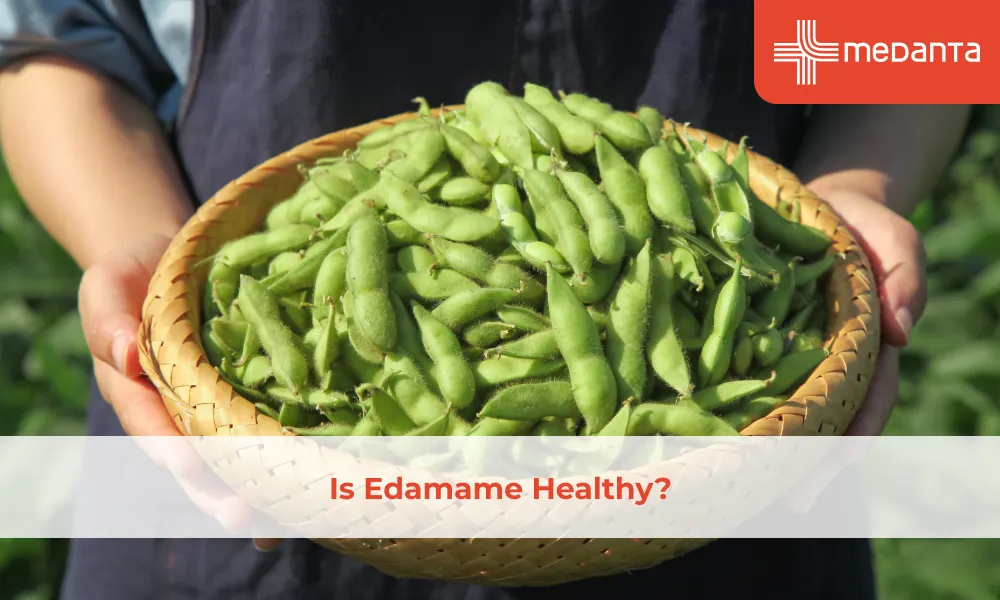
TABLE OF CONTENTS
- Edamame Nutrition Facts & What Is Actually Inside These Green Beans?
- How Much Protein Does Edamame Really Have?
- Top Health Benefits of Eating Edamame Regularly
- Is Edamame Good for Weight Loss?
- Is Edamame Safe for People With Thyroid or Hormone Concerns?
- Side Effects of Eating Too Much Edamame
- Edamame vs Other Protein Snacks - How Does It Compare?
- How to Eat Edamame - Raw, Boiled, Salted or Snack Form?
- Who Should Be Careful About Eating Edamame?
- Is Edamame the Same as Soya Bean?
- Conclusion
- FAQs
- References
Edamame is the Japanese name for immature soybeans harvested before the seeds harden. They are typically eaten steamed or boiled in their pods. In India, edamame is available in frozen form and grown commercially in Maharashtra, Andhra Pradesh and Uttarakhand. It is the same species as the mature soya bean, harvested earlier while the beans are green, soft, and mildly sweet.
Edamame Nutrition Facts & What Is Actually Inside These Green Beans?
Per 100 grams of cooked, shelled edamame: approximately 122 kilocalories, 11 grams of protein, 9 grams of carbohydrate (5 grams dietary fibre) and 5 grams of fat (predominantly polyunsaturated and monounsaturated). Edamame is a big source of folate (approximately 303 mcg per 100g, covering over 75% of the daily requirement), vitamin K1, manganese, iron, magnesium, phosphorus and zinc.
How Much Protein Does Edamame Really Have?
Edamame provides approximately 11 grams of protein per 100 grams cooked. Soya protein is complete (has all nine essential amino acids) distinguishing it from dal, rajma and chickpeas, which require complementary grains. A 150-gram serving provides 16 to 17 grams of protein, a meaningful advantage for vegetarians and vegans.
Top Health Benefits of Eating Edamame Regularly
Cardiovascular health: Soya protein and isoflavones are associated with modest reductions in LDL cholesterol; the FDA recognises soya protein as a food that may reduce coronary heart disease risk at 25g per day
Bone health: Calcium, magnesium and vitamin K1 support bone mineralisation; soya isoflavones have some evidence for reducing postmenopausal bone loss
Blood sugar regulation: Protein, fibre and low glycaemic load mean edamame raises blood glucose slowly; studies support its inclusion in type 2 diabetic diets
Gut health: Approximately 5g of fibre per 100g supports a diverse gut microbiome and regular bowel function
Folate: Exceptionally high folate content makes edamame particularly valuable for women planning pregnancy or in the first trimester, critical for neural tube development
Antioxidant activity: Soya isoflavones (genistein and daidzein) have antioxidant properties that may contribute to cellular protection though clinical significance in humans requires further research.
Is Edamame Good for Weight Loss?
High protein, high fibre and moderate calorie content make edamame a strong candidate for weight management. Protein reduces ghrelin and increases satiety signals; fibre slows gastric emptying. Edamame has a glycaemic index of approximately 18 which is one of the lowest of any food. Replacing one high-GI Indian snack daily with edamame produces a meaningful dietary change.
Is Edamame Safe for People With Thyroid or Hormone Concerns?
Edamame contains isoflavones; phytoestrogens with much weaker binding affinity to oestrogen receptors than endogenous oestrogen. Concerns about hormonal disruption at normal dietary intake levels are not supported by the evidence. Soya interferes with levothyroxine absorption if consumed simultaneously therefore people on thyroid hormone replacement should take their medication at least four hours before or after consuming soya.
Side Effects of Eating Too Much Edamame
For most people, edamame causes no side effects in reasonable amounts. Those with IBS or FODMAP sensitivity may experience gas and bloating from its oligosaccharide content. Soya allergy is one of the eight major food allergens and individuals with confirmed soya allergy must avoid edamame entirely. Cross-reactivity with birch pollen allergy is documented. Excessive isoflavone intake is not recommended for those with oestrogen-receptor-positive breast cancer.
Edamame vs Other Protein Snacks - How Does It Compare?
Per 100g cooked: edamame (~11g protein, ~122 kcal, ~5g fibre) outperforms boiled chickpeas (~9g protein, ~164 kcal) and boiled rajma (~9g protein, ~127 kcal) on calorie efficiency. Edamame's critical advantage is complete protein as chickpeas and rajma require complementary grains. Against namkeen and biscuits: far more calories with minimal protein. Compared to paneer, edamame has less protein but far less saturated fat.
How to Eat Edamame - Raw, Boiled, Salted or Snack Form?
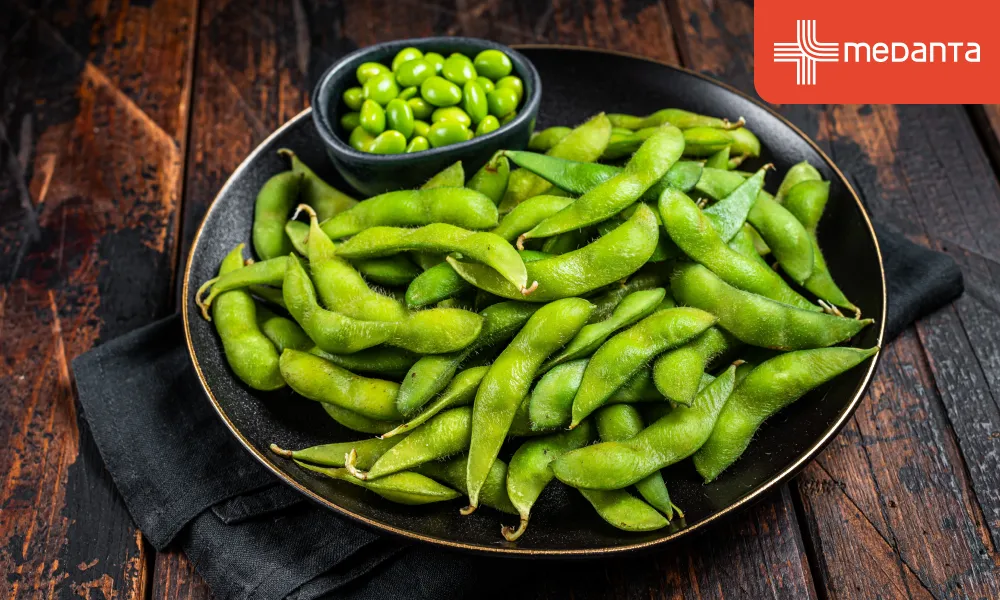
Edamame should not be eaten raw as it contains lectins and enzyme inhibitors deactivated by heat. Boiling or steaming for five to seven minutes is standard; the pod is not eaten. In India, frozen shelled edamame is the most practical form - boil from frozen for three to five minutes and season with chilli powder, lime juice, and chaat masala. Dry roasted edamame provides approximately 14g protein per 30g serving but with less fibre.
Who Should Be Careful About Eating Edamame?
Certain group of people should avoid edamame:
People with soya allergy must avoid edamame entirely; soya is a major food allergen, causing reactions ranging from oral tingling to anaphylaxis
People taking levothyroxine should not consume edamame within four hours of their thyroid medication, as soya reduces absorption
People with oestrogen-receptor-positive breast cancer should seek individualised guidance from their oncologist; current evidence does not clearly support harm, but individualised assessment is appropriate
People with IBS or FODMAP sensitivity may experience bloating and gas
People with gout as edamame contains purines; moderate intake and discuss with a doctor.
Is Edamame the Same as Soya Bean?
Edamame and mature soya beans are the same species (Glycine max) harvested at completely different stages. Edamame is harvested when the pod is green and soft; mature soya beans are harvested fully dried. Edamame has more water, fibre, and vitamin content whereas mature soya beans are hard and bland and are processed into soya chunks, tofu, or soya flour.
Conclusion
Edamame delivers complete protein, significant dietary fibre and a broad micronutrient profile at low calorie density which is a rare combination in a single plant food. The evidence supports its regular consumption for most people. Concerns about phytoestrogens and hormonal disruption are not supported by evidence at normal dietary intake. Those with soya allergy, on with hormone-sensitive cancers should seek individual guidance.
FAQs
What is edamame and is it the same as a soya bean?
Edamame is an immature soya bean & the same species as the mature soya bean, harvested earlier while still green and soft. It is mild, slightly sweet, and high in fibre and water; mature soya beans are hard, bland, and require processing.
How much protein does edamame have compared to other snacks?
Approximately 11 grams per 100g cooked which is comparable to chickpeas and rajma, but with the advantage of complete protein (all nine essential amino acids). A 150g serving provides 16 to 17 grams of protein. Most Indian snacks provide negligible protein per calorie.
Is edamame good for weight loss?
Yes its high protein and fibre produce strong satiety per calorie. Edamame has a glycaemic index of approximately 18 (one of the lowest of any food) producing minimal blood glucose fluctuations. At approximately 122 calories per 100g, it provides sustained fullness relative to most snacks.
Can edamame affect hormones because it contains oestrogen-like compounds?
Edamame contains isoflavones which are phytoestrogens with much weaker binding affinity to oestrogen receptors than endogenous oestrogen. Multiple clinical studies have not found significant hormonal disruption in men or women at normal dietary intake levels.
Is edamame safe to eat every day?
Yes for most people. Regular soya consumption is associated with cardiovascular and other health benefits. No evidence supports harm from daily consumption at normal amounts. Exceptions: soya allergy, levothyroxine users (timing issue, not toxicity) and hormone sensitive cancer.
Is edamame good for people with diabetes?
Yes with a low glycaemic index, high protein, and significant fibre edamame raises blood glucose slowly and modestly. Multiple studies support soya foods in diabetic diets. Edamame is better suited to blood glucose management than most common Indian snacks.
What does edamame taste like and how is it eaten?
Edamame has a mild, slightly sweet, nutty flavour which is often described as a cross between peas and broad beans. Traditionally served boiled in the pod with sea salt, with the beans squeezed directly into the mouth. In India, shelled edamame with chilli powder, lime juice, and chaat masala is a popular preparation.
Is edamame good for building muscle?
Yes edamame provides complete protein with all nine essential amino acids, making it effective for muscle protein synthesis. A 150g serving provides approximately 16 to 17 grams of protein, best combined with other protein sources throughout the day.
Can children eat edamame safely?
Yes, with standard precautions. For children under three, remove the beans from the pod to avoid choking. Soya allergy is more common in children than adults so one should introduce edamame gradually and watch for rash, hives or vomiting on first exposure.
Is frozen edamame as nutritious as fresh edamame?
Yes frozen edamame retains nearly all of its nutritional value. Typically blanched and frozen within hours of harvest, protein, fibre, and most micronutrients are well preserved. Vitamin C undergoes some loss during blanching but frozen is nutritionally equivalent to fresh.
Why is edamame considered healthy?
Because it delivers complete protein, dietary fibre and a broad micronutrient range (folate, vitamin K1, manganese, iron, magnesium) at low calorie density and very low glycaemic index. Few single foods simultaneously provide complete protein and substantial fibre. Evidence supports cardiovascular benefits and blood glucose management.
References
1. Messina M. Soy and health update: evaluation of the clinical and epidemiologic literature. Nutrients. 2016;8(12):754. https://doi.org/10.3390/nu8120754
2. Jenkins DJ, Mirrahimi A, Srichaikul K, et al. Soy protein reduces serum cholesterol by both intrinsic and food displacement mechanisms. J Nutr. 2010;140(12):2302S–11S. https://doi.org/10.3945/jn.110.124958
3. Rizzo G, Baroni L. Soy, soy foods and their role in vegetarian diets. Nutrients. 2018;10(1):43. https://doi.org/10.3390/nu10010043
4. Bhagwat S, Haytowitz DB, Holden JM. USDA database for the isoflavone content of selected foods, release 2.0. US Dept of Agriculture. 2008. https://www.ars.usda.gov/ARSUserFiles/80400525/Data/isoflav/Isoflav_R2.pdf
5. Messina M, Mejia SB, Cassidy A, et al. Neither soyfoods nor isoflavones warrant classification as endocrine disruptors: a technical review of the observational and clinical data. Crit Rev Food Sci Nutr. 2022;62(21):5824–85. https://doi.org/10.1080/10408398.2021.1895054