1068
1068
 Request Call Back
 Contact
 1068
1068
Inner Thigh Rash: Causes, Treatment and Best Creams to Use
Published on: Sep 30, 2026
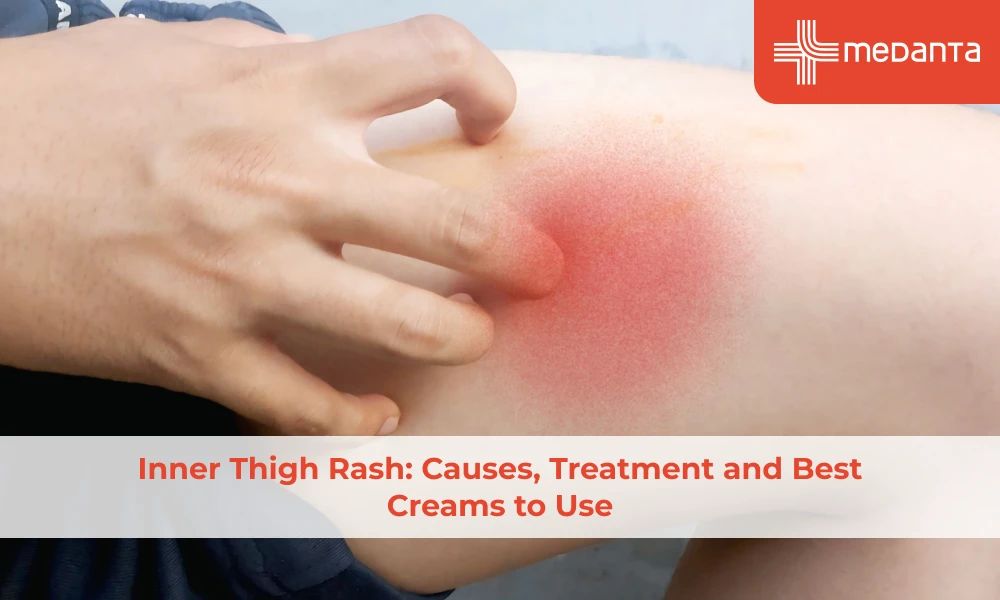
TABLE OF CONTENTS
- What Causes Rash on Inner Thighs?
- How to Identify the Cause of an Inner Thigh Rash
- Rash Between Thighs: Male vs Female Causes
- White Patches on Inner Thigh: What They Mean
- Best Creams and Ointments for Inner Thigh Rash
- How to Get Rid of Thigh Rash at Home
- Prevention Tips to Stop Thigh Rash from Recurring
- When to See a Dermatologist
- Conclusion
- FAQs
- References
Inner thigh rashes are among the most common skin complaints in India, especially during the monsoon and summer months when heat, humidity and friction combine to irritate this skin-on-skin contact zone. The skin folds, traps moisture, experiences constant friction during walking and is covered by clothing that reduces airflow (making this area particularly prone to rashes in India's tropical climate).
Most inner thigh rashes are not medically serious but are uncomfortable and can worsen quickly without treatment. Identifying the correct cause is the essential first step, as a fungal rash treated as an allergic reaction will not improve and may worsen.
What Causes Rash on Inner Thighs?
The inner thigh rash has several distinct causes that are clinically different and require different treatments.
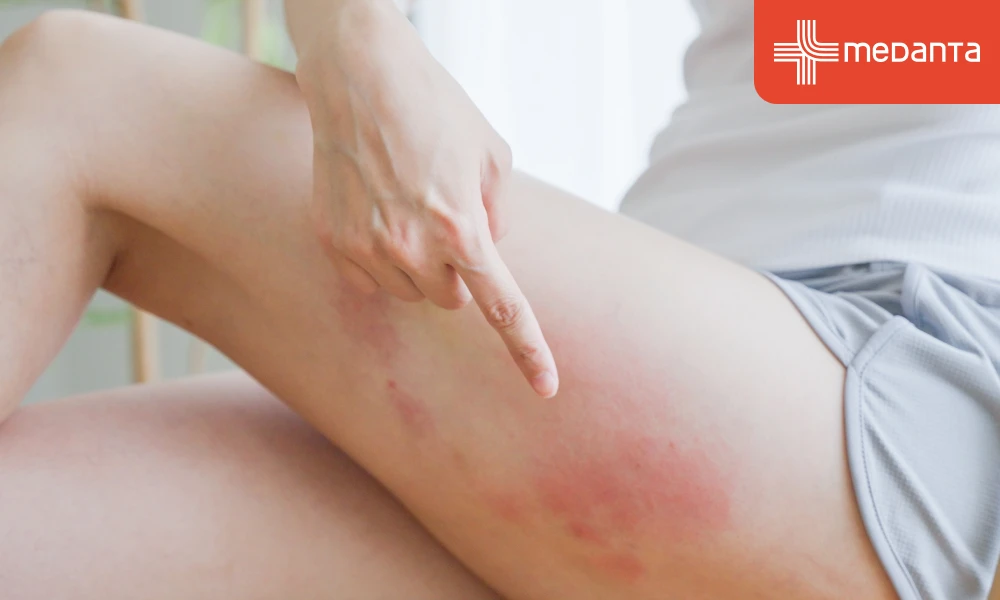
Tinea cruris (jock itch or dhobi itch): The most common cause of inner thigh rash. A superficial fungal infection that produces a ring shaped, scaly rash with a raised border and central clearing. Starts in the groin crease and spreads outward. Intensely itchy (particularly in humid or sweaty conditions).
Chafing (intertrigo): Mechanical friction between the inner thigh skin surfaces during walking or exercise causes red, raw, and painful skin. Without treatment the skin may crack and secondary bacterial or fungal infection can follow.
Heat rash (miliaria): Small red or clear bumps from blocked sweat glands. Common in the groin and inner thigh during hot and humid weather. Produces prickling or mild itching and usually resolves within a few days of keeping the area cool and dry.
Contact dermatitis: An allergic or irritant reaction to synthetic clothing, laundry detergent, intimate hygiene products, elastic waistbands or wax strips. Produces red, itchy, sometimes blistered skin at the site of contact.
Folliculitis: Inflammation or infection of hair follicles producing small red pimple like lesions around individual follicles. Caused by bacterial infection, fungal infection or mechanical irritation from shaving or tight clothing.
Eczema (atopic dermatitis): Chronic eczema affecting the inner thigh produces dry, itchy, inflamed skin that may be thickened with chronic scratching. More common in people with a personal or family history of eczema or asthma.
How to Identify the Cause of an Inner Thigh Rash
Cause | Typical Features |
Tinea cruris (Jock itch) | Ring-shaped rash with a raised, scaly border and central clearing; usually starts in the groin crease and is intensely itchy. |
Chafing (Intertrigo) | Red, raw, and painful rash along skin folds caused by friction; usually lacks a ring-shaped border. |
Heat Rash (Miliaria) | Tiny red or clear bumps with a prickling or stinging sensation; worsens in hot, humid weather and improves with cooling. |
Contact Dermatitis | Red, itchy rash that matches the area of contact with an irritant or allergen (such as clothing or a waistband); may blister. |
Folliculitis | Small red bumps or pimples around hair follicles, sometimes with a central pus-filled spot. |
Eczema | Dry, itchy, and thickened skin, often associated with a personal or family history of allergies or asthma. |
Psoriasis | Smooth, shiny red plaques, often with psoriasis affecting other parts of the body as well. |
Rash Between Thighs: Male vs Female Causes
Most causes of inner thigh rash are shared between men and women but there are important differences in prevalence and some sex-specific causes.
In men, tinea cruris (jock itch) is significantly more common because the warm, moist environment adjacent to the inner thigh encourages fungal growth. Men who play sports or spend long periods in sweaty clothing are particularly prone.
In women, inner thigh rashes are more commonly associated with contact dermatitis from synthetic underwear, sanitary products or depilatory creams. Candidal intertrigo produces a red, moist, itchy rash with satellite lesions and is more common in women, particularly those who are pregnant, diabetic or on antibiotic therapy.
White Patches on Inner Thigh: What They Mean
White patches or lightened skin on the inner thigh have several possible causes, each with a different clinical significance.
Post-inflammatory hypopigmentation: After any inflammatory skin condition the affected skin may temporarily lose pigmentation as it heals. This is particularly noticeable in darker skin tones. Pigment usually returns over weeks to months without treatment.
Tinea versicolor: A fungal skin infection that produces white or pale subtly scaly patches by interfering with melanin production. Common in hot, humid conditions and in people who sweat heavily.
Vitiligo: An autoimmune condition causing complete loss of skin pigment in pure white, well-defined patches with distinct borders that do not scale. Vitiligo requires dermatological assessment and management.
Best Creams and Ointments for Inner Thigh Rash
The correct cream depends entirely on the cause. Using the wrong product can make the rash significantly worse.
For tinea cruris (fungal rash): Antifungal creams like clotrimazole 1% cream, miconazole 2% cream, and terbinafine 1% cream are widely available. Apply twice daily for two to four weeks. Do not stop early even if the rash appears to clear. For severe or recurrent tinea cruris your doctor may prescribe oral antifungals (fluconazole or itraconazole).
For chafing and intertrigo: Barrier creams containing zinc oxide protect the skin from friction and moisture. Calamine lotion is soothing for mild chafing
For heat rash: Calamine lotion provides immediate cooling relief. Avoid thick creams that trap heat. Prickly heat powder (talc-free formulations preferred) helps keep the area dry.
For contact dermatitis: Remove the causative agent first. A mild topical corticosteroid (1% hydrocortisone cream available over the counter) reduces inflammation and itch. Do not use potent corticosteroids without medical advice in the groin area (as the skin absorbs corticosteroids more readily in skin folds and potent steroids can cause skin thinning).
How to Get Rid of Thigh Rash at Home
Keep the area clean and dry: Wash twice daily with mild, fragrance-free soap or plain water. Pat dry thoroughly rather than rubbing as friction worsens all types of inner thigh rash.
Apply aloe vera gel: If you apply pure aloe vera gel (refrigerated for an additional cooling effect) it can soothe irritated skin, reduce inflammation and has mild antimicrobial properties.
Apply neem paste or neem oil: Neem has well-documented antibacterial and antifungal properties. A paste of neem leaves applied for 20 minutes is a traditional Indian remedy with scientific support for bacterial and fungal skin conditions.
Wear loose, breathable clothing: Switch to pure cotton underwear and loose fitting clothing (always avoid synthetic fabrics and tight clothing that trap heat and friction).
Prevention Tips to Stop Thigh Rash from Recurring
Keep the inner thigh area dry throughout the day: Use a talc-free powder or cornstarch powder to absorb sweat. Change damp or sweaty clothing immediately after exercise.
Use anti-chafe products: Anti chafing balms or petroleum jelly applied to the inner thigh before exercise or prolonged walking reduce friction related rash.
Maintain a healthy weight: Excess weight increases skin on skin contact in the inner thigh, increasing both friction and moisture trapping. Even modest weight reduction significantly reduces the frequency of chafing and intertrigo.
Wash and dry clothing properly: Fungal spores survive on damp clothing. You should wash your workout clothes, underwear & towels after each use and dry fully in sunlight. Sharing towels or clothing significantly increases the risk of spreading tinea cruris.
When to See a Dermatologist
Most inner thigh rashes can be managed initially with over-the-counter treatments. A dermatologist should be consulted if any of the following apply:
The rash has not improved after two weeks of correct over-the-counter treatment
The rash is spreading rapidly or becoming significantly more inflamed
The rash is producing discharge, pus or an unusual smell
The rash is accompanied by fever, swollen lymph nodes or significant pain
White patches are present
The rash is present in the genital area or accompanied by genital symptoms.
Conclusion
Inner thigh rashes are common, treatable and in most cases preventable. The key to effective treatment is identifying the correct cause. Applying the wrong treatment delays recovery and can worsen the condition.
In India's hot and humid climate, preventive measures including keeping the area dry, wearing breathable cotton clothing and using anti-chafe products before prolonged activity are the most effective ways to stop rashes from recurring. If a rash persists despite two weeks of home treatment or involves white patches, spreading inflammation or discharge, a dermatologist visit is the most efficient path to resolution.
FAQs
What causes a rash on the inner thigh?
The most common causes are tinea cruris (fungal infection), chafing from friction, heat rash, contact dermatitis from clothing or products, folliculitis, eczema or psoriasis.
What is the best cream for inner thigh rash?
The best cream depends on the cause. Clotrimazole or terbinafine cream for fungal rashes. Zinc oxide barrier cream for chafing. Calamine lotion for heat rash. Hydrocortisone 1% cream for contact dermatitis or eczema flares.
How do you get rid of a thigh rash naturally at home?
Keep the area clean, dry and cool. Apply pure aloe vera gel for soothing relief. Use neem oil or paste for antibacterial and antifungal benefits. Wear loose cotton clothing & avoid synthetic fabrics.
What causes rash between the thighs in hot weather?
Hot weather triggers heat rash from blocked sweat glands, chafing worsened by sweat and tinea cruris from fungal growth in warm, moist conditions. All three are more severe in India's hot and humid summers.
Is rash on inner thigh different for males and females?
Yes. Tinea cruris is significantly more common in men. Women are more prone to candidal intertrigo and contact dermatitis from synthetic underwear, sanitary products and depilatory creams. Appearance helps distinguish between causes.
What do white patches on the inner thigh mean?
White patches may indicate post-inflammatory hypopigmentation after a resolved rash, tinea versicolor fungal infection, vitiligo or lichen sclerosus. A dermatologist should assess white patches to determine the cause and appropriate management.
What ointment helps a rash between the legs?
Zinc oxide ointment protects against friction and moisture. Antifungal cream (clotrimazole or miconazole) treats fungal rashes. Boro Plus cream or petroleum jelly acts as a barrier. Avoid strong corticosteroids in the groin without medical advice.
Can chafing cause a skin rash on the thighs?
Yes repeated friction between inner thigh skin surfaces causes red, raw, painful skin. Without treatment it can progress to intertrigo with secondary infection. Anti-chafe products and maintaining a healthy weight reduce the frequency of chafing.
How can I prevent inner thigh rash in summer?
Wear cotton clothing, keep the area dry with powder, apply anti-chafe balm before walking or exercise, shower after sweating, change damp clothing promptly and treat any existing athlete's foot simultaneously.
When should I see a doctor for a thigh rash?
See a dermatologist if the rash persists after two weeks of correct treatment, spreads rapidly, produces pus or discharge, is accompanied by fever, involves white patches or affects the genital area alongside other symptoms.
Can sweating cause an inner thigh rash?
Yes sweat trapped between the inner thighs triggers heat rash, promotes fungal growth and worsens chafing. Keeping the area dry is the most effective single preventive measure in India's climate.
References
1. Kaur R, Maheshwari M, Mittal G, Monga D. Epidemiology and mycology of tinea cruris in India. Indian J Dermatol. 2020;65(5):380–4. https://doi.org/10.4103/ijd.IJD_367_19
2. Morales-Trujillo ML, Arenas R, Arroyo S. Interdigital tinea pedis with or without onychomycosis: frequency and etiology. Rev Iberoam Micol. 2003;20(1):1–5. https://pubmed.ncbi.nlm.nih.gov/15456382
3. Wolf R, Oumeish OY, Parish LC. Intertriginous eruption. Clin Dermatol. 2011;29(2):173–9. https://doi.org/10.1016/j.clindermatol.2010.09.005
4. Verma S, Heffernan MP. Superficial fungal infection: dermatophytosis, onychomycosis, tinea nigra, piedra. In: Wolff K, et al (eds). Fitzpatrick's Dermatology in General Medicine (7th ed). McGraw-Hill. 2008
5. Hay RJ, Ashbee HR. Mycology. In: Burns T, et al (eds). Rook's Textbook of Dermatology (9th ed). Wiley-Blackwell. 2016