1068
1068
 Request Call Back
 Contact
 1068
1068
Carrot Benefits & Nutrition: Calories, Protein and Vitamins Per 100g
Published on: Sep 04, 2026
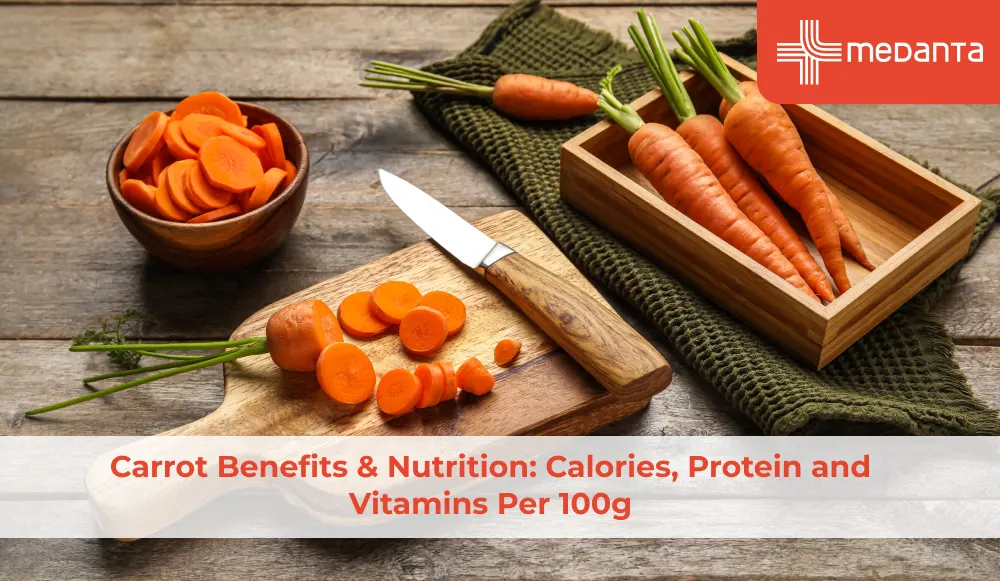
TABLE OF CONTENTS
- Quick Nutrition Snapshot - Raw Carrot Per 100g
- Carrot Nutrition Facts Per 100g
- Top Health Benefits of Eating Carrots
- Vitamins and Minerals in Carrots
- Calories in 1 Carrot vs 100g - Comparison Table
- How Much Protein Is in a Carrot?
- Everyday Uses of Carrot
- Who Should Be Cautious Eating Too Many Carrots
- Conclusion
- FAQs
- References
Carrots are among the most nutritious and widely eaten vegetables in the world and they are a kitchen staple found in everything from sabzi and halwa to salads and fresh juice. Carrots have an impressive combination of vitamins, antioxidants and dietary fibre that supports eye health, heart function, immune defence and healthy digestion.
Raw carrots provide just 41 kilocalories per 100 grams, making them one of the most satisfying low-calorie foods available. A single medium carrot (approximately 61 grams) provides nearly 90% of the daily recommended intake of vitamin A, along with meaningful amounts of vitamin K, potassium and dietary fibre.
Quick Nutrition Snapshot - Raw Carrot Per 100g
Nutrient | Amount Per 100 Ger 100g |
Calories | 41 kcal |
Carbohydrates | 9.6 g |
Dietary Fibre | 2.8 g |
Sugars | 4.7 g |
Protein | 0.9 g |
Total Fat | 0.2 g |
Vitamin A (as beta-carotene) | 835 mcg RAE (93% DV) |
Vitamin K | 13.2 mcg (11% DV) |
5.9 mg (7% DV) | |
Potassium | 320 mg (7% DV) |
Folate | 19 mcg (5% DV) |
DV = Daily Value based on a 2,000 kcal diet.
Carrot Nutrition Facts Per 100g
The full nutritional profile of raw carrot per 100 grams is set out in the table below. All values represent the raw, unpeeled carrot unless otherwise stated.
Nutrient | Amount Per 100 Gnt Per 100g |
Energy | 41 kcal (172 kJ) |
Water | 88.3 g |
Carbohydrates | 9.58 g |
Dietary Fibre | 2.8 g |
Total Sugars | 4.74 g |
Starch | 1.43 g |
Protein | 0.93 g |
Total Fat | 0.24 g |
Saturated Fat | 0.04 g |
Sodium | 69 mg |
Potassium | 320 mg |
Calcium | 33 mg |
Phosphorus | 35 mg |
Magnesium | 12 mg |
Iron | 0.30 mg |
Zinc | 0.24 mg |
Vitamin A (RAE) | 835 mcg |
Beta-carotene | 8285 mcg |
Alpha-carotene | 3477 mcg |
Vitamin C | 5.9 mg |
Vitamin K | 13.2 mcg |
Folate (B9) | 19 mcg |
Vitamin B6 | 0.138 mg |
Niacin (B3) | 0.983 mg |
0.66 mg |
Top Health Benefits of Eating Carrots
The health benefits of carrots come from their rich content of beta-carotene, antioxidants, fibre and essential vitamins.
Supports eye health and night vision: Carrots are the richest common vegetable source of beta-carotene, which the body converts into vitamin A - an essential component of rhodopsin, the visual pigment that enables vision in dim light. One medium carrot per day provides nearly the full adult daily requirement of vitamin A.
Reduces the risk of cardiovascular disease: The antioxidants in carrots including beta-carotene, alpha-carotene, and lutein reduce the oxidation of LDL cholesterol, which is the process that initiates the build-up of plaques in artery walls. Dietary fibre in carrots also lowers total cholesterol levels.
Protects against cancer through antioxidant action: Beta carotene and other carotenoids in carrots are powerful antioxidants that neutralise free radicals. According to studies higher dietary intake of carotenoids with a reduced risk of lung cancer, colorectal cancer and breast cancer.
Supports healthy digestion and gut health: Carrots provide both soluble fibre (pectin) which feeds beneficial gut bacteria and produces short-chain fatty acids that maintain the health of the gut lining and insoluble fibre which adds bulk to stools and prevents constipation.
Supports healthy skin: Vitamin A derived from beta-carotene in carrots is essential for the normal growth and repair of skin cells and vitamin C in carrots supports collagen synthesis.
Helps regulate blood sugar levels: Despite their sweet taste carrots have a relatively low glycaemic index (GI of approximately 39 for raw carrots) therefore they cause a slower and more gradual rise in blood glucose. The dietary fibre in carrots slows the absorption of carbohydrate and lowers the post-meal glucose peak. Carrots are a safe and nutritious vegetable for most people with type 2 diabetes or pre-diabetes when eaten in normal serving sizes.
Strengthens immune function: Vitamin A is critical for the maintenance of mucosal barriers in the airways, gut and urinary tract - the first line of defence against infection. Vitamin C in carrots stimulates the production and activity of white blood cells. Together these nutrients support the body's ability to resist infection.
Vitamins and Minerals in Carrots

Carrots are particularly rich in fat-soluble vitamins and provide a meaningful contribution of several minerals that are commonly deficient in the Indian diet.
Vitamin A (as beta-carotene): Carrots are the richest vegetable source of provitamin A carotenoids, providing 835 mcg RAE per 100 grams - approximately 93% of the adult daily requirement.
Vitamin K: 13.2 mcg of vitamin K per 100 grams (~11% of the adult daily requirement)
Vitamin C: 5.9 mg of vitamin C per 100 grams (~7% of the adult daily requirement)
Potassium: 320 mg of potassium per 100 grams
Folate (Vitamin B9): 19 mcg of folate per 100 grams
B vitamins: Carrots contain small amounts of vitamin B6 (0.14 mg per 100g), niacin (B3, 0.98 mg per 100g) and pantothenic acid (B5), which are involved in energy metabolism, nervous system function and the formation of red blood cells.
Calories in 1 Carrot vs 100g - Comparison Table
The number of calories in a carrot varies depending on the size of the carrot and whether it is raw or cooked.
Serving | Weight (approx.)(approx.) | Calories |
1 small raw carrot | 50 g | ~21 kcal |
1 medium raw carrot | 61 g | ~25 kcal |
1 large raw carrot | 72 g | ~30 kcal |
100g raw carrot | 100 g | 41 kcal |
1 cup raw carrot (chopped) | 128 g | ~52 kcal |
100g boiled carrot | 100 g | ~35 kcal |
100g carrot juice (unsweetened) | 100 g | ~40 kcal |
1 cup carrot juice (unsweetened) | 240 g | ~94 kca |
How Much Protein Is in a Carrot?
Carrots are not a significant source of protein. Raw carrot contains approximately 0.93 grams of protein per 100 grams, which is a small contribution to the adult daily protein requirement of approximately 0.8 to 1.0 grams per kilogram of body weight.
The protein in carrots contains all nine essential amino acids in low concentrations.
Cooking carrots whether by boiling, steaming, or pressure-cooking in the Indian style does not significantly change the protein content, as carrot protein is not heat-sensitive and is not substantially lost in cooking water.
Everyday Uses of Carrot
Carrots are one of the most versatile vegetables in Indian cooking, used across a wide range of dishes from everyday meals to festive preparations.
Raw carrot salad: Raw grated carrot salad (combined with cucumber, onion, tomato, coriander, lemon juice, and chaat masala) retains its full fibre content and all heat-sensitive vitamins, making raw salads one of the most nutritious ways to eat carrot.
Gajar ka halwa: While gajar ka halwa retains most of the fat-soluble carotenoids from the carrot, the high sugar and fat content means it is an occasional treat rather than a daily health food.
Carrot sabzi and mixed vegetable dishes: Chopped or diced carrot is added to a wide range of Indian vegetable dishes. Carrots are pressure-cooked or sautéed alongside other vegetables and retain most of their carotenoids during cooking as carotenoids are heat-stable.
Carrot juice and smoothies: Fresh carrot juice often combined with ginger, apple or beetroot is an efficient way to consume a large amount of beta-carotene in a single glass though it is lower in dietary fibre than whole carrots.
Carrot soup and dal: Blended carrot soup and carrot-based dals retain water-soluble vitamins such as vitamin C and folate that would otherwise be lost in discarded cooking water.
Pickled carrot (gajar ka achaar): Carrot pickle retains its fibre and carotenoids, though the high salt content means it should be consumed in small quantities by people with hypertension.
Who Should Be Cautious Eating Too Many Carrots
Carrots are safe and beneficial for the vast majority of people, but certain groups should be aware of potential considerations when consuming very large amounts.
People taking warfarin or other anticoagulant medicines: Carrots contain vitamin K that helps in blood clotting. Patients on warfarin should maintain consistent vitamin K intake and eating normal serving sizes of carrots is safe.
People with chronic kidney disease (CKD): Carrots contain potassium (320 mg per 100g). Patients with advanced CKD who
People with diabetes: Whole carrots are diabetes-friendly, but carrot juice contains less fibre and may raise blood sugar more quickly. Whole carrots are the better choice.
Conclusion
Carrots are a nutritional powerhouse that earns their place as a daily food in the Indian diet. At just 41 kilocalories per 100 grams, carrots deliver nearly the full daily requirement of vitamin A, meaningful amounts of vitamin K, potassium, folate, and dietary fibre. The health benefits of regular carrot consumption are well-supported by nutritional research ranging from reduced risk of cardiovascular disease and certain cancers to better eye health, improved digestion and stronger immune function.
Whether eaten raw as a salad, cooked in a sabzi, blended into juice or slow-cooked into gajar ka halwa, carrots are one of the simplest dietary choices for everyday health. Eating carrots regularly as part of a balanced and varied diet is good for most people at every stage of life.
FAQs
What are the health benefits of eating carrots every day?
Eating carrots every day provides a wide range of evidence-backed health benefits including support for eye health and night vision, reduced risk of cardiovascular disease, healthy digestion, stronger immune function and antioxidant protection against cellular damage that can lead to cancer.
How many calories are there in 100 grams of carrots?
Raw carrots provide 41 kilocalories per 100 grams, providing nearly the full daily requirement of vitamin A along with meaningful amounts of fibre, vitamins and minerals, for fewer calories than a single biscuit.
How much protein is present in 100g of carrots?
Raw carrots contain approximately 0.93 grams of protein per 100 grams. Carrots are not a significant protein source therefore should not be relied upon to meet daily protein requirements. For vegetarian and vegan Indians, protein needs are better met through dal, rajma, chana, moong, soya and paneer.
Which vitamins and minerals are found in carrots?
Carrots are richest in vitamin A, vitamin K and vitamin C. Carrots also contain potassium, folate, vitamin B6, niacin (B3), vitamin E, calcium, magnesium, iron and zinc.
Are raw carrots healthier than cooked carrots?
Both raw and cooked carrots are highly nutritious but offer different advantages. Raw carrots retain all their heat-sensitive vitamins particularly vitamin C and folate, which are partially destroyed by cooking. Cooked carrots, however, have higher bioavailability of beta-carotene, because cooking breaks down the cell walls that trap beta-carotene.
Can carrots help improve eyesight and eye health?
Yes carrots are one of the best dietary sources of beta-carotene, which the body converts into vitamin A. Vitamin A is an essential component of rhodopsin, the visual pigment that enables vision in low light. Eating carrots regularly helps prevent vitamin A deficiency and the associated night blindness.
Are carrots good for weight loss and healthy eating?
Yes carrots are an excellent food for weight loss. At just 41 kilocalories per 100 grams they are very low in energy density. The dietary fibre in carrots promotes satiety (the feeling of fullness), reducing the urge to eat more and the natural sweetness of carrots can satisfy sweet cravings without the calorie cost of sugary snacks.
Is it safe to eat carrots every day?
Eating carrots every day is safe for most people. Carrots are a natural whole food with no known toxic dose at normal dietary intake levels. The only notable effect of very high daily carrot consumption is carotenodermia - a harmless yellowing of the skin caused by beta-carotene deposition, which reverses when intake is reduced.
Do carrots help control blood sugar levels?
Carrots are a good choice for blood sugar management. Raw carrots have a low glycaemic index (GI of approximately 39) so cause a slow and gradual rise in blood glucose. The dietary fibre in carrots slows the absorption of carbohydrates, blunting the post-meal glucose peak. Carrots are a safe and nutritious vegetable for people with type 2 diabetes or pre-diabetes when eaten in normal serving sizes as whole vegetables.
Who should avoid eating too many carrots?
Most people can safely eat carrots in any reasonable quantity. However, patients on warfarin should maintain consistent vitamin K intake rather than making sudden large changes. Patients with advanced chronic kidney disease may need to limit potassium-rich foods including carrots on the advice of their nephrologist or dietitian. People with diabetes should prefer whole carrots over large quantities of carrot juice, which has a higher glycaemic response due to its lower fibre content.
Are carrots good for a low-calorie diet?
Carrots are one of the best foods for a low-calorie diet. At 41 kilocalories per 100 grams, they are very low in energy density. A medium carrot (approximately 61 grams) provides only about 25 kilocalories, and the dietary fibre in carrots promotes satiety and reduces overall food intake.
References
1. U.S. Department of Agriculture, Agricultural Research Service. FoodData Central: Carrots, raw (FDC ID 170393). USDA FoodData Central. 2019. https://fdc.nal.usda.gov/fdc-app.html#/food-details/170393/nutrients
2. Daucus carota — carotenoid content and bioavailability. Voutilainen S, Nurmi T, Mursu J, Rissanen TH. Carotenoids and cardiovascular health. Am J Clin Nutr. 2006;83(6):1265–71. https://doi.org/10.1093/ajcn/83.6.1265
3. Aune D, Giovannucci E, Boffetta P, et al. Fruit and vegetable intake and the risk of cardiovascular disease, total cancer and all-cause mortality — a systematic review and dose-response meta-analysis of prospective studies. Int J Epidemiol. 2017;46(3):1029–56. https://doi.org/10.1093/ije/dyw319
4. World Health Organization. Global prevalence of vitamin A deficiency in populations at risk 1995–2005: WHO Global Database on Vitamin A Deficiency. WHO. 2009. https://www.who.int/publications/i/item/9789241598019
5. Arscott SA, Tanumihardjo SA. Carrots of many colors provide basic nutrition and bioavailable phytochemicals acting as a functional food. Compr Rev Food Sci Food Saf. 2010;9(2):223–39. https://doi.org/10.1111/j.1541-4337.2009.00103.x