1068
1068
 Request Call Back
 Contact
 1068
1068
Cabbage Benefits and Nutrition: Vitamins, Protein and Health Facts
Published on: Sep 18, 2026
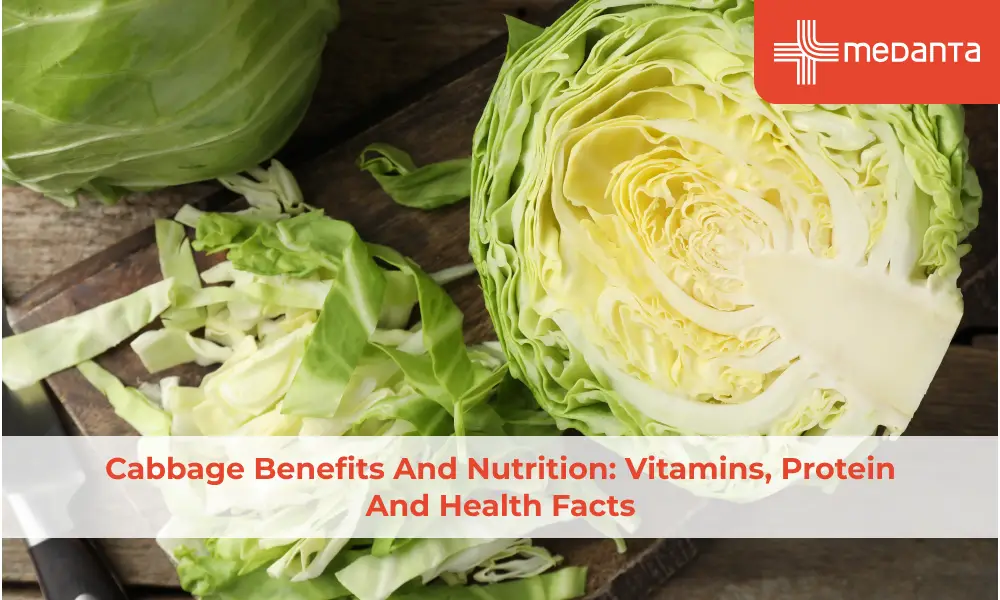
TABLE OF CONTENTS
- Cabbage Nutrition Facts Per 100g
- Top Health Benefits of Eating Cabbage
- Vitamins and Minerals Found in Cabbage
- Does Cabbage Have Protein?
- Cabbage for Diabetes and Heart Health
- Types of Cabbage - Benefits Compared
- Broccoli vs Cabbage - Which Is Healthier?
- How to Add Cabbage to Your Diet
- Conclusion
- FAQs
- References
Cabbage is one of the most underrated vegetables in Indian kitchens. It is affordable year-round, available across every state and dense enough in nutrients to justify its place in a daily diet. Despite being dismissed as a filler vegetable, cabbage belongs to the Brassica family - a group that includes broccoli, cauliflower, and kale and has powerful bioactive compounds including glucosinolates, sulforaphane, and indole-3-carbinol.
Green cabbage, violet (red or purple) cabbage, and Savoy cabbage are the most widely consumed varieties in India, all providing meaningful amounts of vitamin C, vitamin K, folate, fibre and antioxidant compounds. This article explains the full nutritional profile of cabbage, its most evidence-supported health benefits and the most practical ways to eat it.
Cabbage Nutrition Facts Per 100g
100 grams of raw green cabbage provide:
Calories: 25 kcal
Carbohydrates: 5.8 g
Dietary fibre: 2.5 g
Protein: 1.3 g
Fat: 0.1 g
Vitamin C: 36.6 mg (approximately 41% of the adult daily requirement)
Vitamin K: 76 mcg (approximately 63% of the adult daily requirement)
Folate (Vitamin B9): 43 mcg (approximately 11% of the adult daily requirement)
Vitamin B6: 0.124 mg
Potassium: 170 mg
Calcium: 40 mg
Magnesium: 12 mg
Manganese: 0.16 mg
At only 25 kilocalories per 100 grams, cabbage is one of the most nutrient-dense, calorie-light vegetables available.
Top Health Benefits of Eating Cabbage
Cabbage benefits are:
Supports Digestive Health: Rich in dietary fibre cabbage helps keep bowel movements regular, nourishes healthy gut bacteria and supports the digestive system overall.
Powerful Antioxidant: Cabbage has sulforaphane and other antioxidants (protecting our cells & organs from oxidative stress)
Boosts Immunity: Cabbage is rich in vitamin C which gives you better immunity, promotes wound healing and helps the body fend off infections.
Promotes Bone Health: It's also a good source of vitamin K (keeps your bones strong and supports normal blood clotting).
Supports Heart Health: The combination of fibre and antioxidants keeps your cholesterol levels in check
Reduces Cancer Risk: Cabbage has glucosinolates that may potentially lower the risk of certain cancers
Supports Weight Management: Being low in calories yet high in fibre cabbage helps you feel fuller for longer making it a useful ally for healthy weight management
Helps Control Blood Sugar: Its fibre content slows down glucose absorption, making cabbage a smart vegetable choice for people managing diabetes or prediabetes.
Vitamins and Minerals Found in Cabbage
Vitamin C: Vitamin C is heat sensitive and reduced by over cooking. Raw or lightly cooked cabbage preserves far more of this vitamin than heavily boiled preparations.
Vitamin K1: One of the best everyday sources of vitamin K1 in the Indian diet, supporting blood clotting, bone metabolism and vascular calcification prevention.
Folate: Folate is essential for the synthesis of DNA, red blood cells and the prevention of neural tube defects in early pregnancy. Raw or lightly steamed cabbage retains more folate than heavily boiled cabbage.
Does Cabbage Have Protein?
Cabbage contains 1.3 grams of protein per 100 grams of raw cabbage - modest compared to cooked dal (8 to 9g per 100g), paneer (18g per 100g), or eggs (13g per 100g). Cabbage is not eaten for its protein content. However in Indian meals where protein is provided by dal, curd, eggs or legumes, cabbage contributes a small but real additional amount of plant protein alongside its more significant contributions of fibre, vitamin C, vitamin K and folate.
Cabbage for Diabetes and Heart Health
Cabbage is an excellent food for people with type 2 diabetes and cardiovascular disease.
Low glycaemic impact: At 25 kilocalories per 100g with 2.5g of dietary fibre and only 3.2g of sugar cabbage produces a very low glycaemic response. The fibre slows glucose absorption and blunts the post-meal glucose spike. Including cabbage sabzi or raw cabbage salad in a meal meaningfully reduces the overall glycaemic load.
Anthocyanins in violet cabbage and cardiovascular benefit: Violet (red) cabbage contains large amounts of anthocyanins (the purple-red pigments) that reduce LDL cholesterol oxidation, improve endothelial function and lower blood pressure.
Fibre and cholesterol reduction: The soluble fibre in cabbage including pectin binds to bile acids in the digestive tract and prevents their reabsorption, forcing the liver to synthesise new bile acids from circulating LDL cholesterol. This is the same mechanism by which oat beta-glucan and psyllium husk (isabgol) lower LDL cholesterol.
Types of Cabbage - Benefits Compared
Green cabbage: The most widely consumed variety in India. Provides vitamin C, vitamin K, folate and fibre. Versatile in Indian cooking and used in sabzi, paratha stuffing, soups, salads and thoran.
Violet or red cabbage: Contains approximately 6 to 8 times more vitamin C than green cabbage and significantly higher levels of anthocyanins, which provide additional anti-inflammatory and cardiovascular protective benefits. Slightly more bitter in flavour, violet cabbage is most commonly eaten raw in salads or lightly pickled.
Broccoli vs Cabbage - Which Is Healthier?
Both broccoli and cabbage belong to the Brassica family and share many of the same bioactive compounds including glucosinolates, sulforaphane and vitamin C. Broccoli is more nutrient-dense on a gram-for-gram basis providing more protein (2.8g vs 1.3g per 100g), more vitamin C (89mg vs 37mg per 100g), and more folate (63 mcg vs 43 mcg per 100g). However, cabbage is significantly cheaper and more widely available across India year-round. Violet cabbage provides anthocyanins not present in broccoli and eating both as part of a varied diet captures the full range of Brassica bioactive compounds.
How to Add Cabbage to Your Diet
Raw in salads: Toss raw cabbage into salads with a squeeze of lemon juice and some fresh herbs this keeps its vitamin C and antioxidants largely intact.
Lightly cooked in sabzi: A light sauté green cabbage with mustard seeds, curry leaves, turmeric, and minimal water retains most of the fibre, vitamin K, and potassium far better than boiling it for long periods, which tends to strip away much of its goodness.
Try fermented cabbage: Fermenting cabbage brings the added benefit of beneficial probiotics, giving your gut health a helpful boost.
Use as paratha filling: Stuffed into whole wheat parathas, cabbage makes for a satisfying, fibre-rich meal that doesn't feel like a compromise.
Add to soups and stir-fries: Cabbage fits easily into soups, stir-fries and mixed vegetable dishes, making it one of the more versatile vegetables to keep on hand.
Conclusion
Cabbage is a nutritional overachiever that is routinely overlooked in favour of more fashionable vegetables. It not only provides approximately 41% of the daily vitamin C requirement & 63% of the daily vitamin K requirement but also gives significant folate, dietary fibre and a suite of bioactive Brassica compounds including sulforaphane and anthocyanins in violet cabbage.
For Indian households, cabbage is one of the most affordable and practical everyday vegetables for meeting micronutrient needs, supporting gut health, and reducing cardiovascular and metabolic risk. Eat it raw to maximise vitamin C and glucosinolate content, lightly cooked to preserve fibre and vitamin K, and fermented occasionally to add probiotic benefit. Simple, inexpensive and versatile, it remains one of the easiest vegetables to build a healthy plate around.
FAQs
What are the health benefits of eating cabbage?
Cabbage supports digestive health through its fibre content and when fermented through live probiotic bacteria. It provides antioxidant and anti-inflammatory activity through sulforaphane and indole-3-carbinol from its glucosinolate content. Regular consumption of Brassica vegetables has been associated with reduced risk of colorectal, lung, and breast cancer. Cabbage also supports immune function through its high vitamin C content, bone health through its high vitamin K1 content and heart health through its fibre, anthocyanins (in violet cabbage) and potassium.
What is the nutritional value of cabbage per 100g?
Per 100 grams of raw green cabbage: 25 kilocalories, 5.8 grams of carbohydrate, 2.5 grams of dietary fibre, 1.3 grams of protein and 0.1 grams of fat. It provides approximately 37mg of vitamin C, 76 mcg of vitamin K, 43 mcg of folate and 170 mg of potassium.
Does cabbage have protein?
Yes cabbage contains 1.3 grams of protein per 100 grams of raw cabbage. This is modest compared to cooked dal (8 to 9g per 100g), paneer (18g per 100g), or eggs (13g per 100g). Cabbage is not a significant source of protein, but it contributes a small amount of plant protein alongside its more significant contributions of fibre, vitamin C, vitamin K, and folate.
Is cabbage good for diabetes?
Yes cabbage is an excellent food for people with type 2 diabetes. At 25 kilocalories per 100g with 2.5 grams of dietary fibre it produces a very low glycaemic response. The fibre slows glucose absorption and blunts the post-meal glucose spike.
What vitamins are in cabbage?
Cabbage is particularly rich in vitamin C (36.6 mg per 100g), vitamin K1 (76 mcg per 100g) and folate (43 mcg per 100g). It also contains vitamin B6 and small amounts of thiamine and riboflavin.
Is violet (red) cabbage healthier than green cabbage?
Violet (red) cabbage is nutritionally superior to green cabbage in several respects. It contains approximately 6 to 8 times more vitamin C than green cabbage and significantly higher levels of anthocyanins - the purple-red pigments that provide anti-inflammatory and cardiovascular protective benefits. Both varieties contain similar amounts of fibre, folate, vitamin K and glucosinolates.
How much potassium is in cabbage?
A 100g serving of cabbage contains roughly 76 mcg potassium - a modest but useful contribution to daily intake. While it's not among the richest potassium sources, it still supports healthy blood pressure and proper muscle and nerve function as part of a balanced diet.
Is cabbage good for weight loss?
Yes cabbage makes a smart addition to a weight loss plan. It's low in calories yet high in fibre, which helps you feel fuller for longer and curbs unnecessary snacking.
How should cabbage be eaten for maximum benefits?
Eat cabbage raw or lightly cooked to maximise vitamin C, folate, and glucosinolate retention. Raw cabbage salad with lemon juice and coriander is the most nutrient-preserving preparation. Lightly cooked cabbage sabzi with minimal water retains most of the fibre, vitamin K, and potassium. Fermenting cabbage adds probiotic benefit.
Raw vs cooked cabbage – which is better?
Raw cabbage is nutritionally superior to cooked cabbage for vitamin C and folate, both of which are heat-sensitive and water-soluble. Raw cabbage also retains its full glucosinolate content and the myrosinase enzyme required to convert glucosinolates into active sulforaphane. However, cooking cabbage softens the fibre, making it easier to digest for people with a sensitive gut. The optimal approach is to eat a combination of raw and lightly cooked cabbage like raw in salads for maximum vitamin C and glucosinolates and lightly cooked in sabzi for fibre and vitamin K.
References
1. U.S. Department of Agriculture. FoodData Central: Cabbage, raw (FDC ID 169975). USDA Agricultural Research Service. 2019. https://fdc.nal.usda.gov/fdc-app.html#/food-details/169975/nutrients
2. Kapusta-Duch J, Kopeć A, Piatkowska E, et al. The beneficial effects of Brassica vegetables on human health. Rocz Panstw Zakl Hig. 2012;63(4):389–95. https://pubmed.ncbi.nlm.nih.gov/23631258
3. Higdon JV, Delage B, Williams DE, Dashwood RH. Cruciferous vegetables and human cancer risk: epidemiologic evidence and mechanistic basis. Pharmacol Res. 2007;55(3):224–36. https://doi.org/10.1016/j.phrs.2007.01.009
4. Mink PJ, Scrafford CG, Barraj LM, et al. Flavonoid intake and cardiovascular disease mortality: a prospective study in postmenopausal women. Am J Clin Nutr. 2007;85(3):895–909. https://doi.org/10.1093/ajcn/85.3.895
5. Murillo G, Mehta RG. Cruciferous vegetables and their implication in cancer prevention. J Chromatogr B Analyt Technol Biomed Life Sci. 2001;761(2):99–118. https://doi.org/10.1016/S1570-0232(01)00349-2