
Open surgery served patients well for over a century. It still does, in the right situations. But the trade it demanded, a long incision, days...
Open surgery served patients well for over a century. It still does, in the right situations. But the trade it demanded, a long incision, days in hospital, weeks of genuine discomfort before anything healed properly, was always a cost, not a feature. Laparoscopic surgery reduced that cost. Robotic surgery has taken it further, in cases where the anatomy demands it.
At Medanta Noida, the Department of Robotics, MIS and General Surgery is built around surgeons who have trained specifically in minimally invasive techniques. The team covers abdominal surgery, gastrointestinal conditions, bariatric procedures, and emergency general surgery, using laparoscopic and robotic approaches as the default where the evidence supports them.
Patients in Noida, Greater Noida, and the NCR corridor no longer need to cross into central Delhi or make the drive to Gurugram for access to this level of surgical care. It is available here.
The department's work spans planned and emergency surgical care, with a consistent emphasis on minimally invasive approaches. Below are the main surgical areas the team covers.
Robotic and Laparoscopic Abdominal Surgery
The robotic platform gives surgeons something standard laparoscopy cannot - a three-dimensional magnified view and instrument tips that rotate with a range of motion beyond what the human wrist allows. In straightforward cases, this advantage is marginal. In complex hernia repairs, adrenal surgery, or GI procedures where the anatomy is complicated or the tissue planes are fragile, it changes what is safely achievable. The surgeons here use robotic assistance selectively, for cases where it genuinely adds something not as a default for every operation.
Bariatric Surgery
Sleeve gastrectomy and gastric bypass are both performed at Medanta Noida. Bariatric surgery restructures digestion permanently. It changes how the stomach and, in bypass, the intestine handle food, which in turn affects blood sugar, hunger hormones, and nutrient absorption in ways that persist for life. Getting the pre-operative assessment right matters as much as the surgery itself. The team works with Medanta Noida's nutrition and endocrinology departments at both ends of the process before the operation and through the follow-up months.
Laparoscopic GI Surgery and Gastrointestinal Emergencies
Routine laparoscopic cholecystectomy and appendicectomy make up a steady part of the department's elective volume. Beyond those, the team handles more complex bowel procedures and the acute presentations that arrive unannounced like obstruction, perforation, incarcerated hernias, and gastrointestinal emergencies. Surgical cover for these runs around the clock.
Laser Proctology
Haemorrhoids, fistula-in-ano, anal fissures, pilonidal sinus - these are conditions patients often delay addressing for years, partly because they are embarrassing to raise and partly because surgery sounds worse than living with the problem. Laser procedures have changed that calculation. Less pain after the operation, shorter recovery and no large wound. Dr. Sharma and Dr. Chaudhary both carry specific experience in laser proctology, and the department sees a steady volume of these cases.
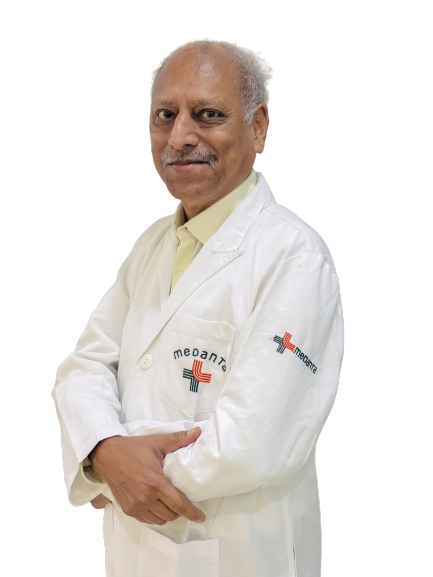
Dr. Sudhir Sharma, Director, trained at The Maharaja Sayajirao University of Baroda for his MS and later completed an MBA in Healthcare at the Faculty of Management Studies, Delhi University. His surgical focus covers robotic abdominal surgery, laparoscopy, bariatric procedures, and laser surgery.
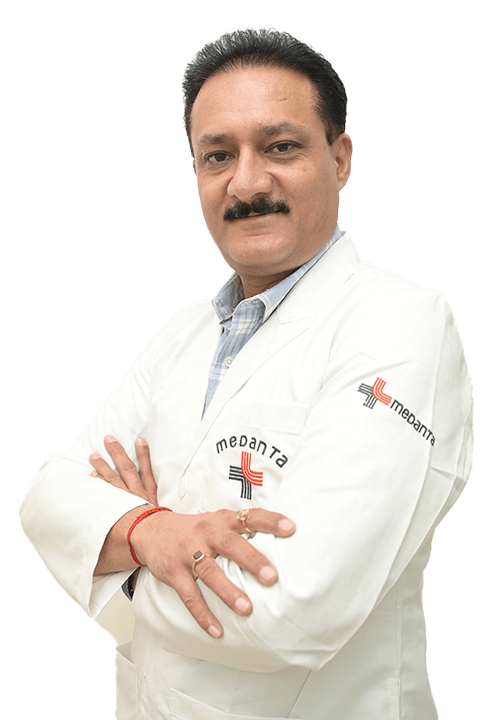
Dr. Tarun Kumar is Associate Director. He did his MS at LLRM Medical College, Meerut, a government institution with a high surgical caseload, which typically means exposure to a wider and more complex range of presentations than smaller or private training environments produce. His focus is on robotic surgery, minimal access surgery, advanced laparoscopy, and bariatric procedures.
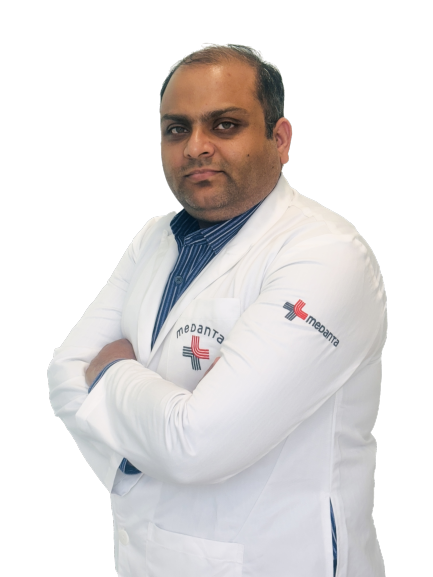
Dr. Anmol Chaudhary completed his MS at GMCH Udaipur and works as Consultant in the department. He operates across planned and emergency GI surgical work including laparoscopic and robotic procedures alongside acute gastrointestinal cases and has developed specific expertise in laser proctology. Managing both the scheduled list and the unscheduled emergencies within the same practice is a meaningful indicator of surgical breadth.
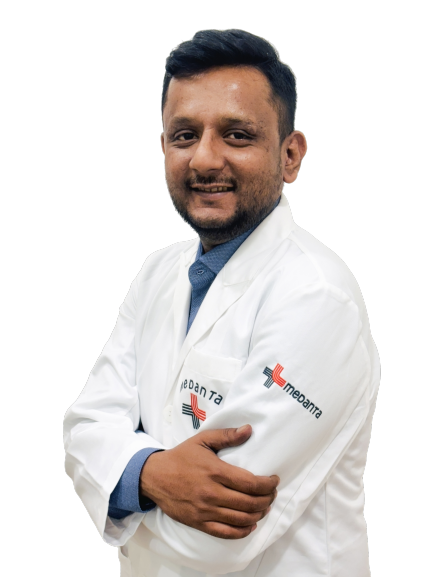
Dr. Nikhil Chauhan, Associate Consultant, holds an MS in General Surgery and an I.A.G.E.S. fellowship, both from Geetanjali University. The fellowship represents structured subspecialty training in minimally invasive surgery that sits above and beyond the general MS qualification. His work focuses on robotic-assisted surgery, advanced laparoscopy, laser-assisted procedures, and minimally invasive general surgery.
What is the difference between robotic surgery and laparoscopic surgery?
Both use small incisions instead of a large open cut. Where they differ is in the tool the surgeon works with and what they can see. In standard laparoscopy, the surgeon holds instruments directly and views the operative field on a flat 2D screen. In robotic surgery, the instruments are mounted on robotic arms and controlled from a console. The camera delivers a 3D magnified view. The instrument tips can rotate beyond the range of a human wrist. None of this means the robot is making decisions; the surgeon controls every movement in real time. What changes is the degree of precision available, particularly in difficult anatomy or confined spaces where standard laparoscopy has limits.
Is bariatric surgery available at Medanta Noida, and who qualifies?
Yes, sleeve gastrectomy and gastric bypass are both performed here. Qualification is not just about BMI. The assessment also looks at whether the patient has obesity-related conditions like type 2 diabetes or hypertension, what weight management has already been attempted, and whether the person is medically fit for surgery. A proper pre-operative workup is required before any procedure is scheduled, covering medical, nutritional, and psychological evaluation. Post-operative follow-up particularly with the dietetics team, is an ongoing part of the process, not something that stops when the patient leaves the hospital.
What is laser proctology, and is it suitable for haemorrhoids?
Laser proctology uses focused laser energy to treat a range of conditions like haemorrhoids, fistulas, fissures and pilonidal sinus. For haemorrhoids specifically laser haemorrhoidoplasty targets the tissue directly, causing it to shrink without the wound that makes conventional haemorrhoidectomy so uncomfortable to recover from. It works best for grade II and III haemorrhoids. Grade IV or certain anatomical variations may still require a different approach. A consultation will confirm what is appropriate for your specific situation.

 1068
1068
 Request Call Back
 Contact
 1068
1068