
Children are not small adults. That distinction matters enormously in surgery. A newborn's anatomy is still developing. An infant's tolerance f...
Children are not small adults. That distinction matters enormously in surgery. A newborn's anatomy is still developing. An infant's tolerance for blood loss, temperature change, and anaesthetic agents is measured in fractions.
Paediatric surgery is a speciality that demands more than technical skill. It requires surgeons who have spent years operating specifically on children, who know how neonatal physiology differs from adult physiology, and who understand that a worried parent needs clear answers.
At Medanta The Medicity, Gurugram, the Department of Paediatric Surgery and Paediatric Urology has been managing surgical conditions in children for years from simple day-case procedures to complex neonatal repairs in babies weighing under two kilograms. The team includes surgeons who trained at leading centres in India and abroad, and who between them have experience spanning general paediatric surgery, neonatal surgery, GI surgery, and urological reconstruction in children.
If your child needs surgery whether it is something you have known about since the antenatal scan or something that has come up suddenly, this is a team that will tell you exactly what is going on, what the plan is, and what you can realistically expect.
The department manages the full range of paediatric surgical conditions, from those that are picked up at birth to conditions that develop during childhood and adolescence. Below is an overview of what the team handles.
Paediatric Gastrointestinal Surgery
GI problems are among the most common reasons children require surgery. Some are congenital (present from birth). Others develop over time. The team at Medanta manages:
Oesophageal atresia and tracheo-oesophageal fistula
Intestinal atresias and malrotation
Hirschsprung's disease and anorectal malformations
Intussusception and bowel obstruction
Gastro-oesophageal reflux disease requiring surgical correction
Inflammatory bowel conditions needing operative management.
Neonatal Surgery
Operating on newborns particularly those born preterm or with multiple anomalies requires a specific kind of training and infrastructure. Neonatal surgery at Medanta is performed in close coordination with the NICU team. Conditions commonly managed include:
Antenatally detected structural anomalies including counselling, surgical planning, and correction
Congenital diaphragmatic hernia
Gastroschisis and omphalocele
Sacrococcygeal teratoma
Biliary atresia and choledochal cyst.
Paediatric Urology
Urological conditions in children range from minor structural variants to complex anomalies that require careful surgical planning and long-term follow-up. The paediatric urology expertise within this department covers:
Hypospadias repair and penile reconstruction
Undescended testis (orchidopexy)
Vesicoureteric reflux and obstructive uropathy
Pyeloplasty for pelvi-ureteric junction obstruction
Ureterocele and duplex kidney management
Bladder and urethral anomalies requiring surgical correction
Urinary tract reconstruction.
Paediatric Thoracic Surgery
Chest conditions in children whether congenital lung lesions, empyema following pneumonia, or mediastinal masses are managed using both open and minimally invasive thoracic approaches. Conditions treated include:
Congenital pulmonary airway malformation (CPAM) and pulmonary sequestration
Empyema and complex pleural infections requiring drainage
Video-assisted thoracic surgery (VATS) for paediatric lung and chest conditions
Mediastinal tumours and masses in children.
Minimally invasive surgery (laparoscopy and thoracoscopy) is now standard practice for many paediatric procedures. But "standard" does not mean appropriate in every case. At Medanta, the decision to use a minimally invasive approach is made individually for each child, weighing their age, weight, the specific anatomy involved, and the complexity of the procedure.
When it is the right choice, the benefits for children are meaningful like smaller incisions, less pain in the days following surgery, shorter time in hospital, and a quicker return to feeding and normal activity. For neonates and infants, where every day of hospitalisation carries its own risks, these advantages are particularly significant.
Procedures the team performs laparoscopically or thoracoscopically at Medanta Gurugram include:
Laparoscopic appendicectomy
Laparoscopic pyeloplasty
Laparoscopic orchidopexy for intra-abdominal testes
Thoracoscopic repair of oesophageal atresia
VATS for empyema and lung lesions
Laparoscopic Kasai procedure for biliary atresia.
More and more structural anomalies are now picked up on routine antenatal scans - a finding on an anomaly scan that flags a possible problem with the baby's intestine, kidneys, lungs, or abdominal wall. For parents, that moment in the sonography room can be overwhelming. What follows - the additional scans, the referrals, the uncertainty is hard.
The paediatric surgery team at Medanta works alongside the fetal medicine unit to counsel families at this stage. The consultation covers what has been seen on imaging, what it is likely to mean at birth, what surgical correction involves, and what the realistic outlook is. These are not quick conversations they take the time they need to take.
Planning the delivery itself — which hospital, with what level of neonatal support, with which surgical team on standby — is also part of this process. For conditions where immediate postnatal surgery is likely, that preparation matters enormously. It means the baby can go from the delivery room to the NICU to the operating theatre without the delays that come from unplanned transfers.
Some of the most serious surgical presentations in children are acute they arrive without warning, often at night, and they need experienced surgical decision-making fast. Medanta Gurugram's paediatric surgery team is available around the clock. The hospital's emergency infrastructure including the PICU and NICU, supports immediate management of acute cases.
Acute conditions commonly managed by the team include:
Acute appendicitis
Intestinal obstruction from any cause
Incarcerated or strangulated hernias
Abdominal and thoracic trauma
Foreign body ingestion particularly those lodged in the oesophagus or airway
Testicular torsion and other acute scrotal conditions
Certain children come with conditions that cross speciality boundaries. A baby with a cardiac defect who also needs abdominal surgery. A child with a urological anomaly who has underlying renal impairment. A patient with a complex syndrome where surgery is only one part of the management picture.
At Medanta, the paediatric surgery department does not operate in isolation. The team works with neonatologists, paediatric cardiologists, paediatric nephrologists, anaesthetists who specialise in paediatric cases, radiologists, and oncologists all within the same hospital. There is no need to coordinate across institutions or wait for referrals to come through. The conversation happens directly, quickly, and with the child's records in the room.
For families managing a child with a complex condition, this matters practically - fewer hospitals to navigate, fewer consultants to chase, and a team that is genuinely coordinating rather than simply corresponding.
Families travelling to Medanta Gurugram for paediatric surgical care come from across NCR, from other states, and from abroad. Several things distinguish the experience here:
Senior surgeons with subspecialty training in neonatal surgery, paediatric GI surgery, and paediatric urology
A dedicated paediatric surgical theatre, equipped and set up specifically for children
On-site NICU and PICU with 24-hour intensivist cover so post-operative critical care does not require a transfer
Laparoscopic and thoracoscopic capability tailored to paediatric anatomy, including in small infants
An antenatal consultation pathway, so families with prenatally diagnosed conditions are prepared well before delivery
A genuinely patient-centred approach - one where parents are kept informed, not managed
Paediatric surgery done well is quiet work. It does not announce itself. The goal is a child who recovers well, a family that understood what happened and why, and a result that holds over time. That is the standard the team at Medanta Gurugram works to.
Who are the paediatric surgeons at Medanta Gurugram?
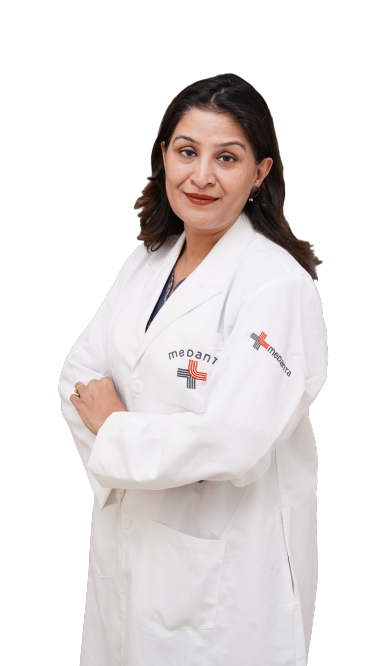
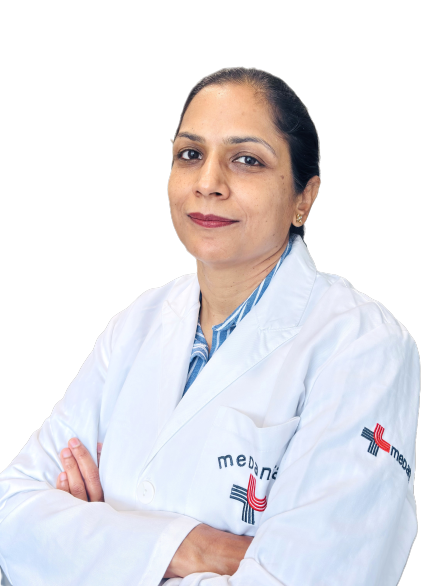
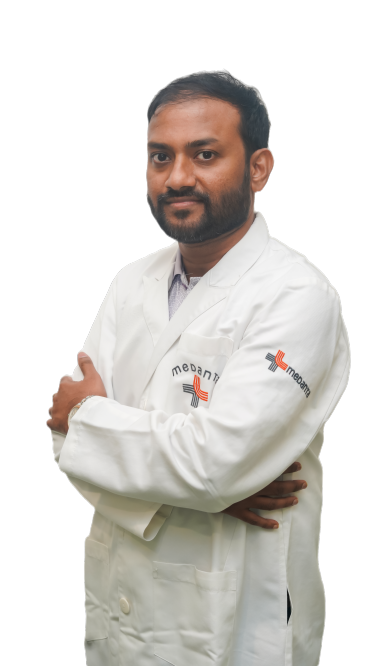
The department is led by Dr. Shandip Kumar Sinha, Director, who has extensive experience in neonatal surgery, paediatric urology, and GI surgery, including the management of antenatally detected anomalies. Dr. Praney Gupta, Senior Consultant, focuses on gastrointestinal surgery, urological procedures, congenital anomalies, and paediatric emergencies. Dr. Rahul Dey, Associate Consultant, manages a broad range of paediatric surgical conditions. Dr. Meera Luthra, Visiting Consultant, brings expertise in paediatric laparoscopic surgery, GI surgery, urology, and VATS - a combination of skills that is relatively uncommon in a single surgeon.
How young can a child be to have surgery at Medanta?
There is no minimum age. Neonatal surgery including procedures on premature babies is performed here. The anaesthetic protocols, surgical instruments, and post-operative monitoring are all adapted for the child's size and age. In life-threatening congenital conditions, surgery may be necessary within the first few hours after birth.
Our baby has been diagnosed with a condition on the anomaly scan. Can we consult the paediatric surgery team before delivery?
Yes, and it is strongly advisable to do so. An antenatal consultation with the paediatric surgery team allows parents to understand the condition, what intervention is likely to be needed, and what the prognosis looks like. It also allows the team to plan the delivery including ensuring the right level of neonatal surgical support is available from day one. Families who come in with this preparation tend to find the postnatal period significantly less overwhelming.


 1068
1068
 Request Call Back
 Contact
 1068
1068