1068
 Request Call Back
 Contact
 1068
Jaw Pain: Causes, Symptoms and When to See a Doctor
Published on: Sep 16, 2026
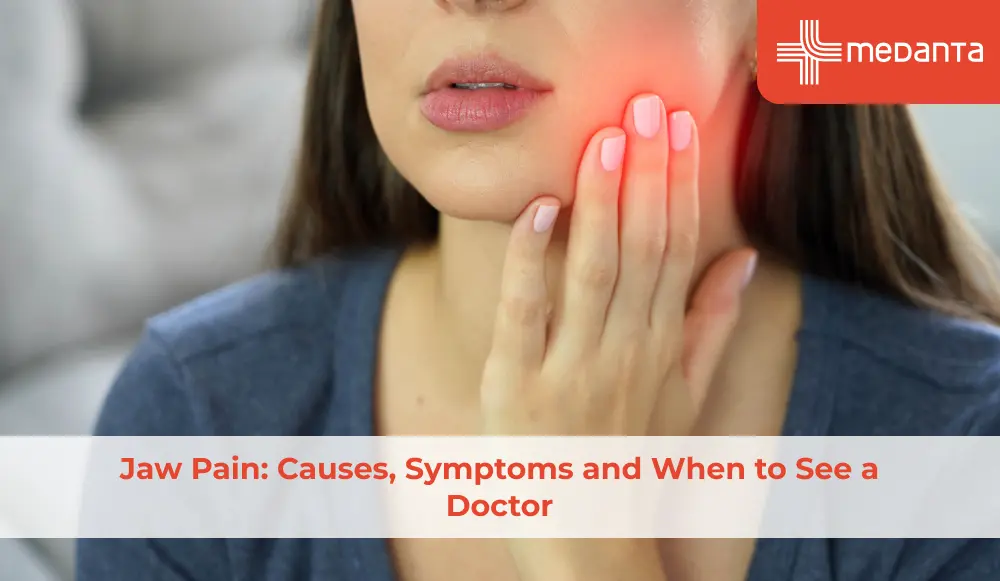
TABLE OF CONTENTS
- Common Causes of Jaw Pain
- Jaw Pain on One Side: What It Means
- Lower Jaw Pain and Jaw Bone Pain Explained
- Jaw Pain Near the Ear: Possible TMJ Connection
- Jaw Tightness and Pain When Opening Mouth
- Tooth and Jaw Pain: How They're Connected
- Treatment Options for Jaw Pain
- When Jaw Pain Needs Urgent Medical Attention
- Conclusion
- FAQs
- References
Jaw pain is one of the most frequently misattributed symptoms in clinical practice. It can originate in the joint itself, the surrounding muscles, the teeth and gums, the ear or structures as distant as the heart. Where in the jaw the pain is felt, whether it worsens with chewing or occurs at rest, and what other symptoms accompany it are key questions that guide diagnosis.
Common Causes of Jaw Pain
Jaw pain has a wide differential. The most common causes encountered in clinical practice include the following.
Temporomandibular disorder (TMD): The leading cause of non-dental jaw pain. TMD involves dysfunction of the temporomandibular joint (TMJ), the surrounding masticatory muscles or both. It produces pain in the joint itself and frequently refers pain to the ear, temple, and teeth.
Dental and periodontal causes: Dental abscess, impacted wisdom teeth, cracked tooth syndrome, severe caries and advanced periodontitis are among the most common causes of acute jaw pain.
Bruxism: Nocturnal teeth grinding and daytime clenching overload the masticatory muscles and the TMJ. Bruxism is a major cause of morning jaw pain, jaw tightness, and headache in adults.
Trigeminal neuralgia: Causes intense, brief, electric shock-like pain along the trigeminal nerve, which supplies the jaw, teeth, gums, cheek, and forehead. It affects one side of the face and can be triggered by touch, chewing, or speaking.
Arthritis: Both osteoarthritis and rheumatoid arthritis can affect the TMJ, producing progressive joint pain, stiffness, and crepitus (grating sounds on jaw movement)
Referred cardiac pain: Jaw pain, particularly in the lower jaw, can be a presenting symptom of acute myocardial infarction, especially in women. This must always be considered when jaw pain is acute in onset, occurs at rest, and is accompanied by chest discomfort, breathlessness or sweating.
Jaw Pain on One Side: What It Means
Jaw pain confined to one side narrows the differential significantly. Dental causes (abscess, impacted wisdom tooth, cracked tooth, pericoronitis) almost always present unilaterally, corresponding to the affected tooth. TMD frequently presents on one side when disc displacement or muscle spasm is greater on that side.
Trigeminal neuralgia is strictly unilateral and never crosses the midline. Parotid gland disorders, including parotitis and parotid tumours, present unilaterally and produce pain and swelling just in front of the ear.
Unilateral jaw pain that is severe, progressive, or associated with swelling, fever, or restricted mouth opening warrants urgent assessment to exclude deep space infection, osteomyelitis or parotid pathology.
Lower Jaw Pain and Jaw Bone Pain Explained
Impacted mandibular third molars (lower wisdom teeth) are among the most common causes of lower jaw pain in young adults. The partially erupted tooth creates a space that traps food and bacteria, causing pericoronitis and often severe, throbbing pain that may radiate to the ear and throat.
Jaw bone pain that is deep, constant or boring in quality raises concern for osteomyelitis of the mandible. This is more common in people with diabetes, those on bisphosphonate medications, or those who have received radiotherapy.
Lower jaw pain that radiates down the left arm or into the chest in a middle-aged or older patient must be treated as a potential cardiac event and warrants immediate emergency assessment.
Jaw Pain Near the Ear: Possible TMJ Connection
Pain felt just in front of the ear, where the jaw meets the temporal bone of the skull, is the cardinal location of TMJ disorder. Pain at this site that worsens with chewing, yawning or jaw opening, particularly when accompanied by clicking or popping sounds, is characteristic of TMJ disorder (TMD).
However, several other structures in this region can produce pain at or near the ear. Otitis media (middle ear infection), otitis externa, and mastoiditis can all produce pain felt at or behind the jaw near the ear, and are sometimes confused with TMD.
Jaw Tightness and Pain When Opening Mouth
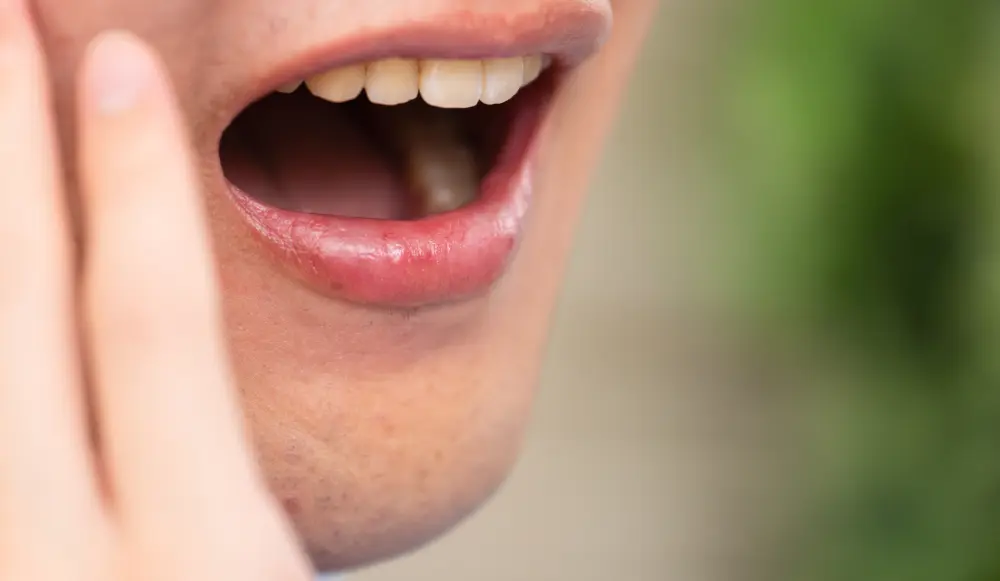
Difficulty opening the mouth, jaw stiffness on waking and a sensation of tightness are characteristic of bruxism and masticatory muscle spasm. The masseter muscles (at the angle of the jaw) and the temporalis muscles become hypertonic with repeated clenching and grinding, producing a persistent ache and restricted jaw opening.
Trismus, defined as a jaw opening of less than 35 millimetres between the upper and lower incisors, has a specific differential. Causes include acute pericoronitis, dental abscess with spread to the pterygoid muscles, tetanus, and acute disc displacement without reduction in the TMJ. Tetanus produces progressive generalised muscle rigidity beginning with the jaw muscles and remains a concern in unvaccinated individuals in India following contaminated wound injuries.
Post-injection trismus, a temporary jaw tightness following dental local anaesthetic injection near the pterygoid muscles, is another common cause.
Tooth and Jaw Pain: How They're Connected
Dental pain and jaw pain are closely intertwined because the teeth and jaw share innervation via the trigeminal nerve. A pulpitic or necrotic tooth can produce pain perceived throughout the jaw rather than from a specific tooth. TMD-related masticatory muscle trigger points also refer pain to specific teeth, producing apparent toothache without dental disease.
Periapical abscess can spread to involve the surrounding bone and soft tissues, producing swelling, fever, and diffuse jaw pain. Late-presenting dental abscesses are a significant cause of serious jaw infections, including Ludwig's angina (a rapidly spreading infection of the floor of the mouth and neck that is a life-threatening surgical emergency).
A cracked tooth may produce no visible abnormality on routine examination or X-ray. The hallmark symptom is sharp pain on biting that releases immediately when pressure is released, with sensitivity to temperature.
Treatment Options for Jaw Pain
Dental treatment: Dental pain from abscess, caries, or impacted wisdom teeth requires root canal treatment, extraction, or antibiotic therapy as clinically appropriate.
Occlusal splints (night guards): Custom fabricated hard acrylic splints worn over the teeth are the first line evidence-based treatment for bruxism and TMD related jaw pain and redistribute bite forces, reduce masticatory muscle activity and protect the joint.
Pharmacological management: NSAIDs such as ibuprofen or naproxen reduce pain and inflammation in acute TMD and dental-related jaw pain. Muscle relaxants are used for acute masticatory muscle spasm.
Physiotherapy and jaw exercises: Physiotherapy reduces masticatory muscle tension and improves jaw mobility. Gentle jaw-opening stretches, lateral excursion exercises and heat application are commonly prescribed home exercises.
Treatment of referred causes: Sinusitis-related jaw pain responds to nasal decongestants, saline rinses, and antibiotics. Trigeminal neuralgia is treated with carbamazepine as the first-line drug.
When Jaw Pain Needs Urgent Medical Attention
Certain clinical features alongside jaw pain indicate a need for immediate or urgent medical assessment. They are:
Jaw pain at rest with chest discomfort, breathlessness, sweating, nausea, or pain radiating to the left arm.
Rapidly progressive jaw swelling, difficulty swallowing, or inability to open the mouth.
Progressive inability to open the mouth combined with generalised muscle stiffness and a history of a wound or injury.
Jaw pain associated with jaw swelling, loose teeth, or a non-healing ulcer in the mouth in a person over 40 years of age with a history of tobacco use.
Jaw pain with neurological signs such as facial weakness, facial numbness, or difficulty speaking.
Conclusion
Jaw pain is a symptom with a broad and clinically important differential. Most cases arise from dental disease, bruxism or TMD and are manageable with dental or conservative treatment. However, the same symptom can signal referred cardiac pain, serious jaw infection, or oral cancer when certain accompanying features are present. Accurate diagnosis depends on the location and character of the pain, its relationship to jaw movement, and the presence of swelling, fever, or systemic symptoms.
FAQs
What causes jaw pain on one side?
The most common causes of unilateral jaw pain are dental abscess, impacted wisdom tooth, TMD with disc displacement, trigeminal neuralgia and parotid gland disorders. Each has distinct features that guide diagnosis.
What does lower jaw pain indicate?
Lower jaw pain most commonly indicates impacted wisdom teeth, pericoronitis or a dental abscess. Persistent deep bone pain raises concern for osteomyelitis. Pain radiating to the chest or left arm may indicate a cardiac event.
Why does my jaw hurt near my ear?
Pain near the ear and jaw is most commonly caused by TMD affecting the temporomandibular joint, which sits directly in front of the ear. Ear infections, parotid gland disorders and mastoiditis must be distinguished from TMD.
What causes jaw pain when opening the mouth?
Pain on jaw opening most commonly indicates masticatory muscle spasm from bruxism, TMD with disc displacement, or pericoronitis. Restriction below 35 mm may indicate a deep space infection or tetanus.
Is jaw pain related to tooth problems?
Dental abscess, cracked tooth, severe caries, and periapical infection are common causes of jaw pain. TMD-related muscle trigger points also refer pain to the teeth, producing apparent toothache without dental disease.
What is jaw tightness a sign of?
Jaw tightness on waking most commonly indicates nocturnal bruxism (teeth grinding during sleep). If you have a persistent jaw tightness during the day it may be due to masticatory muscle hypertension from stress or TMD. Jaw tightness following a wound injury in an unvaccinated person may indicate tetanus.
How is jaw pain treated at home?
Warm compresses two to three times daily, soft foods, ibuprofen for pain relief and avoiding hard foods provide symptomatic relief. Persistent jaw pain requires professional assessment.
Can jaw pain be a sign of a heart problem?
Yes lower jaw pain at rest with no obvious dental cause can be a symptom of acute myocardial infarction especially in women. Jaw pain with breathlessness, sweating or chest discomfort requires immediate emergency assessment.
What causes pain under the ear behind the jawbone?
Pain under the ear behind the jawbone most commonly originates from the parotid salivary gland, mastoid bone, external ear canal or referred TMJ pain.
When should I see a doctor for jaw pain?
See a doctor immediately if jaw pain occurs with chest discomfort, breathlessness, or sweating. Jaw pain with swelling, difficulty swallowing, or fever requires urgent attention. Jaw pain lasting more than two weeks warrants assessment.
Can arthritis cause jaw pain?
Yes both osteoarthritis and rheumatoid arthritis can affect the TMJ, producing progressive joint pain, stiffness, crepitus, and limited jaw opening. Rheumatoid arthritis of the TMJ is more common in women. Psoriatic arthritis and ankylosing spondylitis may also be involved.
References
1. Schiffman E, Ohrbach R, Truelove E, et al. Diagnostic criteria for temporomandibular disorders (DC/TMD) for clinical and research applications. J Oral Facial Pain Headache. 2014;28(1):6–27. https://doi.org/10.11607/jop.1151
2. Gauer RL, Semidey MJ. Diagnosis and treatment of temporomandibular disorders. Am Fam Physician. 2015;91(6):378–86. https://www.aafp.org/pubs/afp/issues/2015/0315/p378.html
3. Horowitz LG. Jaw pain: overview and approach. Am Fam Physician. 2005;71(12):2340–6. https://www.aafp.org/pubs/afp/issues/2005/0615/p2340.html
4. Lipton JA, Ship JA, Larach-Robinson D. Estimated prevalence and distribution of reported orofacial pain in the United States. J Am Dent Assoc. 1993;124(10):115–21. https://doi.org/10.14219/jada.archive.1993.0200
5. Kumar V, Singh B, Agarwal P. Ludwig's angina: a clinical review with focus on Indian perspective. J Oral Maxillofac Surg. 2019;77(10):2061–7. https://doi.org/10.1016/j.joms.2019.03.021