1068
1068
 Request Call Back
 Contact
 1068
1068





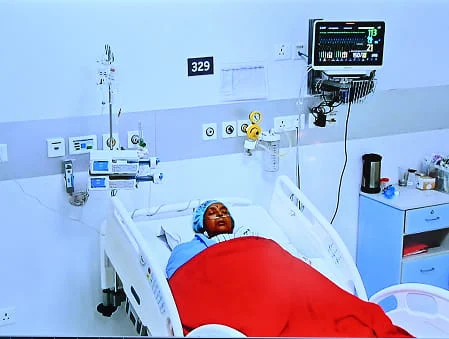
State-of-the-art facility boasts one of the largest closed critical care unit featuring 120 medical ICU beds
Comprehensive ICU services spanning all medical super specialities.
Specialized units for Pulmonary-CCM ICU, Gastro-CCM ICU, Cardio-CCM ICU, Obstetric-CCM ICU, Nephrology-CCM ICU, Neurology-CCM ICU, Oncology-CCM ICU, Organ Transplant-CCM ICU patients
With a vision to cure the rare and difficult to treat infections, we embellished a domain of Super-specialized division of Infectious Disease as a part of critical care
Acute care medicine clinic to tackle the need of urgent care
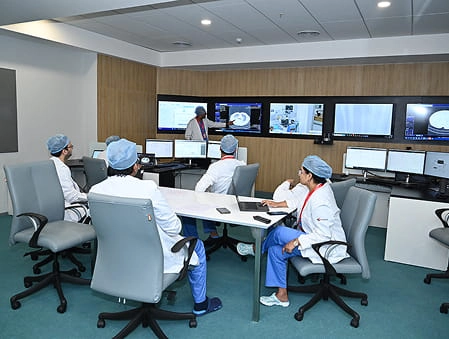
Our commitment extends beyond the geographical constraints , offering Medanta e-ICU services and deliver high-quality critical care
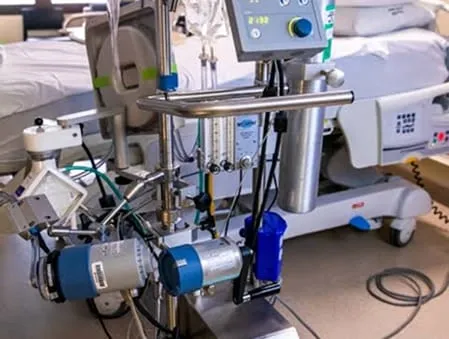
Intensive Care Unit is a high stake environment equipped with state of art technology, expert professionals and evidence based medical practices. In our unwavering dedication to providing the highest level of care , our team of diversified super-specialized intensivists collaborate seamlessly to address a wide spectrum of critical conditions and offer a holistic approach to patient management. Complementing the medical expertise, our established Critical Care Rehabilitation Team of acute care rehab specialists, physiotherapists, nutritionists, infection control nurses, clinical nursing and team of counsellors ensure holistic recovery support. Our department stands at the forefront of innovation utilizing advanced technologies such as critical care therapeutic apheresis, CRRT and ECMO. Also, the digital monitoring system inside ICU and establishment of Medanta e-ICU command centre is an important milestone. On top of it, your health and wellbeing are our top priorities with focus on precision and accuracy, alongside a deep sense of empathy.
Critical Care Medicine is a pivotal branch of healthcare, that stands at the forefront of medical excellence and dedicated to managing life-threatening conditions. Evolution of critical care medicine as a super-speciality took a long journey. Over a period, the medical world acknowledged the importance of its diversified approach which incorporates the potential of superior diagnosis establishment, intelligent monitoring emphasizing rapid response, precise therapeutic decisions and simultaneously providing acute care rehabilitation to ICU patients. This unified approach harnesses a wealth of knowledge , ensuring comprehensive analysis, effective and timely decision-making.


Your health is our priority, and Critical Care is where that commitment shines
Your health is our priority, and Critical Care is where that commitment shines
Medanta's Critical Care Department employs state of the art equipment and technologies like:
- ECMO
- Female gynecological intensive care
- EICU
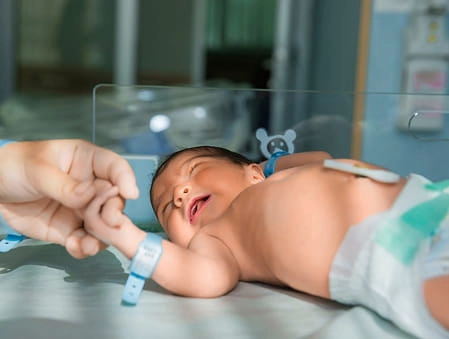
- Pediatrics intensive care