1068
1068
 Request Call Back
 Contact
 1068
1068


At Medanta Cancer Institute, we have a dedicated team of oncologists, organ-specific cancer surgeons, and experts from various specialities, including radiation therapy, and medical and haemato oncology, to deliver care that addresses all aspects of the disease.
Enquiry Form

Search for Hospitals
Cancer Care Highlights

01
Multi-disciplinary Tumor Board approach for end-to-end, customised treatment of all cancers
02
Latest, advanced technologies for fast, accurate diagnosis and precise intervention
03
International infection control protocols, state-of-the-art infrastructure for patient safety
04
Among first in India to adopt latest therapies like SBRT that treat lung and liver cancers in under 20 minutes
05
Experts in minimally invasive robotic surgeries for faster recovery
06
Genetic testing for personalised cancer risk assessment
About the Speciality
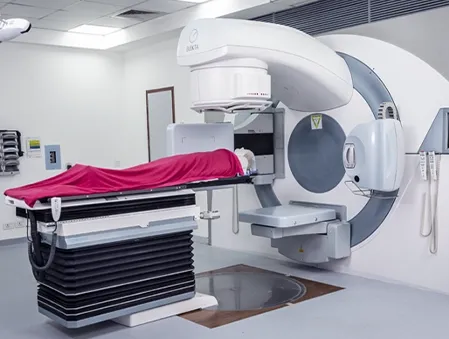
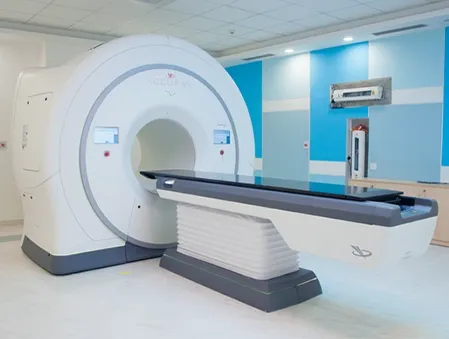
Medanta Institute of Cancer Care is a one-stop destination for comprehensive treatment of all cancers – from risk assessment, prevention to multi-modal treatment and palliative care. We understand that each cancer patient is unique and so should be their treatment plan. For this, we have developed a Tumor Board that includes organ-specific cancer surgeons, radiologists, and medical and haemato oncologists. Our cancer specialists, many of whom are pioneers in their fields, work together seamlessly with surgeons across departments and specialities to provide the most holistic and cutting-edge care using technologies such as Varian Edge, CyberKnife VSI Robotic Radiosurgery, VMAT, IGRT, Tomotherapy and other innovative diagnostic and imaging equipment. Our institute is also actively involved in research, creating more robust protocols, and ushering early adoption of newer therapies such as CAR T-cell Therapy.
Cancer Care Sub-specialities
Comprehensive Cancer Care Team
Innovative and Insightful Cancer Care


The Tumor Board take a unique multi-disciplinary approach to curate a customised treatment plan for each patient depending on the type and stage of cancer. We also bear in mind each patient’s individual circumstances, values, and preferences.

Our specialists are backed by a skilled support network that includes specially trained oncology nurses, radiologists, pathologists, and genetic counsellors.
Our Treatments
Cancer management requires expert intervention and treatment

01
Robotic partial nephrectomy
Robotic partial nephrectomy is a surgical procedure that employs robotic technology to remove only the diseased portion of a kidney while preserving the healthy tissue. This approach is used to treat kidney tumours, minimising the risk of kidney function loss and postoperative complications.
02
Immunotherapy
Immunotherapy is a form of cancer treatment that enhances the body's natural defenses to combat cancer. It involves using substances created either by the body or in a laboratory to improve the immune system's ability to identify and eliminate cancerous cells.
03
Robotic Radical Prostatectomy
Robotic radical prostatectomy is a minimally invasive surgical technique for removing the prostate gland in prostate cancer patients. Surgeons use robotic assistance to enhance precision and reduce complications. It offers faster recovery and less pain compared to traditional open surgery.
04
Leukaemia
Leukaemia is a type of blood cancer that affects the white blood cells. It primarily starts in the bone marrow, the site where blood cells are produced. The most common types of leukaemia acute lymphoblastic leukaemia (ALL), acute myeloid leukaemia (AML), and chronic myeloid leukaemia (CML). It is crucial to consult a doctor for accurate diagnosis and treatment options specific to the type you might have.
05
Craniospinal Irradiation
Craniospinal Irradiation is essentially applied on patients who are at a risk of suffering from a disease or metastasized brain tumour. It is also used when the central nervous system (CNS) cannot be treated with chemotherapy.
06
Inherited Blood Disorders
Inherited blood disorders such as Thalassemia and Sickle Cell Disease (SCD) significantly impact the production and function of haemoglobin, the protein in red blood cells responsible for oxygen transport.
Thalassemia affects the body's ability to produce haemoglobin. There are two main types: alpha and beta-thalassemia. The severity of symptoms varies depending on the type and number of gene mutations inherited. Individuals may experience mild to severe anaemia, leading to symptoms like fatigue, weakness, and shortness of breath. Management includes regular blood transfusions and chelation therapy to remove excess iron from the body.
SCD is a group of inherited disorders that cause abnormal haemoglobin. The most common form is Sickle Cell Anaemia. In SCD, red blood cells become sickle-shaped, stiff, and sticky, leading to a shortage of healthy red blood cells. These sickle cells can block blood flow in small vessels, causing severe pain and complications such as infections, acute chest syndrome, and stroke.
Both Thalassemia and SCD can be cured with Bone Marrow Transplant to improve quality of life and longevity.
Ailments
Cancer management requires expert intervention and treatment
Blood Cancer
Blood cancer, such as leukemia or lymphoma, affects the blood-forming tissues in the body, leading to an abnormal production of blood cells and potentially life-threatening consequences.
Breast Cancer
Breast cancer is a type of cancer that originates in the cells of the breast. Though it is more common in women, it can also affect men. Symptoms of breast cancer may include a lump in the breast, changes in breast size or shape, nipple discharge, or skin changes on the breast. It is crucial to detect breast cancer early through regular breast screenings and self-examinations to ensure successful treatment.
Liver Cancer
It is a condition that happens when normal cells in the liver become abnormal in appearance and behaviour. Malignant or cancerous cells that develop in the liver's normal cells cause the condition called hepatocellular carcinoma.
Head and Neck Cancer
Cancer is a stage when carcinoma cells begin to grow in an uncontrolled manner. They form a mass that is called as tumor. The most dangerous property of a cancerous cell is that it grows and spreads to other body parts. Head and neck cancer is no different from it.
Head and neck cancer is a state when different malignant tumors are developed around: Throat, Neck, Sinus, Mouth, Larynx
Carcinoma Pancreas
The pancreas is a large gland in the digestive system which is positioned in the abdominal cavity just behind the stomach. With the function of producing several vital hormones, it is also a digestive organ. Pancreatic cancer arises when pancreatic cells begin to grow out of control with the formation of a mass, called tumor. These cancerous cells can also effect others parts of the body. There are many types of pancreatic cancer. People who don’t smoke and maintain a healthy lifestyle are at a lower risk of developing this cancer. With its increasing cases every year, the chances of survival is low when diagnosed at a later stage. There are many treatment options available that can advance the quality of life of people with pancreatic cancer.
Lung Cancer
A malignant tumour that develops in the cells of the lungs, Lung Cancer can be of two types based on cell size – small cell lung cancer and non-small lung cancer.
Tracheal Cancer
The tube that connects the mouth and nose to the lungs is called as the Trachea, and the air we breathe goes in and out of the lungs through it. Trachea is placed in front of the oesophagus and it carries the food down from the mouth. It is about 5 - 6 inches long and consists of fibrous tissue rings.
Latest Technology Utilisation
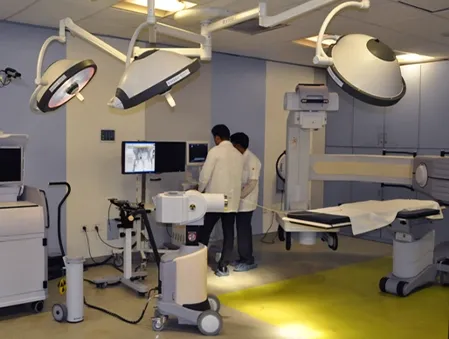
At Medanta's Oncology Department we harness cutting-edge medical technologies like:
- Mammography
- CyberKnife
- Integrated Brachytherapy Unit
- Linear Accelerators (provision for IGRT/ IMRT)
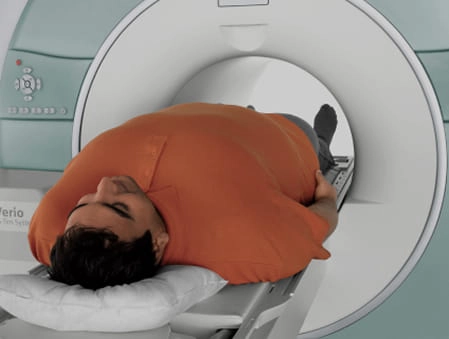
- Artemis MRI/ TRUS Fusion Prostate Biopsy solution
- Tomotherapy
Mammography
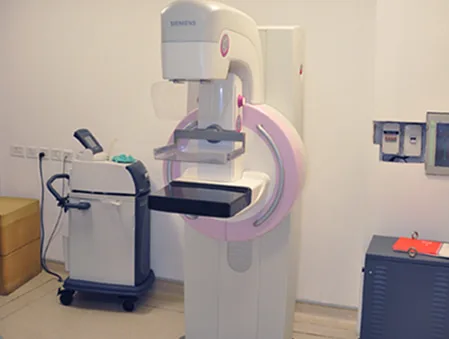
Mammography is an X-ray technique which is used to obtain a picture of the breast. X-ray of the breast is performed by exposure of the breast to low doses of radiations. For a few seconds, breasts are compressed between two thin plates. Mammography is used in early detection of breast cancer, typically through detection of characteristic masses or microcalcifications. With the Mammography machine available at Medanta, radiologists can get a deep insight of the body in 2D and 3D form, which results in early detection with better accuracy.