1068
1068
 Request Call Back
 Contact
 1068
1068


The Division of Nephrology curates different treatment modalities depending on the cause and stage of kidney disease. This integrated team makes sure that every patient receives suitable, advanced care available.
Enquiry Form

Search for Hospitals
Nephrology Highlights

01
Leaders in chronic kidney disease prevention and early intervention
02
Pioneering institute for cutting-edge nephrology care and research
03
Dedicated team of nephrologists committed to improving kidney health
04
A holistic approach to kidney disease management, prioritising patient well-being
05
Utilizing state-of-the-art technologies for precise diagnostics
06
Personalised treatment plans tailored to each patient's unique needs
About the Speciality
The Medanta Division of Nephrology provides medical management for all common and complex conditions affecting the kidneys, including cancers and systemic diseases that need specialised treatment such as autoimmune disorders. Our Nephrologists specialise in prevention and end-to-end management of kidney diseases. They work collaboratively to ensure that the health of patients' kidney doesn’t deteriorate and improves to an extent that it needs no intervention from their surgical counterparts - the urologists. Disease reversal is also a key driving force of our experts. Our comprehensive suite of diagnostic and disease management services, including dialysis and transplant medicine, is both cost-effective and designed to prioritize patient comfort throughout their treatment journey. We are steadfast in our mission to enhance patients' quality of life post-treatment, and our medical team leverages state-of-the-art technology for precision in delivering care.
Nephrology Team
Empowering Kidney Health for a Brighter Tomorrow


Using advanced protocols and techniques, our experts work towards arresting kidney disease to prevent end-stage failure (stage 5), and making patients’ course of treatment comfortable.

As the largest contributors of CKD, diabetes and hypertension are an area of focus at the Division of Nephrology. We specialise in helping patients whose kidneys have been impacted because of uncontrolled or advanced disease.

The division uses the Tumour Board approach for patient-oriented management of adrenal cancer. We work as a team to break down the physical and administrative barriers through interdisciplinary interactions between urologists, nephrologists, medical and radiation oncologists.
Our Treatments
Nurturing Hope through Nephrology Excellence

01
Dialysis
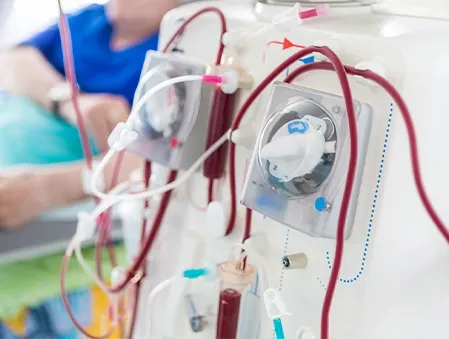
Dialysis is a procedure that seeks to mechanically carry out the functions that were previously performed by your kidneys. The procedure uses a filtration device to filter out all the waste present in your blood as well as keep your fluid and electrolyte levels in check. There are three major dialysis techniques our physicians prescribe based on case factors: Haemodialysis, Peritoneal dialysis and Continuous Renal Replacement Therapy (CRRT).
02
Transplant Medicine
Each kidney transplant candidate is given a lot of medicines after the procedure, including immunosuppressants, antibiotic and antiviral medicines, blood sugar medication, blood thinning medicines, medicines to protect the stomach, and manage other health issues. Together, these preserve the patient’s life and ensure the new organ is not rejected by the body.
03
Paediatric ABO kidney transplant
A paediatric ABO kidney transplant involves the transplantation of a kidney from a compatible donor to a paediatric recipient, despite differences in blood type, aiming to restore kidney function in children with renal failure.
Ailments
Nurturing Hope through Nephrology Excellence
End-stage Kidney Failure
Also known as renal failure, this is a condition in which the kidneys lose their ability to remove waste and balance fluids, and everything gets accumulated in the blood. The two main forms are Acute Kidney Injury (AKI), which is often reversible with adequate treatment, and Chronic Kidney Disease (CKD), which is not reversible.
Chronic Kidney Disease (CKD)
Chronic Kidney Disease is defined as the gradual loss of kidney function over a period of months. It progresses in stages from 0 to 5. Most people have initial stages of CKD that can be managed with lifestyle changes and medication. Only about 0.5-1% patients have CKD stage 5 or kidney failure. In this stage, a person usually requires either dialysis or kidney transplantation to sustain life.
Urinary Tract Infection (UTI)
An infection that occurs in any part of the urinary system, UTIs usually start in the lower urinary tract i.e. the bladder and the urethra. If left untreated, UTI can spread to the kidneys and cause serious damage. The choice of treatment for urinary infections depends upon the type of bacteria found in the urine, the health of the patient and the extent up to which the infection has spread.
Urinary Incontinence
Urinary incontinence is when urine is involuntarily lost, ranging from occasional leaks to a complete lack of control. It affects various age groups but is more prevalent in older adults, particularly women. Treatment depends on cause of incontinence.
Kidney Stones
Kidney stones are hard objects that form when the concentration of the chemical substances present in urine exceeds a certain level, i.e. there are too many substances in too little liquid. The size of kidney stones may vary. Although kidney stones generally originate in the kidney, they can travel to ureters, bladder, and urethra. Untreated kidney stone can irreversibly damage the kidneys.
Adrenal Cancer
Adrenal cancer is a condition that occurs when abnormal cells form in or travel to the adrenal glands. It is advisable that the patient gets the adrenal glands removed through surgery, before the cancer spreads to other parts of the body.
Latest Technology Utilisation
Medanta's Nephrology Department has advance equipment like:
- CT Scan
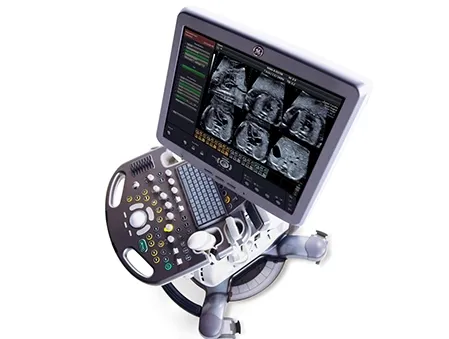
- Ultrasound
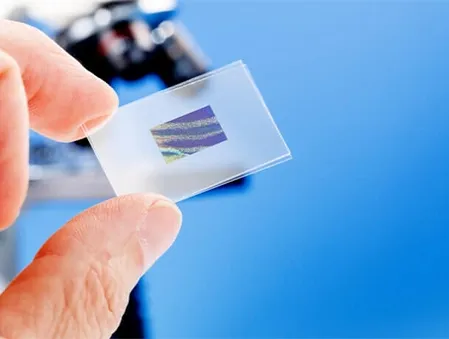
- Biopsy
- Haemodialysis
CT Scan
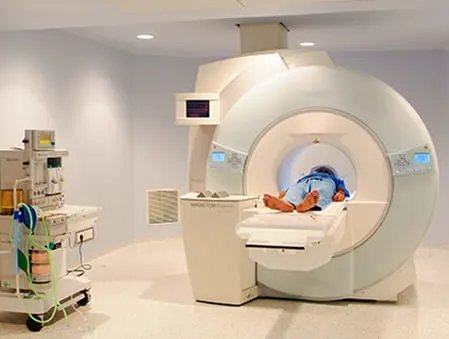
This non-invasive imaging technique offers a complete 3-Dimensional visual representation of the liver and other organs in as little as 5 seconds. With this machine, data is acquired and processed 4 times faster than in conventional machines, allowing us to provide you with an accurate diagnosis in the shortest time possible.