- All Speciality
- Bone Marrow Transplant
- Cancer Care
- Cardiac Care
- Cardiac Surgery
- Chest Surgery
- Clinical & Preventive Cardiology
- Critical Care
- Dentistry
- Dermatology
- Dietetics and Nutrition
- Electrophysiology
- Emergency
- Endocrine and Breast Surgery
- Endocrinology & Diabetes
- Endovascular and Interventional Radiology
- ENT, Head and Neck Surgery
- Gastroenterology
- Gastrosciences
- GI Surgery, GI Oncology and Bariatric Surgery
- Gynaecology and GynaeOncology
- Haemato Oncology
- Head & Neck Cancer Thyroid & Parathyroid Surgery
- Internal Medicine
- Interventional Cardiology
- Kidney Transplant
- Lab & Pathology
- Medical Oncology
- Mental Health
- Nephrology
- Neurology
- Neurosciences
- Neurosurgery
- Nuclear Medicine
- Ophthalmology
- Orthopaedics
- Paediatric Care
- Plastic, Aesthetic and Reconstructive Surgery
- Radiation Oncology
- Radiology & Imaging
- Renal Care
- Respiratory & Sleep Medicine
- Robotics, MIS & General Surgery
- Urology
Interventional Cardiology Doctors in Noida
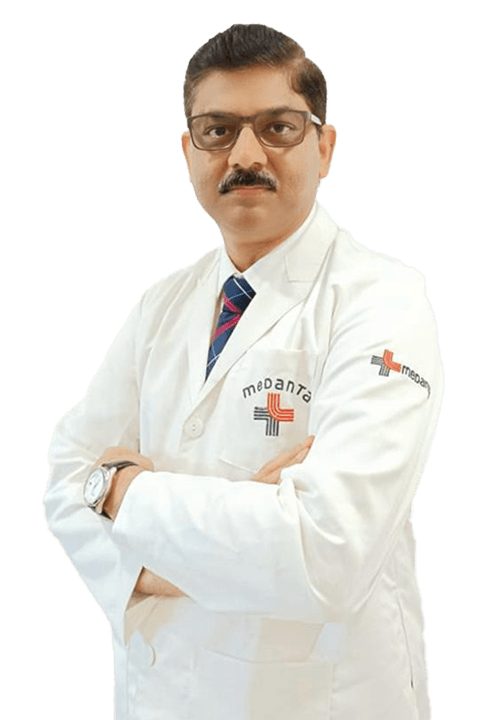
- Cardiac Electrophysiology (Arrhythmia) – 3D Mapping, Radiofrequency Ablation, Pacemaker Implantation
- Heart Failure – Cardiac Device Implantation (AICD, Biventricular Pacemaker)
- Complex Coronary Intervention - Intravascular Lithotripsy (IVL), Rotablation
- Coronary Imaging – Optical Coherence Tomography (OCT), Intravascular Ultrasound (IVUS)
- Fellowship (Cardiac Electrophysiology and Pacing) - National Heart Centre Singapore
- DM (Cardiology) - GSVM Medical College Kanpur
- MD (Medicine) - GSVM Medical College Kanpur
- MBBS - LLRM Medical College Meerut.
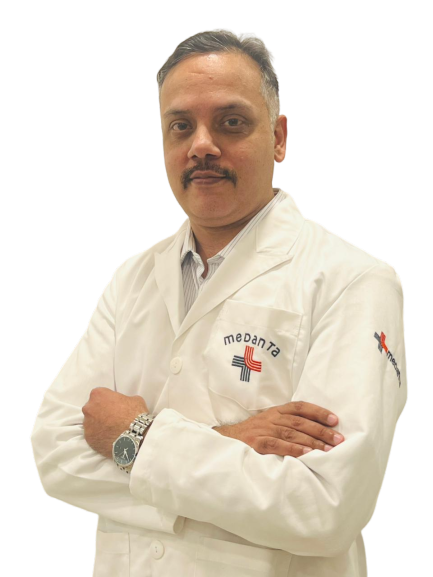
- Coronary Artery Disease and Acute Coronary Syndromes
- Heart Attack and Cardiac Emergencies
- Complex Coronary Lesions
- Cardiac Rhythm Disorders
- DNB Cardiology
- MD General Medicine
- MBBS
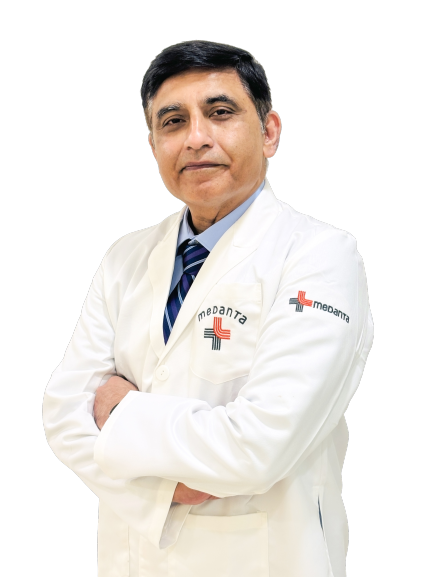
- Radial Coronary angiography and angioplasty, including CHIP, rotablation, IVL, IVUS, and OCT
- Device implantation: Pacemaker, CRTD, AICD
- Structural heart disease intervention,s including TAVI
- Clinical cardiology and complex interventional procedures
- DM (Cardiology) AIIMS
- New Delhi
- Diplomate of National Board (Cardiology) National Heart Institute and Escorts Heart Institute New Delhi
- MD (General Medicine) DMC Ludhiana
- MBBS DMC Ludhiana.
- Interventional Cardiology
- Complex Coronary Interventions
- Advanced Cardiac Imaging
- Evidence-based Cardiovascular Disease Management
- DNB (Cardiology) National Board of Examinations New Delhi
- DM (Cardiology) Grant Medical College and Sir JJ Group of Hospitals Mumbai
- MD (Medicine) Government Medical College Nagpur
- MBBS Indira Gandhi Medical College Nagpur.
- Coronary and Peripheral Angiography and Angioplasty
- Structural and Interventional Cardiology
- Heart Failure and Hypertension Management
- Echocardiography and Stress Testing
- DM (Cardiology) - Jawaharlal Nehru Medical College Belgaum
- Fellowship in Non-Invasive Cardiology - Jawaharlal Nehru Medical College Belgaum
- MD (Internal Medicine) - Jawaharlal Nehru Medical College Belgaum
- MBBS - Jawaharlal Nehru Medical College Belgaum.
- Non-invasive cardiology (TMT, 2D Echo, Holter)
- Management of Coronary Artery Disease (CAD) and Acute Coronary Syndrome (ACS)
- Heart failure and Arrhythmia management
- Lifestyle and cardiac risk factor modification
- PG Diploma in Clinical Cardiology (PGDCC) Noida
- MBBS - Kasturba Medical College Manipal.
- Radial Interventions
- Coronary Stenting including Complex PCI
- Heart Failure
- Electrophysiological Study
- Device Implants (PPI, AICD, CRT)
- DM (Cardiology) - Gauhati Medical College and Hospital Guwahati
- MD (Internal Medicine) - Maharani Laxmi Bai Medical College Jhansi
- MBBS - Kasturba Medical College Mangalore
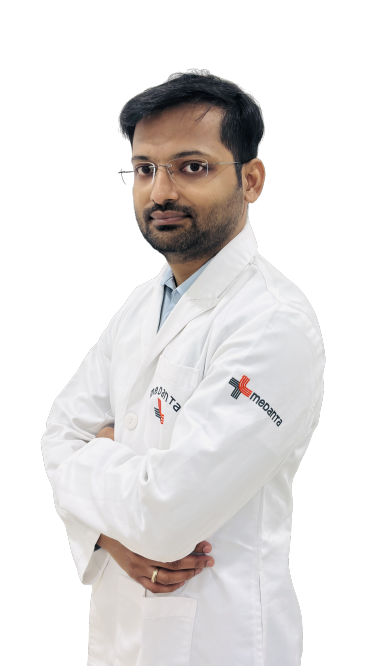
- Interventional Cardiology (Coronary and Structural)
- Complex Coronary Angioplasty (Left Main, CTO, Bifurcation, Calcium Modification)
- Valvuloplasty (BMV, PVBD) and Device Closure (ASD, VSD, PDA)
- Peripheral Angioplasty (Renal, SMA, SFA, Subclavian, Carotid)
- Intracoronary Imaging and Physiology (IVUS, OCT, FFR, IFR)
- Pacemaker, ICD, CRT Device Implantation
- DM (Cardiology) - VMMC & Safdarjung Hospital New Delhi
- MD (Internal Medicine) - Dr. RML Hospital (New Delhi)
- MRCP (UK) - Royal College of Physicians (UK)
- MBBS - VMMC & Safdarjung Hospital (New Delhi).
When a coronary artery is blocked during a heart attack, every minute matters. The time from symptom onset to opening the artery is a metric th...
When a coronary artery is blocked during a heart attack, every minute matters. The time from symptom onset to opening the artery is a metric that cardiac units track closely because it directly correlates with how much heart muscle is saved. Having an interventional cardiology team that can perform emergency angioplasty around the clock, with the equipment and expertise to handle not just simple cases but complex ones. It is the baseline for serious cardiac care.
Medanta Noida's Department of Interventional Cardiology has eight cardiologists - four Directors, one Senior Consultant, two Consultants, and one Associate Consultant with training spanning AIIMS Delhi, Safdarjung Hospital, Grant Medical College Mumbai, National Heart Centre Singapore, GSVM Kanpur, Gauhati Medical College, and the Royal College of Physicians UK. The clinical scope covers primary angioplasty for heart attacks, complex coronary intervention, electrophysiology and device implantation, structural heart disease including TAVI, and peripheral vascular procedures.
For patients in Noida and the NCR east corridor, this is a department capable of managing the full spectrum of cardiac emergencies and elective interventional procedures without transfer to Delhi.
What the Department Covers
Complex Coronary Intervention
Not all coronary artery disease is amenable to a simple stent. Heavily calcified lesions require calcium modification before a stent can be deployed properly through rotational atherectomy (rotablation) or intravascular lithotripsy (IVL). Chronic total occlusions, bifurcation lesions, and left main disease each require specific techniques and considerable experience. Intracoronary imaging (OCT and IVUS) allows the interventional cardiologist to see the vessel wall in detail and guide precise stent placement that angiography alone cannot provide. Physiological assessment with FFR and IFR helps determine whether a lesion is truly causing reduced blood flow (and whether stenting is actually needed). Multiple members of this team have specific expertise in these advanced techniques.
Cardiac Electrophysiology and Device Therapy
Arrhythmias (abnormal heart rhythms) range from benign to life-threatening. Atrial fibrillation, ventricular tachycardia, supraventricular tachycardias, and heart block all require electrophysiological assessment. Catheter ablation using radiofrequency energy or cryotherapy guided by 3D electroanatomical mapping, can eliminate many arrhythmias permanently. Device therapy like pacemakers for bradycardia, implantable cardioverter defibrillators for ventricular arrhythmia and cardiac resynchronisation therapy devices for selected heart failure patients, is performed by Dr. Malik, Dr. Arora, Dr. Farooqui, and Dr. Vijay.
Structural Heart Disease - TAVI and Valvuloplasty
Structural heart disease like valve problems, septal defects, and cardiomyopathies increasingly has percutaneous solutions that avoid open-heart surgery. TAVI (transcatheter aortic valve implantation) allows aortic valve replacement through a catheter in patients who are too high-risk for surgery. Valvuloplasty for mitral stenosis and device closure for atrial septal defects, ventricular septal defects, and patent ductus arteriosus are also performed within the department. Dr. Arora lists structural heart disease interventions including TAVI as a specific focus. Dr. Vijay's scope includes valvuloplasty and device closure procedures.
Peripheral Vascular Intervention
Peripheral arterial disease (narrowing in the renal, carotid, subclavian, and lower limb arteries) is managed endovascularly in many cases, using balloon angioplasty and stents delivered through a catheter. Dr. Vijay lists peripheral angioplasty across multiple territories (renal, SMA, SFA, subclavian, carotid) as a specific clinical area. Dr. Modi covers coronary and peripheral angiography and angioplasty alongside structural interventional work.
The Interventional Cardiology Team
Dr. Parneesh Arora, Director, holds a DM in Cardiology from AIIMS New Delhi and a DNB from the National Heart Institute and Escorts Heart Institute, New Delhi. His clinical scope covers complex PCI including CHIP, rotablation, IVL, and intracoronary imaging, device implantation, structural heart disease including TAVI, and clinical cardiology.
Dr. Amit Kumar Malik, Director, completed his DM at GSVM Medical College Kanpur and then a Fellowship in Cardiac Electrophysiology and Pacing at the National Heart Centre Singapore. His focus covers 3D mapping-guided ablation, radiofrequency ablation, pacemaker implantation, IVL, rotablation, and intracoronary imaging with OCT and IVUS.
Dr. Vineet Bhatia, Director, holds a DM from Grant Medical College and Sir JJ Group of Hospitals, Mumbai and a DNB in Cardiology. His practice covers interventional cardiology, complex coronary intervention, advanced cardiac imaging and evidence-based cardiovascular management. Dr. Nishant Tyagi, Director, manages coronary artery disease, acute coronary syndromes, complex coronary lesions, and cardiac rhythm disorders.
Dr. Ranjan Modi, Senior Consultant, trained entirely at Jawaharlal Nehru Medical College Belgaum - MBBS, MD, DM Cardiology, and a Fellowship in Non-Invasive Cardiology - and covers coronary and peripheral angiography and angioplasty, structural intervention, heart failure, and echocardiography. Dr. Waseem Farooqui, Consultant, holds a DM from Gauhati Medical College and manages radial interventions, complex PCI, heart failure, electrophysiological study, and device implants.
Dr. Aakash Vijay, Associate Consultant, is among the more comprehensively trained members of the team including DM from VMMC and Safdarjung Hospital, MD from Dr. RML Hospital, MBBS from Safdarjung, and an MRCP from the Royal College of Physicians UK. His scope spans complex PCI including CTO, bifurcation, left main, and calcium modification; structural intervention including valvuloplasty and device closure; peripheral angioplasty across multiple territories; full intracoronary imaging and physiology (IVUS, OCT, FFR, IFR); and device implantation. Dr. Deepak Jain, Consultant, handles non-invasive cardiology, CAD and ACS management, heart failure, arrhythmia, and cardiac risk factor modification.
FAQs
What is the difference between angiography and angioplasty?
Angiography is a diagnostic procedure. In this procedure, a dye is injected into the coronary arteries through a catheter introduced via the wrist or groin, and X-ray imaging shows where the arteries are narrowed or blocked. Angioplasty is the treatment that may follow: a balloon is inflated at the site of the blockage to open the artery, and in most cases a stent (a small metal mesh tube) is deployed to keep it open. Both are done in the cardiac catheterisation laboratory under local anaesthesia. Many patients have angiography and angioplasty performed in the same sitting if a significant blockage is found.
My angiogram showed a calcified blockage. What does that mean for my treatment?
Calcium in the arterial wall makes the vessel rigid and harder to dilate with a standard balloon. If a stent is placed without first modifying the calcium, it may not expand fully, which increases the risk of vessel re-narrowing (restenosis) or stent thrombosis over time. Calcium modification is done using rotational atherectomy (a high-speed diamond-tipped burr that ablates the calcium) or intravascular lithotripsy (IVL), which uses sonic pressure waves to crack the calcium without removing it. Both techniques require specific training and experience. This department has cardiologists who perform both, which matters for patients with calcified disease who might otherwise be told they are not suitable for angioplasty.
What is TAVI and who is it suitable for?
TAVI or transcatheter aortic valve implantation is a procedure that replaces a diseased aortic valve without open-heart surgery. A new valve, mounted on a catheter, is guided through the femoral artery to the heart and deployed inside the diseased valve. The decision about whether a patient is better suited to surgical valve replacement or TAVI is made by a multidisciplinary Heart Team including cardiologists and cardiac surgeons reviewing the anatomy, risks, and patient preference together. Dr. Arora manages TAVI at Medanta Noida.
I have been told I need a pacemaker. What does the implantation involve?
Pacemaker implantation is done under local anaesthesia with sedation, typically taking one to two hours. A small incision is made below the collarbone, and one or more electrode leads are passed through a vein into the heart under X-ray guidance. The leads are connected to the pacemaker device, which is placed in a pocket created under the skin. Most patients are discharged the following day and can return to normal activity within a few weeks. The type of device like single-chamber, dual-chamber, or cardiac resynchronisation depends on the underlying heart rhythm problem. If a defibrillator function is also needed (an ICD or CRTD), the same implantation technique applies with a more complex device.