- All Speciality
- Bone Marrow Transplant
- Cancer Care
- Cardiac Care
- Cardiac Surgery
- Chest Surgery
- Clinical & Preventive Cardiology
- Critical Care
- Dentistry
- Dermatology
- Dietetics and Nutrition
- Electrophysiology
- Emergency
- Endocrine and Breast Surgery
- Endocrinology & Diabetes
- Endovascular and Interventional Radiology
- ENT, Head and Neck Surgery
- Gastroenterology
- Gastrosciences
- GI Surgery, GI Oncology and Bariatric Surgery
- Gynaecology and GynaeOncology
- Haemato Oncology
- Head & Neck Cancer Thyroid & Parathyroid Surgery
- Internal Medicine
- Interventional Cardiology
- Kidney Transplant
- Lab & Pathology
- Medical Oncology
- Mental Health
- Nephrology
- Neurology
- Neurosciences
- Neurosurgery
- Nuclear Medicine
- Ophthalmology
- Orthopaedics
- Paediatric Care
- Plastic, Aesthetic and Reconstructive Surgery
- Radiation Oncology
- Radiology & Imaging
- Renal Care
- Respiratory & Sleep Medicine
- Robotics, MIS & General Surgery
- Urology
Electrophysiology Doctors in Noida
- Cardiac Electrophysiology (Arrhythmia) – 3D Mapping, Radiofrequency Ablation, Pacemaker Implantation
- Heart Failure – Cardiac Device Implantation (AICD, Biventricular Pacemaker)
- Complex Coronary Intervention - Intravascular Lithotripsy (IVL), Rotablation
- Coronary Imaging – Optical Coherence Tomography (OCT), Intravascular Ultrasound (IVUS)
- Fellowship (Cardiac Electrophysiology and Pacing) - National Heart Centre Singapore
- DM (Cardiology) - GSVM Medical College Kanpur
- MD (Medicine) - GSVM Medical College Kanpur
- MBBS - LLRM Medical College Meerut.
- Radial Interventions
- Coronary Stenting including Complex PCI
- Heart Failure
- Electrophysiological Study
- Device Implants (PPI, AICD, CRT)
- DM (Cardiology) - Gauhati Medical College and Hospital Guwahati
- MD (Internal Medicine) - Maharani Laxmi Bai Medical College Jhansi
- MBBS - Kasturba Medical College Mangalore
The heart is, at its core, an electrical organ. Every beat begins with an electrical impulse that travels through a precisely ordered pathway - from the SA node through the atri...
The heart is, at its core, an electrical organ. Every beat begins with an electrical impulse that travels through a precisely ordered pathway - from the SA node through the atria, down through the AV node, along the bundle branches, and into the ventricles. When that pathway is disrupted due to a short circuit, an accessory pathway, diseased tissue, or a failing conducting system the result is an arrhythmia. Some are harmless. Others cause strokes.
Cardiac electrophysiology is the subspecialty that maps, diagnoses, and treats these electrical problems. It is procedurally demanding work - an electrophysiologist navigates catheters inside the beating heart, maps electrical signals in three dimensions, identifies the precise location of a faulty pathway, and delivers energy to eliminate it, all without making a single incision. The margin for error is narrow. The training requirement is correspondingly high.
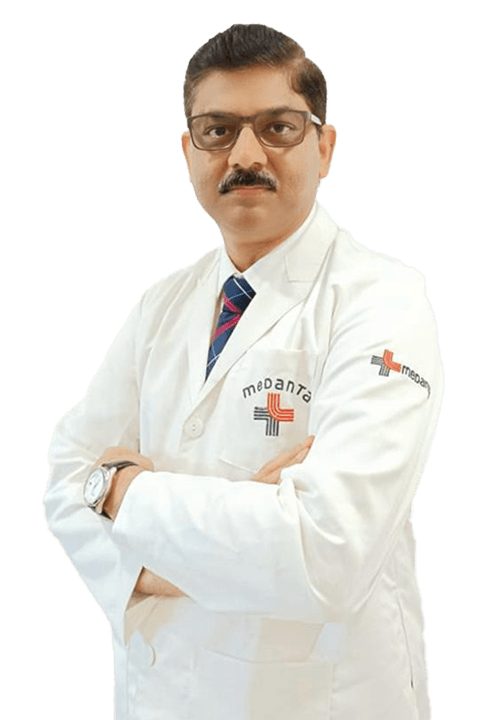
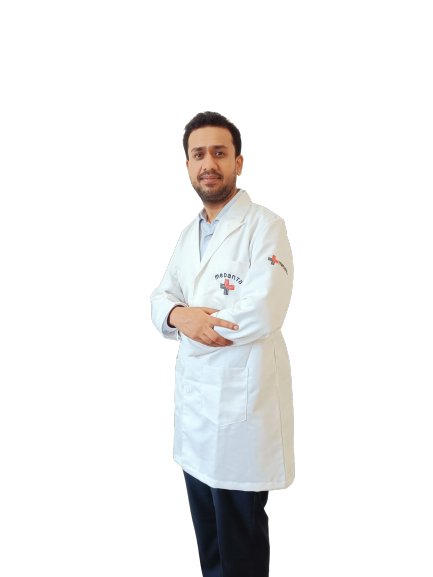
Dr. Amit Kumar Malik and Dr. Waseem Farooqui lead Medanta Noida's Electrophysiology Department.
Arrhythmias the Department Manages
Atrial Fibrillation
AF is the most common sustained cardiac arrhythmia. The atria fire chaotically instead of contracting in an organised sequence, producing an irregular heart rhythm and - more dangerously - a risk of clot formation in the left atrial appendage that can embolise to the brain. Many patients with AF are managed long-term on anticoagulation and rate or rhythm control drugs. For those in whom the arrhythmia is paroxysmal or persistent and medication has not adequately controlled it, pulmonary vein isolation (catheter ablation targeting the triggers of AF) is now an established treatment with good outcomes in appropriately selected patients.
Supraventricular Tachycardias
SVTs including AVNRT, AVRT in patients with accessory pathways such as WPW syndrome, and atrial tachycardias typically cause episodes of rapid heart rate, palpitations, dizziness, and sometimes pre-syncope. They are not usually life-threatening but can be severely disruptive to daily life. Radiofrequency ablation is curative in the majority of SVT cases, with higher success rates for common forms. The procedure is done in the cardiac catheterisation laboratory under sedation and takes a few hours.
Ventricular Arrhythmias
Ventricular tachycardia and ventricular fibrillation are the arrhythmias that cause sudden cardiac death. VT in the context of structural heart disease like after a heart attack, in dilated cardiomyopathy, and in patients with heart failure carries a serious prognosis without treatment. Management involves a combination of medication, implantable defibrillator therapy and in selected cases VT ablation.
Bradyarrhythmias and Conduction Disease
Sick sinus syndrome, high-degree AV block, and bundle branch disease causing symptomatic bradycardia (a heart rate too slow to maintain adequate cardiac output) are managed with permanent pacemaker implantation. The pacemaker senses the native rhythm and paces only when needed, maintaining a minimum rate. In patients with both bradycardia and impaired left ventricular function, cardiac resynchronisation therapy can improve both symptoms and ventricular function. Patients who need defibrillator capability in addition to pacing receive a combined CRTD device.
Electrophysiology Procedures at Medanta Noida
The electrophysiology laboratory at Medanta Noida is equipped for 3D electroanatomical mapping - technology that creates a real-time three-dimensional model of the heart's electrical activity and anatomy, allowing the electrophysiologist to navigate catheters with precision and identify arrhythmia circuits that two-dimensional fluoroscopy alone cannot adequately characterise. This is particularly important for complex ablations including AF ablation, VT ablation, and atrial flutter circuits in patients with prior cardiac surgery or structural disease.
Radiofrequency ablation uses heat energy delivered through the catheter tip to destroy a small area of tissue maintaining the arrhythmia circuit. Cryoablation uses extreme cold to achieve the same effect and is used preferentially in certain anatomical locations, particularly near the AV node where thermal injury would be more consequential.
Device implantation like permanent pacemakers, ICDs, CRT-P and CRT-D devices is performed in the same catheterisation suite. Leads are positioned under fluoroscopy guidance and the device is placed in a subcutaneous pocket below the collarbone. Most patients are discharged the following day. Device checks and programming are part of the ongoing follow-up, and the department manages both new implants and patients whose existing devices require generator replacement or lead revision.
The Electrophysiology Team
Dr. Amit Kumar Malik, Director, trained at LLRM Medical College Meerut for his MBBS and at GSVM Medical College Kanpur for both his MD and DM in Cardiology. He then went on to complete a dedicated Fellowship in Cardiac Electrophysiology and Pacing at the National Heart Centre Singapore. The distinction matters: most DM-trained cardiologists have some EP exposure, but a structured fellowship at a high-volume international EP centre - one that specifically trains in 3D mapping-guided ablation, complex AF and VT ablation, and advanced device implantation - is a different level of subspecialty preparation. His clinical scope at Medanta Noida covers the full EP spectrum: 3D mapping and radiofrequency ablation, pacemaker implantation, AICD and biventricular device implantation, and the complex coronary work (IVL, rotablation, OCT, IVUS) that reflects his broader interventional training.
Dr. Waseem Farooqui, Consultant, holds a DM in Cardiology from Gauhati Medical College and Hospital, Guwahati, MD from Maharani Laxmi Bai Medical College Jhansi, and MBBS from Kasturba Medical College Mangalore. His clinical work spans radial interventions, complex PCI, heart failure management, electrophysiological study, and device implantation including permanent pacemakers, AICDs, and CRT devices. Having an electrophysiological study and device capability within his scope means the department's EP capacity extends beyond a single-physician dependency - important for a department managing both elective EP procedures and urgent device-related presentations.
FAQs
I have been told I have atrial fibrillation. Does it always need ablation?
No. Many patients with AF are managed long-term on medication like anticoagulation to reduce stroke risk, and either rate control drugs to slow the ventricular response or rhythm control drugs to try to maintain sinus rhythm. Ablation becomes a consideration when medication has not adequately controlled symptoms, when the patient prefers a definitive treatment over lifelong drug therapy, or when rhythm control is specifically important - for example, in a patient with heart failure where maintaining sinus rhythm improves cardiac function.
What is an electrophysiology study and why is it done?
An EPS is a diagnostic procedure in which electrode catheters are placed inside the heart via the veins in the groin. Electrical signals are recorded from different chambers, and the heart's conduction system is tested by pacing at various rates and locations. The study can identify the mechanism of a patient's arrhythmia, locate the site of origin, assess the risk of dangerous ventricular arrhythmias in certain conditions, and determine whether ablation is feasible. In many cases, if the arrhythmia is induced during the EPS, ablation is performed in the same session.
My Holter monitor showed frequent ectopic beats. Should I be worried?
Isolated ectopic beats (premature atrial or ventricular contractions) are common in the general population and are usually benign often feeling like a skip, a thud or a fluttering sensation. In an otherwise structurally normal heart, occasional ectopics rarely require treatment beyond reassurance and addressing triggers like caffeine, stress, or poor sleep. The threshold for investigation or treatment changes when ectopics are very frequent typically above fifteen to twenty thousand per twenty-four hours, when they are causing significant symptoms, or when they occur in the context of structural heart disease. A cardiology review with an ECG and echocardiogram is the appropriate starting point.
I fainted suddenly with no warning. Does this need an electrophysiology assessment?
Sudden loss of consciousness without warning particularly if it occurred without a clear situational trigger like prolonged standing, dehydration, or pain needs proper cardiac investigation. Vasovagal syncope, the most common cause, typically has recognisable prodromal symptoms and a clear situational context. Syncope from a cardiac arrhythmia (a pause in the sinus node, a run of VT, or rapid AF) often comes without warning, which is clinically significant. An ECG, Holter monitor, and in some cases an echocardiogram are initial investigations. If these point toward an arrhythmic cause, or if the clinical suspicion is high, an EPS may be indicated. An electrophysiology consultation at Medanta Noida is the appropriate referral for unexplained syncope where a cardiac rhythm cause has not been excluded.