- All Speciality
- Bone Marrow Transplant
- Cancer Care
- Cardiac Care
- Cardiac Surgery
- Chest Surgery
- Clinical & Preventive Cardiology
- Critical Care
- Dentistry
- Dermatology
- Dietetics and Nutrition
- Electrophysiology
- Emergency
- Endocrine and Breast Surgery
- Endocrinology & Diabetes
- Endovascular and Interventional Radiology
- ENT, Head and Neck Surgery
- Gastroenterology
- Gastrosciences
- GI Surgery, GI Oncology and Bariatric Surgery
- Gynaecology and GynaeOncology
- Haemato Oncology
- Head & Neck Cancer Thyroid & Parathyroid Surgery
- Internal Medicine
- Interventional Cardiology
- Kidney Transplant
- Lab & Pathology
- Medical Oncology
- Mental Health
- Nephrology
- Neurology
- Neurosciences
- Neurosurgery
- Nuclear Medicine
- Ophthalmology
- Orthopaedics
- Paediatric Care
- Plastic, Aesthetic and Reconstructive Surgery
- Radiation Oncology
- Radiology & Imaging
- Renal Care
- Respiratory & Sleep Medicine
- Robotics, MIS & General Surgery
- Urology
Digestive and Hepatobiliary Doctors in Noida
- Diagnostic and Therapeutic Endoscopy
- ERCP (Endoscopic Retrograde Cholangiopancreatography)
- Advanced Gastrointestinal Interventions
- Hepatology and Pancreatic Disorders
- Complex GI Procedures and Second Opinions
- Fellowship in Therapeutic Endoscopy Beth Israel Hospital (Harvard Medical School)
- DNB (General Medicine)
- DNB (Gastroenterology)
- MBBS University College of Medical Sciences Delhi University.
- ERCP (Endoscopic Retrograde Cholangiopancreatography)
- Therapeutic Endoscopic Ultrasound (EUS)
- Enteroscopy and Luminal Gastroenterology
- Inflammatory Bowel Disease (IBD)
- Gastrointestinal bleeding and cancers
- Pancreatic and biliary diseases
- Liver diseases and hepatology
- DrNB (Gastroenterology)
- MD (General Medicine) Bangalore Medical College
- MBBS JJMMC Davangere.
- Endoscopic Ultrasound
- Endoscopic Retrograde Cholangiopancreatography (ERCP)
- Endoscopy and Colonoscopy
- Manometry and Biofeedback Therapy
- DM (Gastroenterology) GIPMER G. B. Pant Hospital Delhi
- MD (Medicine) Sarojini Naidu Medical College Agra
- MBBS GMC Haldwani.
Gastroenterology has changed more than most medical specialities in the past two decades. A procedure that once required surgery like removing a polyp, draining a pancreatic pse...
Gastroenterology has changed more than most medical specialities in the past two decades. A procedure that once required surgery like removing a polyp, draining a pancreatic pseudocyst, or clearing a blocked bile duct can now be done through an endoscope, without a single incision. The gastroenterologist who manages these cases is not simply a physician who scopes patients; they are a proceduralist who has to combine diagnostic precision with technical skill, and who has to know when endoscopic intervention is appropriate and when it is not.
For patients in Noida, Ghaziabad, and Greater Noida dealing with liver disease, biliary problems, pancreatic conditions, inflammatory bowel disease, or GI bleeding, this is a department with the procedural capability and clinical depth to manage cases that would previously have required a trip to a major Delhi hospital.
What the Department Covers
Advanced Endoscopy - ERCP and EUS
ERCP (endoscopic retrograde cholangiopancreatography) is the procedure used to access and treat the bile ducts and pancreatic duct from inside. Gallstones lodged in the common bile duct, bile duct strictures, leaks after surgery, and selected pancreatic duct problems are all managed endoscopically through ERCP rather than through open or laparoscopic surgery. It is a technically demanding procedure that requires significant volume to perform safely.
Endoscopic ultrasound (EUS) combines a flexible endoscope with an ultrasound probe, allowing imaging of structures adjacent to the GI tract from within. It is used for staging oesophageal and pancreatic cancers, assessing submucosal lesions, guiding biopsies of lesions that are not accessible by conventional means, and draining pancreatic fluid collections.
Hepatology and Liver Disease
Chronic liver disease ranging from viral hepatitis B and C, fatty liver disease, autoimmune hepatitis, and alcoholic liver disease sits within the gastroenterologist's scope in most Indian hospitals. Assessing the degree of fibrosis, managing complications of cirrhosis (ascites, variceal bleeding, hepatic encephalopathy), and deciding when a patient's disease has reached a stage where liver transplant evaluation is needed are all part of hepatological management.
Pancreatic Diseases
Acute pancreatitis, chronic pancreatitis, pancreatic cysts, and pancreatic cancer all require specialist gastroenterological input at various points in their management. Chronic pancreatitis with duct dilation and pain may be amenable to endoscopic drainage; pancreatic pseudocysts can now be drained under EUS guidance without surgery; pancreatic cancer staging uses EUS-guided biopsy to confirm tissue before treatment decisions are made. The department manages the full range of pancreatic presentations, with endoscopic options available where surgery would previously have been the only route.
Inflammatory Bowel Disease
Crohn's disease and ulcerative colitis require long-term specialist management - not just during flares, but in remission, where the aim is to maintain mucosal healing and prevent structural damage over time. Treatment has evolved considerably with the availability of biologic therapies, and the decision about when to escalate from mesalazine or immunosuppressants to biologics requires experience with disease behaviour and response patterns.
Motility Disorders - Manometry and Biofeedback
Motility disorders like oesophageal dysmotility, achalasia, gastroparesis, and pelvic floor dysfunction are a less visible but clinically significant part of gastroenterology. Manometry measures pressure within the oesophagus, stomach, and ano-rectum and is needed to properly classify these conditions before treatment. Biofeedback therapy is used for disorders of defaecation where the coordination of pelvic floor muscles is abnormal.
The Gastroenterology Team
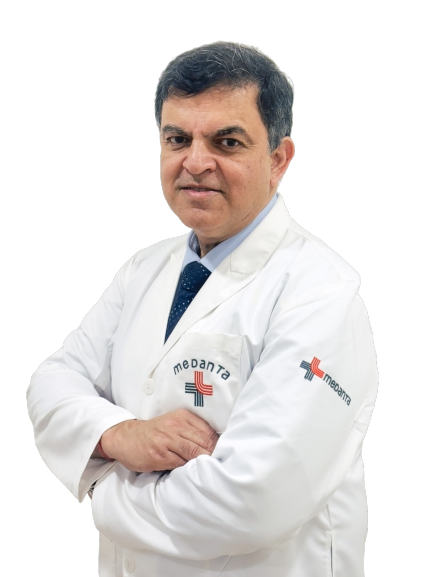
Dr. Ajay Bhalla is the Director of the department. He holds dual DNBs in General Medicine and Gastroenterology from the National Board of Examinations, and his MBBS is from the University College of Medical Sciences, Delhi University. After his gastroenterology training, he completed a Fellowship in Therapeutic Endoscopy at Beth Israel Deaconess Medical Center, affiliated with Harvard Medical School - a fellowship that specifically focuses on advanced endoscopic techniques including ERCP and EUS. His clinical experience covers diagnostic and therapeutic endoscopy, ERCP, advanced GI interventions, hepatology, pancreatic disorders, and second opinions on complex GI cases.
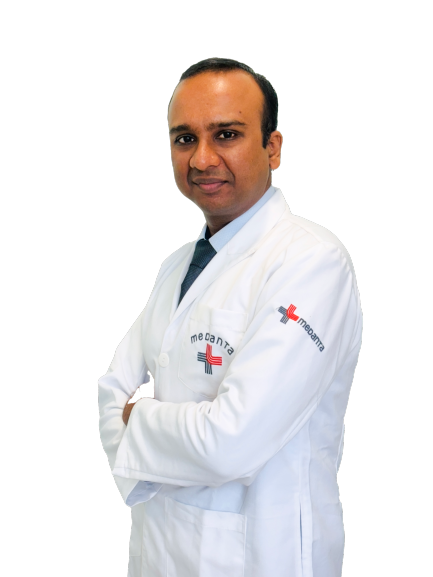
Dr. Amogh Dudhwewala, Senior Consultant, holds a DrNB in Gastroenterology and completed his MD in General Medicine at Bangalore Medical College. His MBBS was from JJMMC Davangere. His clinical focus is extensive - ERCP, therapeutic EUS, enteroscopy, IBD, GI bleeding, GI cancers, pancreatic and biliary diseases, and hepatology. Enteroscopy - deep small bowel endoscopy using balloon-assisted or spiral techniques - is listed explicitly and adds a capability the department has for small bowel bleeding and lesions that standard endoscopy cannot reach.
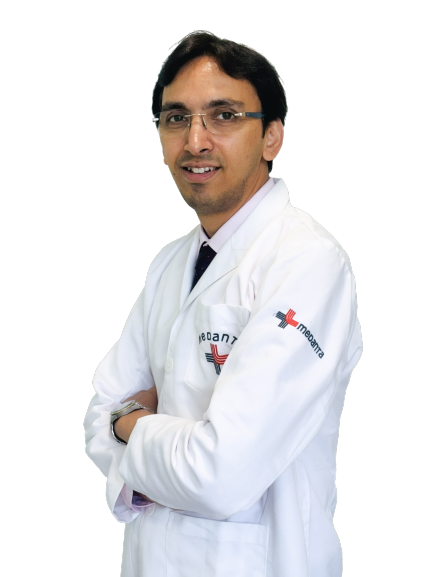
Dr. Manish Kumar Tomar, Senior Consultant, earned his DM in Gastroenterology from GIPMER at GB Pant Hospital, Delhi. His MD in Medicine was from Sarojini Naidu Medical College, Agra, and his MBBS from GMC Haldwani. His practice covers endoscopic ultrasound, ERCP, endoscopy and colonoscopy, and motility assessment through manometry and biofeedback. Training at GB Pant specifically exposes a gastroenterologist to high volumes of hepatobiliary and pancreatic endoscopy that many other training centres do not match.
FAQs
I have been told I need an ERCP. What does the procedure involve?
ERCP is done under sedation. A flexible endoscope is passed through the mouth, down the oesophagus, through the stomach, and into the duodenum, where the bile duct and pancreatic duct open. Using a catheter passed through the endoscope, the gastroenterologist enters these ducts, injects contrast dye to visualise them under X-ray, and then performs the necessary intervention like removing a gallstone, cutting the sphincter to improve drainage, placing a stent across a stricture, or draining a blocked duct. Most patients are observed for a few hours afterwards and can go home the same day or the next morning.
My liver ultrasound shows fatty liver. Do I need to see a gastroenterologist?
It depends on severity. Mild fatty liver without inflammation or fibrosis is usually managed through lifestyle changes like weight loss, reduced alcohol, and better metabolic control and active monitoring by a general physician or diabetologist. If your liver enzymes are persistently elevated, if a FibroScan or biopsy suggests significant fibrosis, or if you have associated features like diabetes or metabolic syndrome and want a proper assessment of your liver's current status and trajectory, a gastroenterologist or hepatologist is the right referral. Fatty liver progresses silently in some patients; catching fibrosis before it reaches cirrhosis is the point of early specialist review.
What is the difference between a gastroenterologist and a GI surgeon?
A gastroenterologist is a physician who diagnoses and manages GI conditions medically and through endoscopy. A GI surgeon operates. Many conditions like bile duct stones, pancreatic cysts, small polyps, and GI bleeding that once required surgery are now managed entirely by the gastroenterologist through the endoscope. When surgery is needed - for bowel cancer, complex fistulas, large tumours - the gastroenterologist and GI surgeon work together. In a hospital like Medanta Noida that has both departments, the two teams coordinate directly, which matters for patients whose management sits at the boundary between endoscopic and surgical options.
I have had loose stools and blood for several weeks. Should I see a gastroenterologist?
Yes, and without significant delay. Rectal bleeding with a change in bowel habit over several weeks needs a colonoscopy to rule out colorectal cancer, inflammatory bowel disease, or another structural cause. A few weeks of symptoms is already longer than ideal for the investigation timeline. If you are over forty or if there is a family history of colorectal cancer, the threshold for acting quickly is lower. Book a consultation at Medanta Noida directly - the gastroenterology team will assess whether colonoscopy needs to be arranged urgently or on a routine basis based on your symptom pattern and clinical picture.